
Male Neanderthal pelvis study recasts modern male anatomy as the outlier
A small fossil comparison found male Neanderthal pelvises closer to modern female forms, prompting a new model of walking evolution.
By Lucas Ferreira · Science & Environment Writer
3 min read
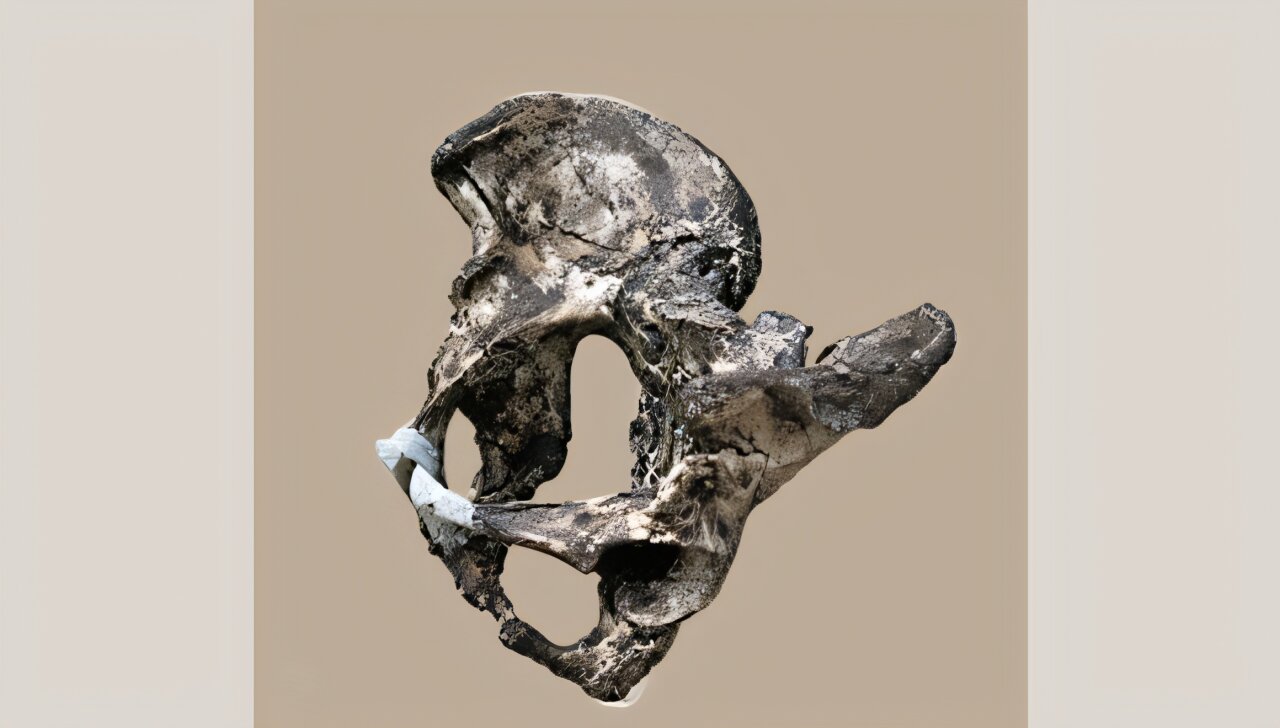
A new male Neanderthal pelvis study argues that modern human male anatomy, rather than the Neanderthal pelvis, may be the configuration that needs explaining. The finding matters because it challenges a longstanding view of Neanderthal pelvic anatomy and proposes a different account of how human walking evolved.
The paper, published in Scientific Reports, compared two nearly complete male Neanderthal pelvises with dozens from modern humans. The Neanderthal remains came from Kebara Cave in Israel and Spain's Sima de los Huesos site, according to Tel Aviv University researchers led by anatomist Yoel Rak.
What did the male Neanderthal pelvis study find?
In most of the measurements and proportions examined, the two male Neanderthal pelvises were more similar to those of modern human females than to modern human males, the researchers reported. For decades, researchers had generally treated the Neanderthal pelvis as an unusual form requiring its own functional explanation.
The authors instead propose that Neanderthals retained a more ancestral pelvic arrangement, along with modern human females, while the pelvis of modern human males underwent more extensive evolutionary change. The study is based on only two nearly complete male Neanderthal specimens, a limitation that means the broader interpretation remains a proposed model rather than a settled account of human evolution.
How do the researchers say pelvic shape affects walking?
The key anatomical difference identified in the paper is the placement of the hip joints on the pelvic ring. In modern males, the hip joints sit farther forward than in modern females and the two male Neanderthals studied, according to the researchers.
The team proposes that this arrangement lets thigh muscles at the front of the pelvis slow the downward movement of the body's center of mass with each step, then return stored energy as the next step begins. Under that model, the modern male pelvis could reduce the energy needed for walking and help with long-distance travel. The study does not establish that benefit directly; it presents it as a biomechanical explanation for the observed geometry.
The authors also say the forward hip-joint position was associated with other features, including a thicker pubic bone and a deeper front portion of the pelvis, which they say would address the resulting mechanical loads.
Why do the authors compare Neanderthals with modern females?
The researchers say childbirth places constraints on pelvic form: a female pelvis needs to remain relatively shallow while maintaining a sufficiently wide birth canal. They argue that these requirements may have limited the same set of changes proposed for modern males, leaving female pelvic anatomy closer to the configuration observed in the male Neanderthal fossils.
The study, “Neandertal pelvis reveals specialized walking apparatus in human males,” appeared in Scientific Reports in 2026, DOI 10.1038/s41598-026-59915-8. Its conclusions may guide further work on pelvic anatomy and biomechanics, but the current evidence concerns comparative measurements and a proposed walking mechanism, not demonstrated medical effects or broad claims about behavior.
This story draws on original reporting from Phys.org.