
Astronomers identify magnetar birth in unusually bright supernova
A changing pulse in SN 2024afav’s light points to a newborn magnetar and a general relativity effect, according to researchers.
By Tom Brennan · Health & Medicine Correspondent
3 min read
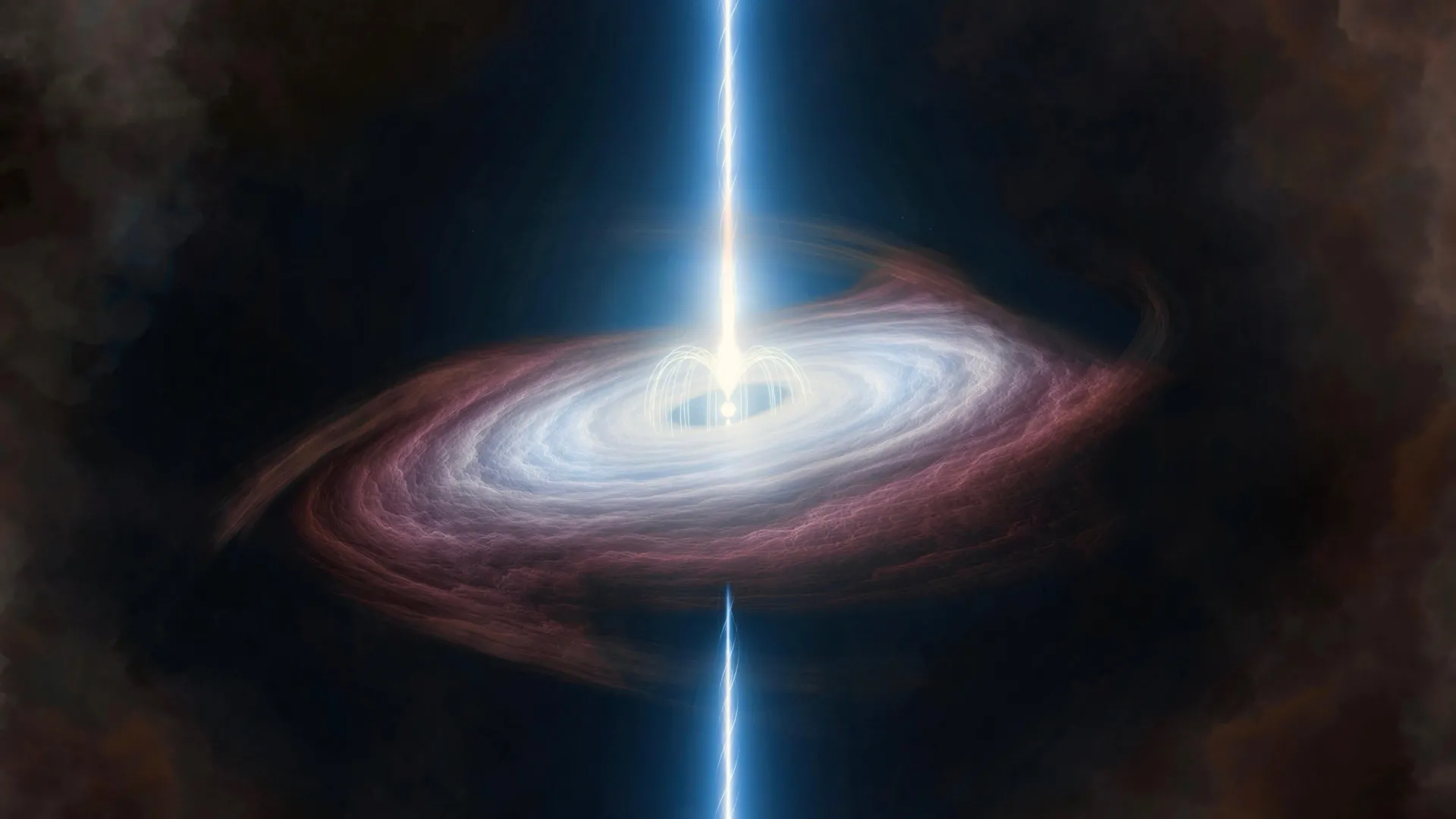
Astronomers say they have found direct evidence that a magnetar formed inside a superluminous supernova, helping explain how some stellar explosions stay so bright. The finding, reported by the University of California, Berkeley and published in Nature, links a changing pattern in the light of SN 2024afav to a rapidly spinning, highly magnetic neutron star.
Superluminous supernovae can shine at least 10 times brighter than ordinary supernovae, according to UC Berkeley. Researchers have debated what powers that extended brightness since the events were first recognized in the early 2000s.
One explanation came in 2010 from UC Berkeley theoretical astrophysicist Dan Kasen, working with Lars Bildsten, with a similar idea independently proposed by Stanford Woosley of UC Santa Cruz. Their model said a massive star’s collapsing core could leave behind a magnetar rather than a black hole, and that the object’s rotational and magnetic energy could feed the expanding debris.
UC Berkeley said the new study provides the first direct evidence for that process. The team studied SN 2024afav, a supernova discovered in December 2024 about one billion light-years from Earth.
Las Cumbres Observatory, a network of 27 telescopes, followed the explosion for more than 200 days, according to UC Berkeley. Joseph Farah, a graduate student at UC Santa Barbara and Las Cumbres Observatory, worked with colleagues including UCSB astronomer D. Andrew Howell to analyze the supernova’s light curve.
The researchers found that after SN 2024afav reached peak brightness roughly 50 days after the explosion, its light did not decline in a smooth way. Instead, UC Berkeley said the brightness rose and fell in four separate bumps, with the gaps between the bumps getting shorter over time.
Farah compared the pattern to a chirp, because the timing tightened as the signal progressed, according to UC Berkeley. Earlier superluminous supernovae had shown one or two similar features, but UC Berkeley said no earlier event had shown four.
The study’s model attributes the signal to material that was thrown outward in the explosion and later fell back toward the newborn magnetar. That material formed an accretion disk, and the researchers concluded that the disk was tilted relative to the magnetar’s spin.
Under Einstein’s general theory of relativity, a fast-spinning compact object can drag nearby space-time, producing an effect known as Lense-Thirring precession. UC Berkeley said the team found that this wobble matched the timing of the light variations, while other explanations, including Newtonian effects and magnetic-field-driven precession, did not.
As the disk moved inward, the wobble sped up, making the light pulses arrive closer together, according to the researchers. Farah said in UC Berkeley’s release that this is the first time general relativity has been required to describe the mechanics of a supernova.
The team estimated that the neutron star rotates once every 4.2 milliseconds and has a magnetic field about 300 trillion times stronger than Earth’s, UC Berkeley said. Those properties fit the definition of a magnetar.
Researchers said the result does not mean magnetars explain every superluminous supernova. UC Berkeley said some events may be powered when blast waves hit nearby material, and Kasen has also proposed that black hole formation could produce a very bright supernova under some conditions.
Farah and colleagues expect more examples to emerge as the Vera C. Rubin Observatory begins its large survey of the night sky, according to UC Berkeley. The study was authored by Farah, Logan J. Prust, Howell, Yuan Qi Ni and collaborators, including UC Berkeley astronomer Alexei V. Filippenko.
This story draws on original reporting from ScienceDaily.