
Chemists pin down borylnitrene structure inside a frozen crystal
Researchers used light, low temperatures and X-ray diffraction to observe a long-predicted boron-nitrogen intermediate.
By Lucas Ferreira · Science & Environment Writer
3 min read
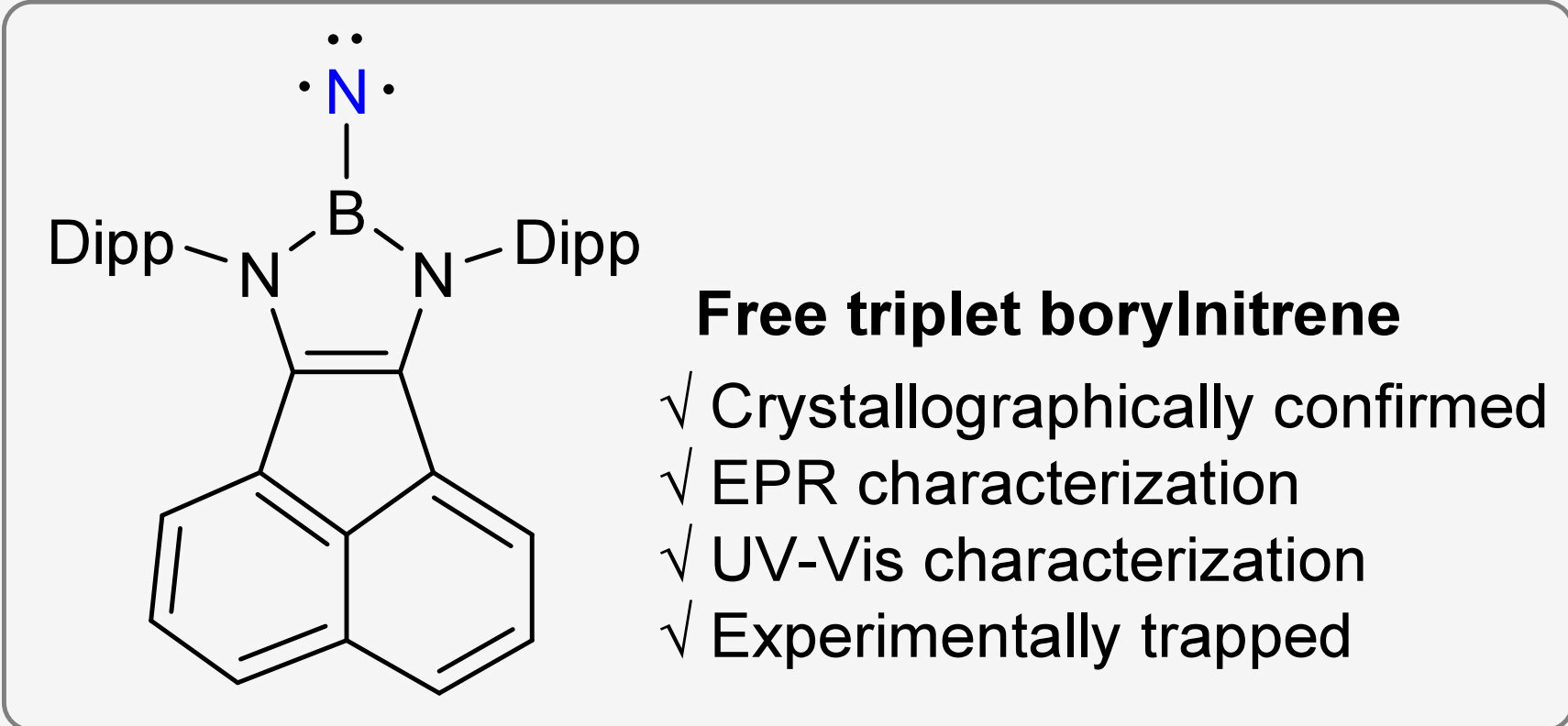
Chemists have directly determined the structure of borylnitrene, a highly unstable boron-bound nitrogen species that had long evaded observation. The result matters because nitrenes help drive reactions used to build carbon-nitrogen bonds, including steps relevant to pharmaceuticals and functional materials.
The work, reported by Shunlin Zheng and colleagues in the Journal of the American Chemical Society, used a single crystal as a molecular trap. According to Phys.org, the team generated the reactive species inside the crystal with 370-nanometer LED light, then examined it by single-crystal X-ray diffraction while keeping the material at very low temperature.
Nitrenes are reactive nitrogen intermediates that appear briefly during synthesis before changing into more stable compounds. Phys.org reported that borylnitrene had been predicted nearly 45 years ago, but its electron-poor boron center made it prone to rapid rearrangement or decomposition before researchers could measure its original structure.
How the team trapped the intermediate
The researchers began with a 1,3,2-diazaborolyl azide precursor containing an acenaphthene group, according to the journal report cited by Phys.org. That group acted as a long-wavelength light absorber, helping the precursor react in the solid state.
To slow the chemistry, the team grew the material as a single crystal and cooled it to 100 kelvin, or about minus 280 degrees Fahrenheit, Phys.org reported. The rigid crystal limited molecular motion, while the low temperature helped preserve the short-lived product long enough for structural study.
After 30 minutes of LED irradiation, the precursor released nitrogen gas and left borylnitrene embedded in the crystal, according to the report. The researchers then used X-ray diffraction along with spectroscopic methods to assess the atomic structure and probe its magnetic and optical behavior.
What the measurements showed
The X-ray data showed a shorter boron-nitrogen bond after borylnitrene formed, Phys.org reported. The distance changed from 1.437 angstroms in the starting material to 1.398 angstroms in the product, a shift the researchers interpreted as evidence of partial double-bond character.
Spectroscopy indicated that the captured molecule has a triplet ground state, according to the study. In that arrangement, two electrons remain unpaired, a feature Phys.org said may be tied to the material’s magnetic and electronic properties.
The material also changed color during the reaction, turning from red to blue when borylnitrene formed, Phys.org reported. To confirm that the X-ray structure matched borylnitrene, the researchers carried out reactions associated with that class of molecule.
Why the finding is useful
In solution, the borylnitrene intermediate showed the expected behavior of a reactive nitrene, according to Phys.org. It abstracted hydrogen atoms, inserted into C-H and B-C bonds, coordinated to Lewis bases and participated in cycloaddition reactions.
The study suggests that attaching a long-wavelength absorber such as an acenaphthene-fused scaffold to a precursor can help trigger solid-state reactions at low temperature, Phys.org reported. The researchers said the approach could broaden the set of main-group nitrenes whose structures can be confirmed directly.
By giving chemists a clearer view of borylnitrene’s structure and reactivity, the work may improve control over nitrene-like intermediates used in synthesis. The findings were published under the title “Crystallographic Capture of a Free Triplet Borylnitrene” in the Journal of the American Chemical Society.
This story draws on original reporting from Phys.org.