
Industrial noise bluebirds study finds learning stayed intact
Penn State researchers found 48 hours of compressor-station noise changed bluebird parenting behavior but did not reduce measured cognition.
By Lucas Ferreira · Science & Environment Writer
3 min read
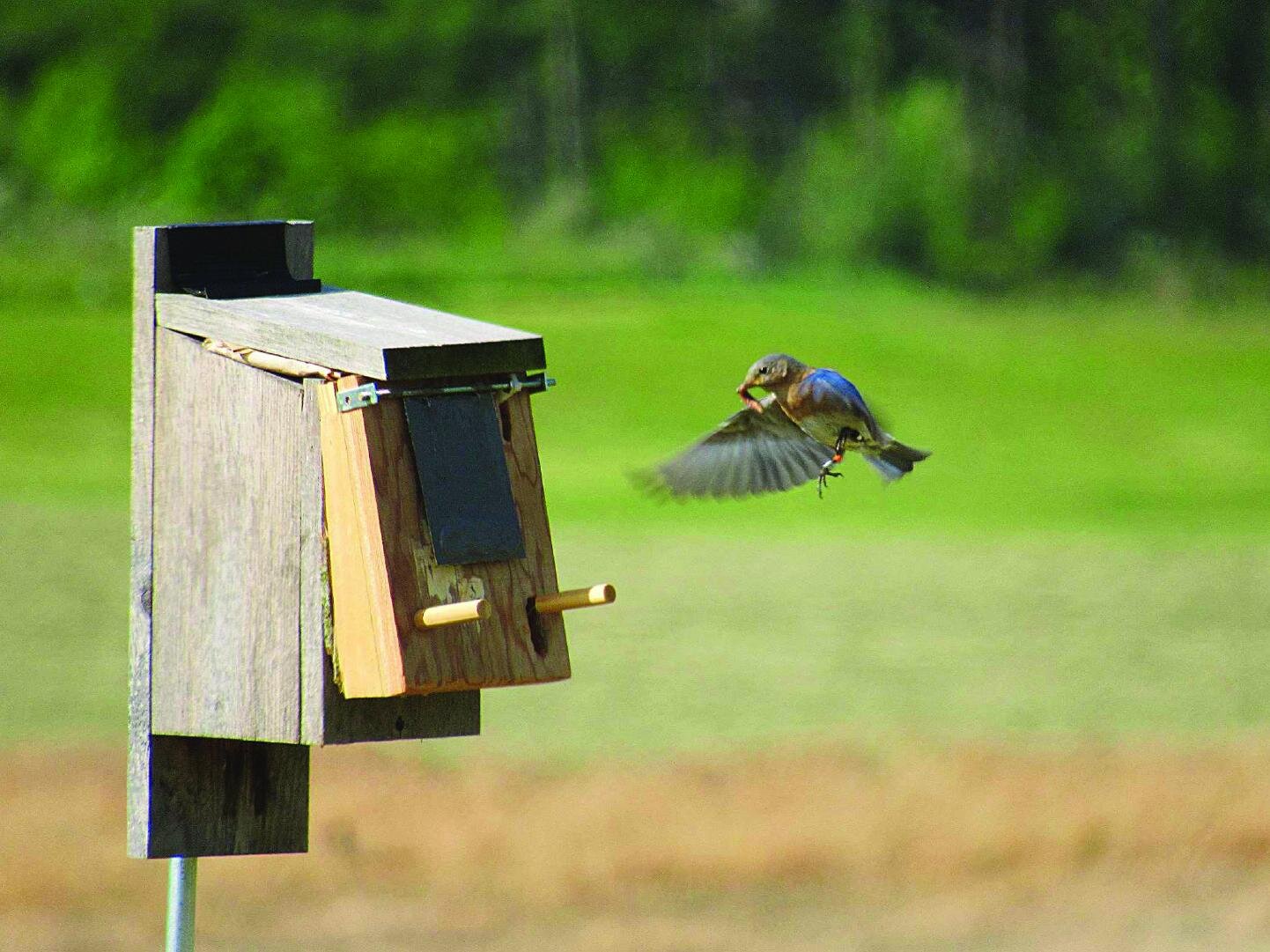
A Penn State study found that industrial noise bluebirds heard for two days did not appear to weaken their ability to learn a nest-box task, though it did change how some parents behaved. The findings matter because human-made noise is common in wildlife habitat, including edge areas created by pipeline corridors that eastern bluebirds use.
The research, published in Behavioral Ecology, tested whether short-term noise from a natural gas pipeline compressor station interfered with cognition in wild eastern bluebirds. According to the Penn State team, the birds exposed to the noise performed about as well as birds kept in quiet conditions when they had to solve a simple problem to reach their chicks.
Does industrial noise affect bluebird cognition?
In this experiment, Penn State researchers reported no evidence that 48 hours of continuous industrial noise reduced the birds’ measured learning or problem-solving ability. Cognition in the study meant how quickly the birds learned which lever opened access to their nest boxes and whether they improved with repeated attempts.
The study involved 44 eastern bluebirds at Penn State’s Russell E. Larson Agricultural Research Center. Half were exposed to noise recordings, and half were not. All of the adult birds were raising nestlings, which gave them a strong reason to return to the boxes during the test.
Researchers fitted each nest box with a small operant-conditioning device for one hour. The setup included two levers: one that allowed the parent to enter and one that did not. To get back to the chicks, the bird had to land on the correct lever.
Sara Isgate, the study’s first author and a Penn State master’s graduate now pursuing a doctorate at Indiana University Bloomington, said the birds got faster over repeated trials. She described the pattern as evidence that they learned the task, while adding that noise exposure did alter behavior.
How did the bluebirds respond to the noise?
The team measured more than task performance. Researchers also tracked feeding visits, hesitation before approaching the nest box and nestling outcomes, including chick health and fledging.
According to Isgate, feeding patterns shifted under noise exposure. In quiet conditions, both male and female bluebirds fed chicks slightly less over the two-day period. Under noise, females reduced feeding more, while males appeared to increase feeding, suggesting a change in parental roles rather than a clear drop in total care.
The noise-exposed bluebirds also seemed more wary at the nest box. Penn State researchers said birds in quiet conditions approached faster over time, while birds hearing compressor-station recordings became slower to approach.
The study did not find evidence that the short-term exposure harmed chick health. The researchers reported that nestlings did well whether their parents had been exposed to noise or kept in quieter conditions.
What noise did the researchers use?
For the noise treatment, the team played five one-hour recordings made at a natural gas compressor station under varying times and weather conditions. The recordings were broadcast through ATV speakers connected to portable digital audio devices and powered by 12-volt marine deep-cycle batteries.
Jason Keagy, associate research professor of wildlife behavioral ecology in Penn State’s College of Agricultural Sciences and the study’s senior author, said the results suggest wild animals may sometimes cope better than expected during short-term noise exposure, especially when caring for young. He said the bluebirds maintained their ability to learn and solve the task even though the noise changed some behaviors.
Keagy said eastern bluebirds are a useful species for this question because they do well with human-provided nest boxes and often use edge habitat associated with pipeline corridors. He also noted that bluebirds are not typically grouped with birds known for high cognitive ability, such as crows or chickadees, making the finding relevant beyond species usually studied for intelligence.
This story draws on original reporting from Phys.org.