
How malaria parasites proliferate through tethers and staggered DNA copying
Two studies identify a nucleus-to-daughter tether and resource-limited DNA replication as key steps in Plasmodium growth.
By Priya Raghavan · Science Reporter
3 min read
New research offers an answer to how malaria parasites proliferate: the organisms use a protein link to position nuclei as daughter cells form, while their nuclei take turns copying DNA from a shared limited resource. The findings, reported by Heidelberg University and its collaborators, describe two distinct steps that help Plasmodium multiply inside host cells and could inform future antimalarial research.
Unlike human cells, which typically split into two daughter cells, malaria parasites can make many copies of their genetic material before assembling a corresponding set of daughter parasites at once, according to Heidelberg University Hospital's report. The two studies were published in The EMBO Journal and Nature Communications.
How do malaria parasites proliferate?
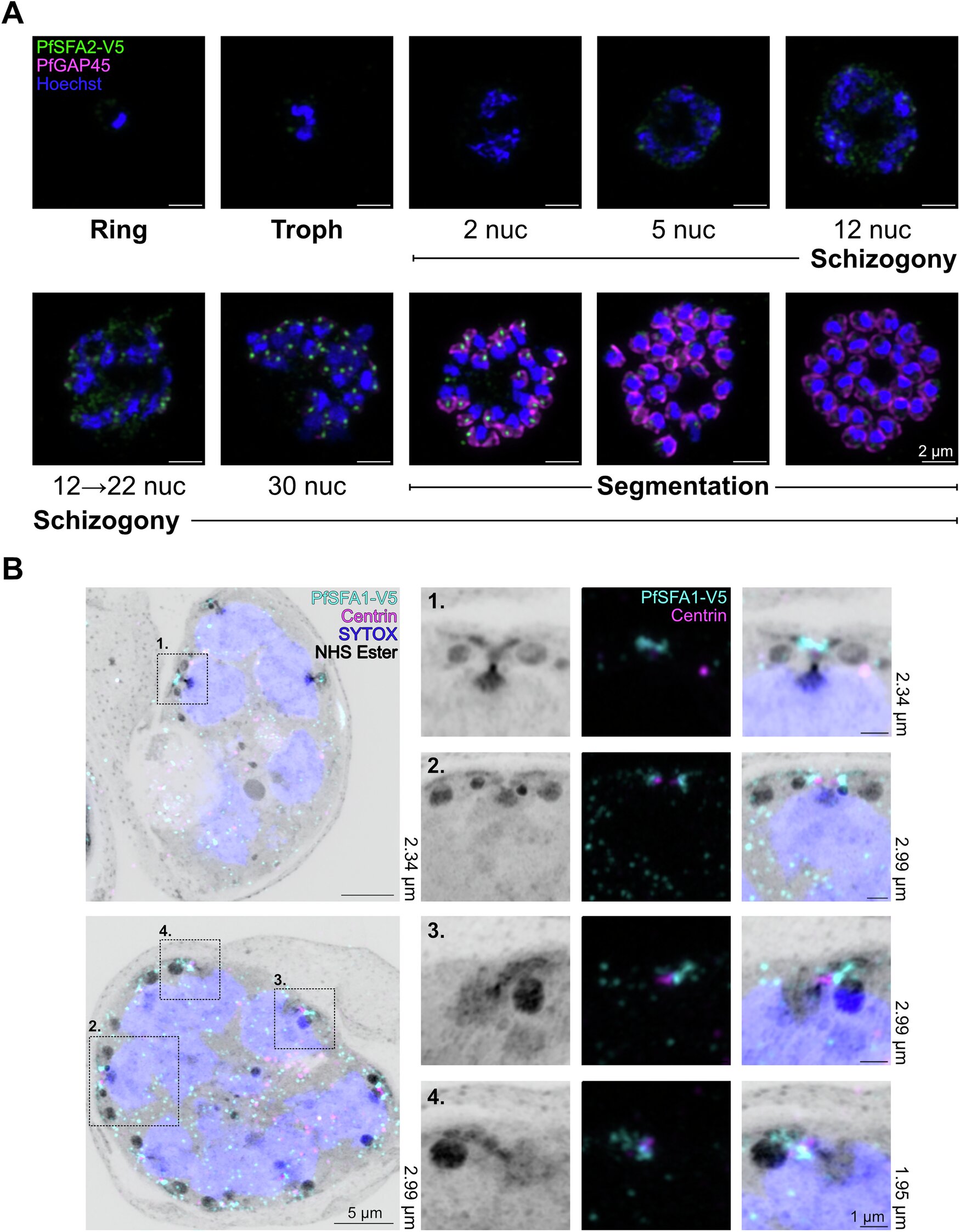
One study found that two proteins form a tether between each newly formed nucleus and the tip of a developing daughter parasite. Researchers led by Friedrich Frischknecht at Heidelberg University and Jeffrey Dvorin of Harvard Medical School investigated a structure previously seen in electron microscopy but whose role had been unclear, Heidelberg University Hospital said.
The connection appears necessary during the physical assembly of daughter cells. Parasites genetically altered to lack one tether component could still duplicate their genomes, but did not yield viable progeny, the university report said. In mosquitoes, production of sporozoites—the stage transmitted to people in a mosquito bite—was almost entirely eliminated.
Frischknecht said the missing connection left developing parasites unable to bring the nucleus into the new cell properly or orient structures needed to enter host cells. That result separates the act of copying DNA from the later task of building a functional daughter parasite.
Why does staggered DNA replication help the parasite?
A separate team studied the blood stage, when many parasite nuclei occupy one shared cell interior. High-resolution live-cell imaging and mathematical modeling indicated that those nuclei compete for a limited protein resource required to replicate DNA, according to Heidelberg University Hospital.
That competition means the nuclei do not all copy their genomes at the same moment. One may be in DNA replication while another has progressed to division. The researchers reported that sequential access keeps the limited resource working with little downtime, and that experiments and modeling found this arrangement somewhat faster than fully synchronized replication.
A related preprint by researchers including Markus Ganter and Nils Becker described sequential allocation of the replication resource as the explanation for the observed timing. It proposed that stable but reversible loading of a DNA-replication component, such as PCNA, could be one way the allocation occurs; the version available on bioRxiv had not been peer reviewed.
The work does not establish a new treatment. Frischknecht said parasite-specific division processes may offer targets for future drug development, an area of interest because malaria parasites can develop resistance to existing medicines, according to Heidelberg University Hospital.
This story draws on original reporting from Phys.org.