
Nolan The Odyssey review debate centers on what an adaptation should keep
Reviews praise Christopher Nolan’s scale and nonlinear storytelling while disputing his changes to Odysseus, the gods and Homer’s moral world.
By Hana Yoshida · Markets Reporter
3 min read
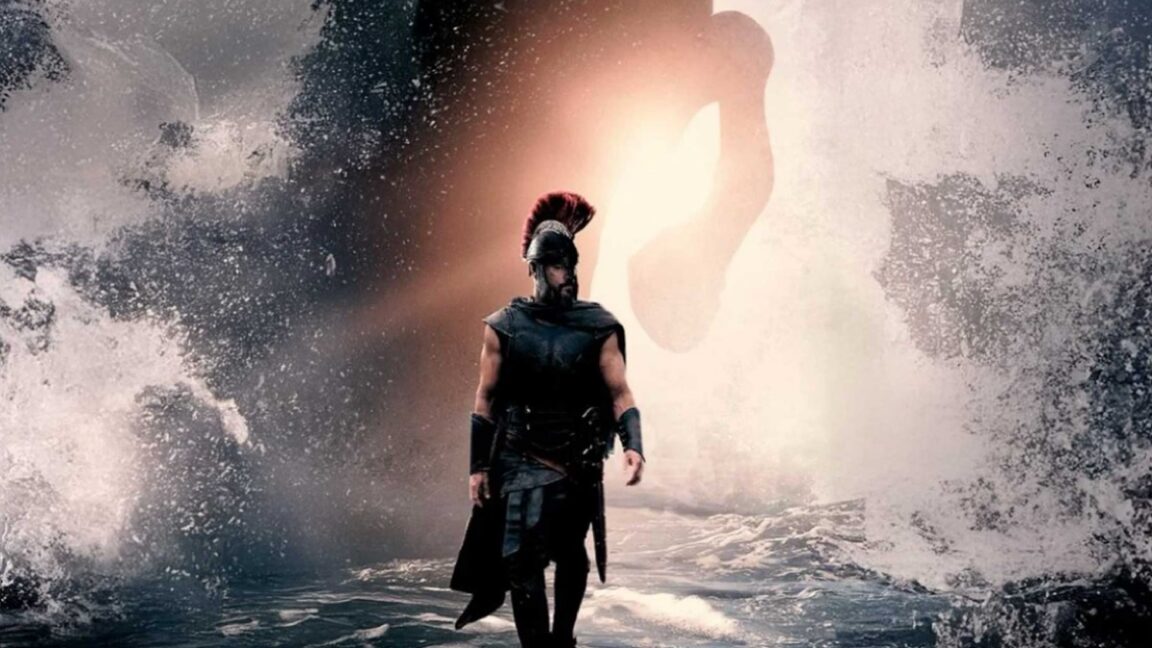
A Nolan The Odyssey review now depends largely on what a viewer expects from Homer’s epic. Ars Technica and other commentators praise the film’s large-format spectacle, performances and effort to retain a nonlinear form, while critics including translator Emily Wilson question its character depth and its recasting of the poem’s central ideas.
The dispute is not a simple verdict on whether the movie works as cinema. Ars Technica calls Nolan’s nearly three-hour production epic in scale yet intimate in effect, and says its images remain with the viewer. Daniel W. Drezner similarly praised its big-screen visuals, the Circe sequence and several performances, while faulting some dialogue and the limited development of women characters.
Why are Nolan’s The Odyssey reviews divided?
A major question is how Nolan handles Homer’s unusual storytelling design. The original poem moves through stories within stories, with Odysseus recounting major parts of his journey to the Phaeacians. Emma Greensmith of the University of Oxford said in a Classics at Cambridge discussion that the structure presents a substantial challenge for a film adaptation.
Greensmith said Nolan engages with that form through flashbacks, but relocates the adventures into Odysseus’s memories rather than his spoken account. She described her response to that choice as mixed, while giving the director credit for taking on the poem’s nonlinear construction. Wilson also said Nolan’s shifting chronology is suited to a work built from nested narratives, even as she found the film short on narrative and emotional depth.
Spoilers follow. Ars Technica says the film frames Odysseus’s past as fractured recollections that return after years with Calypso and lotus fruit. In that review’s reading, the device takes him toward an admission that guilt over the destruction enabled by the Trojan Horse helped drive his extended absence. Ars Technica interprets Athena’s brief appearances as representing the personal reckoning he avoids, while describing Nolan’s Circe as a figure marked by trauma and seeking vengeance.
What changes in Nolan’s Odysseus and the gods?
A central point of disagreement is Nolan’s treatment of Odysseus. Wilson, the University of Pennsylvania classicist and translator, told NPR’s Fresh Air that the film reduces a clever and complicated hero to a man persistently anxious about the war and the Trojan Horse. She said the script lacks emotional depth and character development, and suggested that using a screenwriter might have addressed those problems. Wilson nevertheless said the film is worth seeing because it offers material to consider about war, violence, deception and adaptation.
The divine world is another contested choice. Helena Hunt wrote in The Ringer that Nolan retains some supernatural elements but replaces Homer’s competing and volatile pantheon with a more distant, morally coherent power associated with storms and thunderbolts. Hunt argued that this reshapes the story around hospitality, opposition to war and reciprocal treatment in ways that do not closely match Homer’s gods and heroes.
Those differences leave a durable adaptation question rather than a settled critical answer: whether a modern version should prioritize Homer’s narrative architecture, Odysseus’s ambiguity, the many gods’ conflicting agendas, or the emotional force of a new interpretation.
This story draws on original reporting from Ars Technica.