
Honey bee pesticide diet study links polyunsaturated fats to survival
Penn State researchers found bees fed polyunsaturated fats survived chlorpyrifos exposure at much higher rates in a lab test.
By Lucas Ferreira · Science & Environment Writer
3 min read
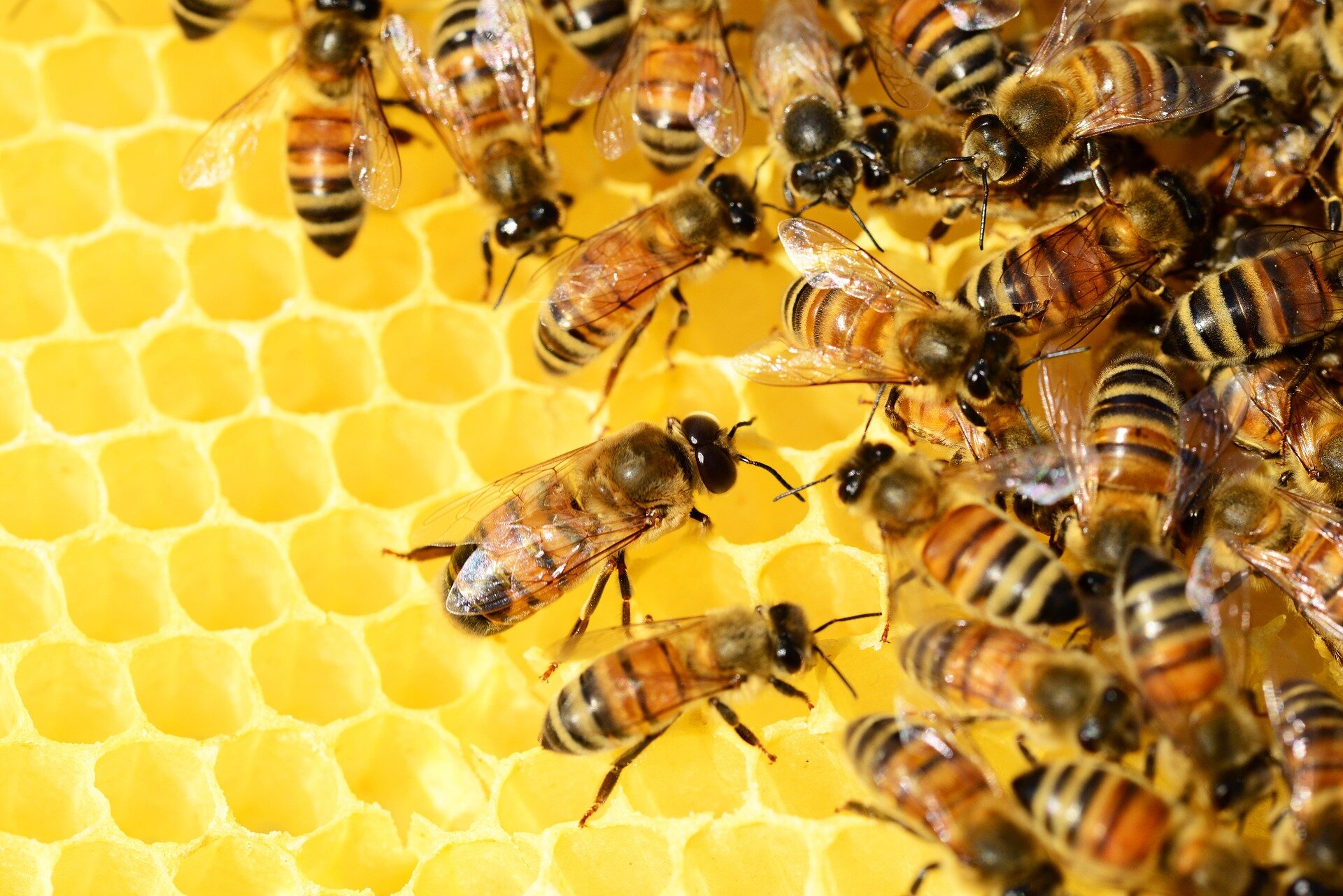
A honey bee pesticide diet study led by Penn State researchers found that bees given food rich in polyunsaturated fatty acids were more likely to survive exposure to chlorpyrifos. The finding points to nutrition as a possible added tool for supporting pollinators, while researchers cautioned that better diets cannot substitute for reducing pesticide risks.
The study, published in the Journal of Insect Physiology, compared how honey bees fared after eating diets enriched with different kinds of fat. According to Penn State, 90% of bees on the polyunsaturated-fat diet survived pesticide exposure, compared with less than half of bees fed diets high in saturated or monounsaturated fats.
Polyunsaturated fatty acids are fats involved in functions such as brain activity, cell growth and heart health. In this study, Penn State researchers examined whether the type of fat in bee food, rather than the amount of fat alone, changed how bees responded to chemical stress.
How did the honey bee pesticide diet study work?
Jaya Sravanthi Mokkapati, an assistant research professor at Penn State and lead author of the paper, said the team fed groups of bees protein-based diets supplemented with saturated, monounsaturated or polyunsaturated fatty acids for five days. Other bees received sucrose-only diets or protein-only diets without added fats, according to the researchers.
After that feeding period, each diet group was split into bees exposed to chlorpyrifos and control bees that were not exposed. The team then tracked survival and food intake for another five days and examined physiological markers in surviving bees.
Mokkapati said the researchers measured stored carbohydrates, proteins and lipids in the bees’ abdomens. They also assessed glutathione-S-transferase, a detoxification enzyme, and acetylcholinesterase, an enzyme tied to nervous system function.
What the researchers found
According to Penn State, bees ate more of the diets containing monounsaturated and polyunsaturated fatty acids than the saturated-fat diet, suggesting a preference for unsaturated fats. The strongest survival pattern appeared in the bees fed polyunsaturated fatty acids.
The researchers reported that bees on the polyunsaturated-fat diet kept higher abdominal lipid stores after chlorpyrifos exposure. They also showed higher acetylcholinesterase activity, which the team interpreted as a sign of better energy balance and nervous system function under pesticide stress.
Glutathione-S-transferase activity did not differ significantly among the fat-enriched diets, according to the study. That result led the researchers to say the apparent protection from polyunsaturated fatty acids was probably not driven mainly by that detoxification route.
Why the finding has limits
Christina Grozinger, a Penn State entomology professor, director of the Huck Institutes of the Life Sciences and co-author of the paper, said pesticides can help control crop pests but can also endanger pollinators. She said strategies that help pollinators withstand unavoidable exposure could complement efforts to reduce pesticide contact.
Mokkapati said the results could inform supplemental foods for managed honey bees and plantings that provide pollen with helpful fatty-acid profiles. She also said the experiment used a chlorpyrifos concentration much higher than levels usually reported where honey bees forage, making it a laboratory challenge rather than a direct match for field conditions.
According to Mokkapati, bees in farm settings are more likely to face lower levels of several pesticides at once, along with poor nutrition, parasites, pathogens and temperature stress. She said future work could test whether polyunsaturated fatty acids remain protective under more realistic pesticide mixtures and environmental pressures.
This story draws on original reporting from Phys.org.