
Study links longer jumps to better handball wing shots
Chalmers students analyzed 634 handball wing shots and found jump distance, timing and variety were key to scoring from tight angles.
By Lucas Ferreira · Science & Environment Writer
3 min read
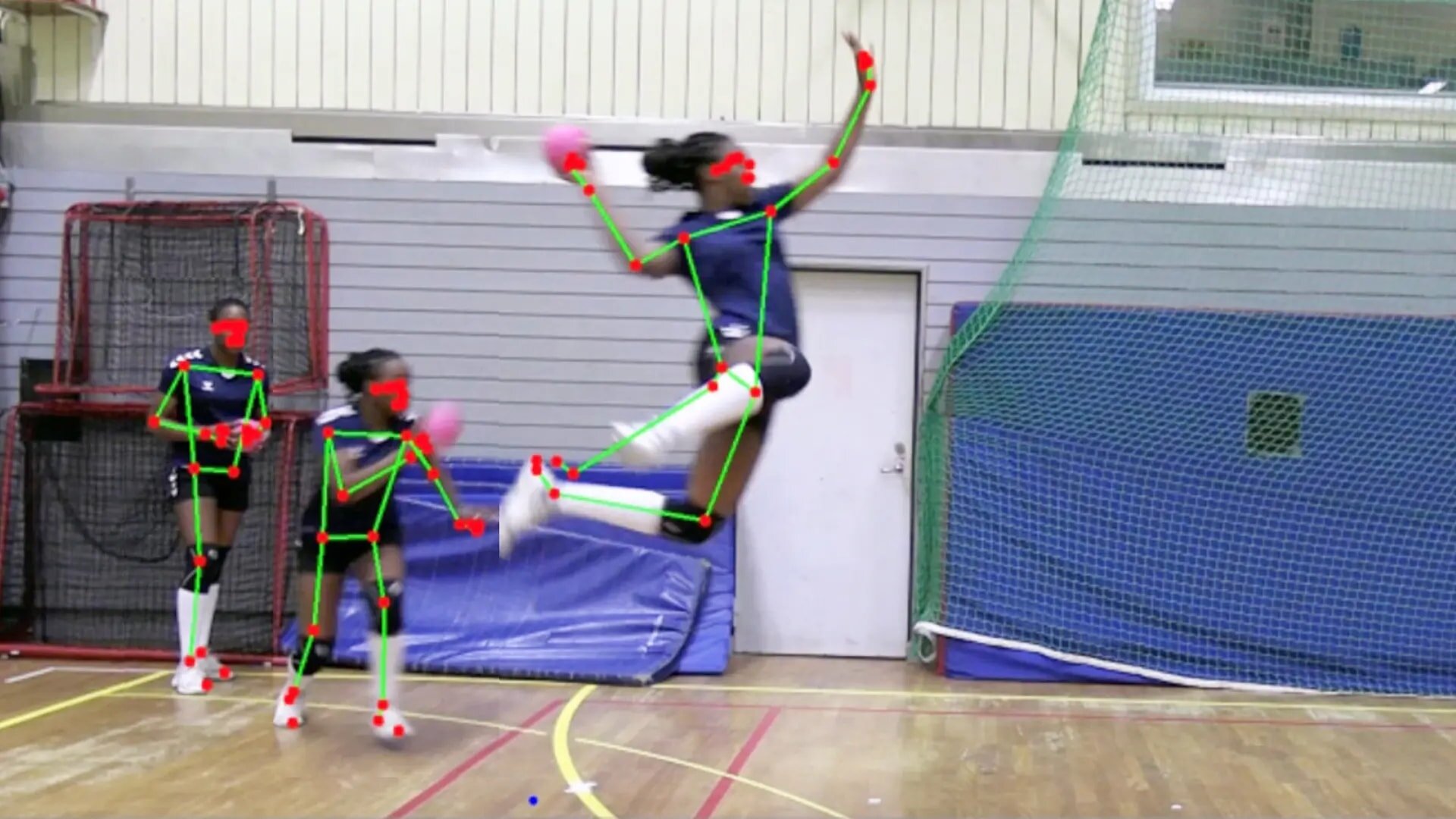
A Chalmers University of Technology bachelor’s thesis has identified the main technical factors behind successful wing shots in handball, offering coaches a more data-based way to train one of the sport’s most difficult finishes. The project, conducted with Swedish club Redbergslids IK, found that longer jumps had the strongest link to shooting accuracy among the measured variables.
According to Chalmers, the study examined 634 wing shots by 40 players, from 12-year-olds to senior-level athletes, during spring 2026. The work is part of a continuing collaboration between Chalmers and Redbergslids IK that has also looked at standing shots and jump shots in earlier projects involving more than 200 players in total.
Wing shots pose a special analysis problem because players often jump in one direction while throwing in another, Chalmers said. To study that movement, the students built video-analysis software to measure airtime, jump distance, takeoff position, jump angle and arm position.
Distance mattered more than airtime
The Chalmers thesis found that jump distance was the clearest factor tied to accuracy. The researchers also concluded that the timing and use of time in the air mattered more than the length of airtime by itself.
Anders Ekberg, a professor at Chalmers and supervisor of the study, said the project gave researchers numerical evidence for parts of handball technique that had often been judged from experience. He said the statistical basis made it easier to see which elements had measurable effects.
The study did not identify one universal model for the ideal shot. Chalmers said successful attempts came from different styles, including lob shots measured at about 40 km/h and harder throws approaching 95 km/h.
Daniel Husberg, one of the students behind the project, said some younger players scored despite using techniques that appeared flawed by the study’s measures. Ekberg said players benefit from being able to finish in several ways, because variation makes the goalkeeper’s task harder.
Five lessons for players
Chalmers summarized the thesis findings as five practical lessons for wing players:
- Use a fast, forceful takeoff and be willing to jump close to the defender.
- Build approach speed and aim for a longer jump, since distance showed the strongest relationship with accuracy.
- Use the time in the air to read the goalkeeper’s position and choose the release moment.
- Develop enough throwing power and wrist speed to make a hard shot a constant threat.
- Practice different finishes so the goalkeeper cannot easily predict the attempt.
Redbergslids IK is already using the findings in its player development program, according to Chalmers. Tony Larsson, the club’s manager, said natural scoring instinct is useful, but players at higher levels need to build specific skills rather than rely on chance.
The thesis, titled “The hunt for the perfect handball shot—a new angle: A study of the movement pattern and precision of the edge shot,” was written by Chalmers students Daniel Husberg, Josefin Karlsson, Antonio Poljak, Luka Pranjic and Holger Ryding. Chalmers said the students study mechanical engineering and computer engineering.
Ekberg also said the collaboration could help players see how physics, mathematics and programming apply to sport. He said Chalmers and Redbergslids IK hope the partnership can continue and possibly grow, including with tutoring in mathematics and physics connected to training sessions.
This story draws on original reporting from Phys.org.