
Serengeti lioness tests GPS collar that logs locations every five minutes
Leiden University researchers say the collar could sharpen efforts to reduce conflict where lions, people and livestock share space.
By Tom Brennan · Health & Medicine Correspondent
2 min read
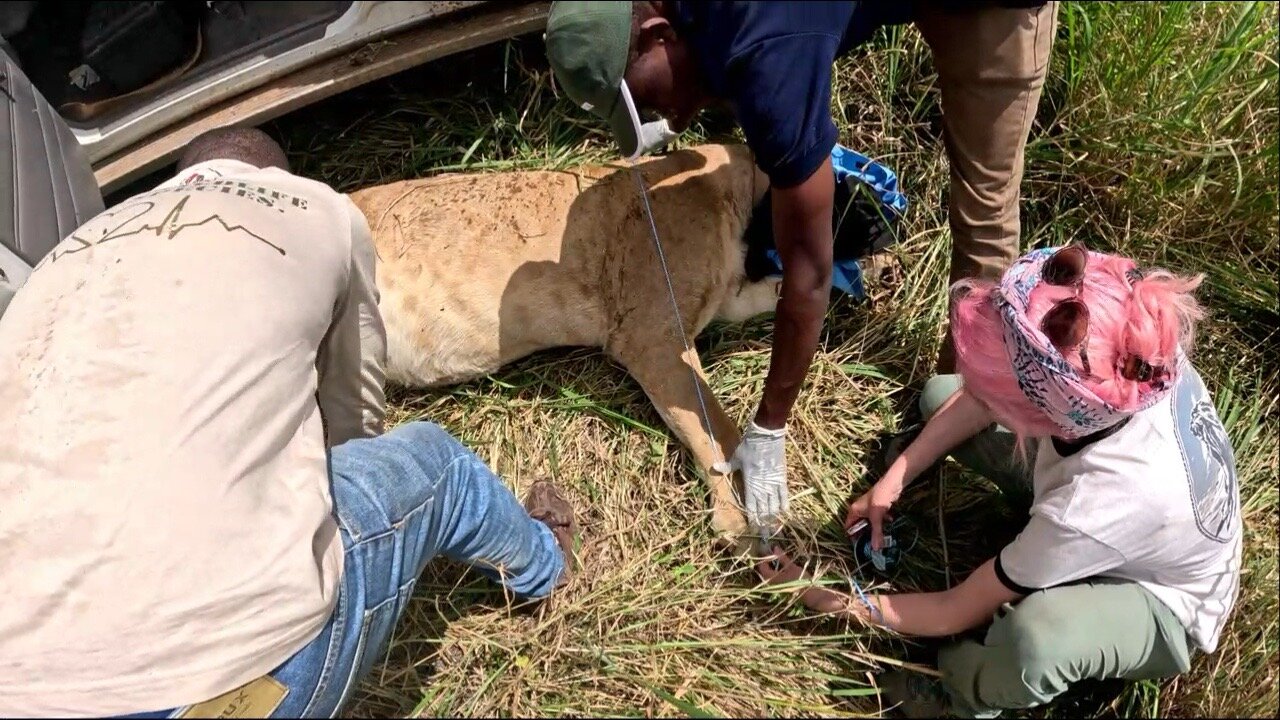
Researchers in Tanzania’s Serengeti are testing a new GPS collar on a lioness to track how lions move through areas increasingly shared with people. Leiden University said the project is meant to show where and when encounters between humans and lions happen, information that could help reduce conflict around livestock and predator killings.
The first animal in the pilot is Sasa, a lioness in the Serengeti. Leiden University said ecologists Matana Ng’Weli, Emily Strange and Michiel Veldhuis are using the collar to build a more detailed record of lion movements than conventional tracking systems typically provide.
More frequent data, lower power use
According to Leiden University, the collar records Sasa’s position every five minutes, compared with the hourly readings common in standard collars. The university said that tighter schedule can show daily travel routes as well as broader seasonal movement patterns.
The system does not send data by satellite, Leiden University said. Instead, it stores information on the collar and transmits it through an energy-efficient network when a connection is available, a design the university said makes it less costly and uses less power than traditional satellite collars.
Strange said the collars allow researchers to follow movement at a finer time scale without repeatedly replacing batteries. Veldhuis said the lower power demands could let researchers collect data for longer periods and monitor more animals for the same budget.
Conflict risks near livestock
Leiden University said the work responds to more frequent overlap between people and lions in shared areas. The university said those encounters can lead to conflict, especially where livestock are involved, and that some conflicts end with predators being killed in retaliation.
Ng’Weli said understanding the places lions favor or avoid could help planners shape areas in ways that reduce conflict risk. According to Leiden University, possible uses include making high-risk places less appealing to lions while keeping safer migration routes protected.
The project is being carried out with the Tanzania Wildlife Research Institute, known as TAWIRI, and Smart Parks, a technology company that develops tools for endangered-species protection and environmental conservation. Leiden University said the pilot will help refine the collars before researchers try the approach more widely.
Veldhuis said the pilot is intended to improve the collars while balancing data quality with battery use. Strange said the long-term goal is to deploy the method on more lions in places where human activity and wildlife movement overlap, giving conservation workers and local decision-makers better information for safety and conservation decisions.
This story draws on original reporting from Phys.org.