
AI model links 3D tooth wear to ancient primate diets
Researchers say machine learning can classify primate diets from 3D enamel wear, offering a tool for studying fossil relatives of early humans.
By Tom Brennan · Health & Medicine Correspondent
3 min read
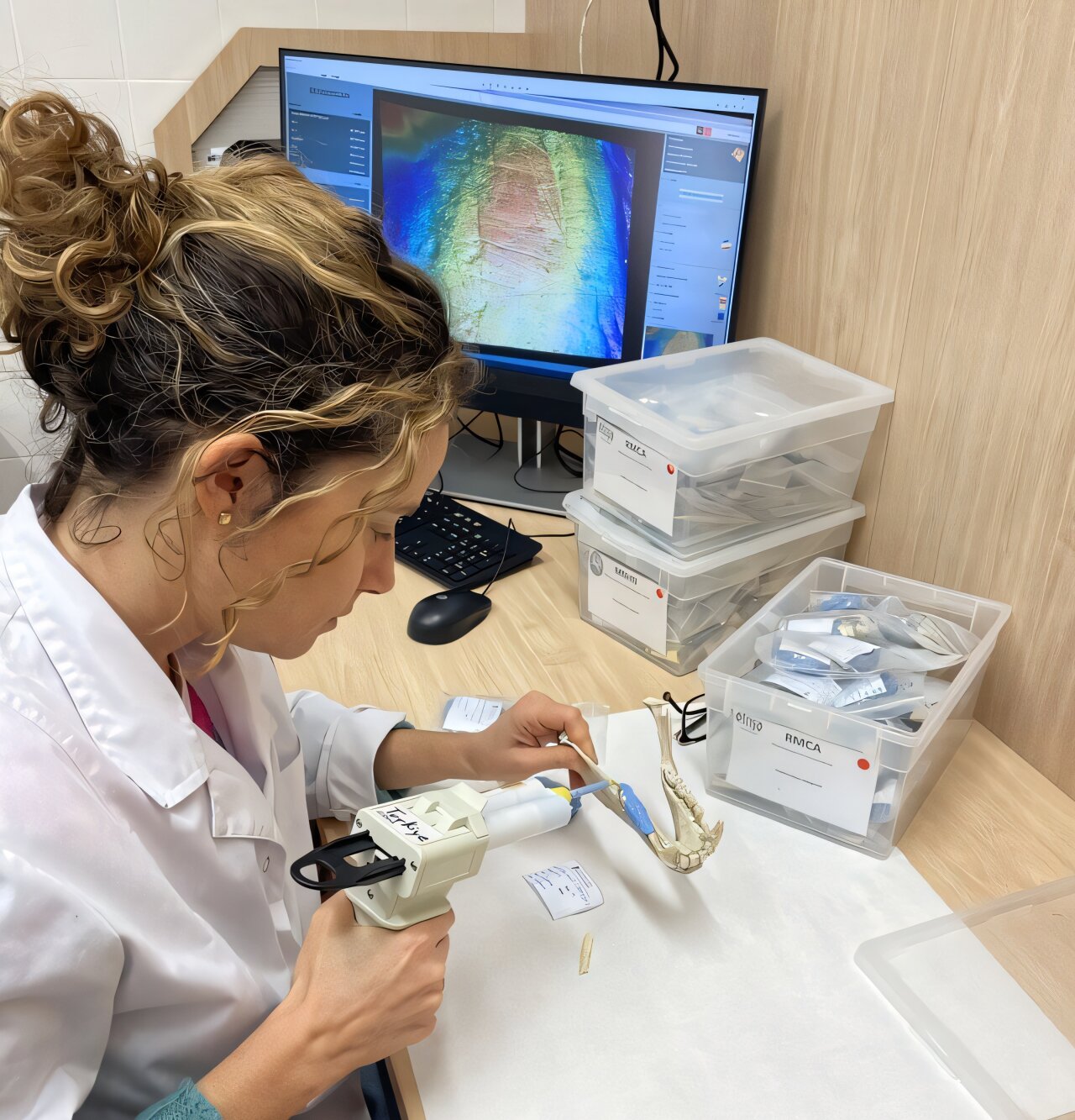
Researchers have developed an artificial intelligence method to read tiny three-dimensional marks on tooth enamel and use them to classify primate diets. The University of Barcelona said the approach could help paleoanthropologists compare fossil primates and hominins with living species whose diets are already known.
The work, published in Scientific Reports, focuses on dental microwear: microscopic damage left on enamel as animals chew. According to the University of Barcelona, those surface marks can indicate whether a diet included softer foods or more abrasive materials.
Laura M. Martínez, a professor in the University of Barcelona’s Faculty of Biology and Institute of Archaeology, led the study. The university described Martínez as a specialist in applying machine learning to paleoanthropology.
The research team also included Ferran Estebaranz of the University of Barcelona and the Milà i Fontanals Institute for Research in Humanities, Juan José Ibáñez of IMF-CSIC, Simón Rodríguez of Comillas Pontifical University, and Kristina Kit and David R. Insua of the Institute of Mathematical Sciences.
From 2D measures to 3D surfaces
The University of Barcelona said dental microwear has long been used to study the evolution of the human lineage. Martínez said earlier studies often relied on simpler two-dimensional measures and conventional statistics to link wear traits with diet.
The newer 3D methods generate many more variables, which can be difficult to interpret with standard statistical tools, Martínez said. In the study, machine learning models were trained on 3D dental wear surfaces from primates with known diets, allowing the software to detect patterns that are hard to read directly from the surface data.
According to the university, the study identifies which measurements are most useful for classifying dental microwear and offers an analytical framework that other researchers can use. The team said the models can distinguish among living primates with different diets, creating a reference point for fossil analysis.
Climate, ecosystems and fossil comparisons
The project pays particular attention to cercopithecids, a large primate family found in varied habitats. The University of Barcelona said the broader research effort is examining specimens from northern, eastern and southern Africa at sites dated between 4 million and 1 million years ago.
That interval included major climatic shifts that changed African ecosystems, according to the university. Martínez said cercopithecids are useful for this work because they lived in the same places and periods as early hominins, making them a comparison group for studying dietary adaptation during the Plio-Pleistocene.
The team’s aim is to use living primates and hunter-gatherer populations with known diets as comparative models for interpreting fossil teeth. Martínez said such references are needed before researchers can make stronger inferences about the diets of fossil primates and hominins.
The researchers plan to expand the dataset by adding more species, ecosystems and diet records. According to the University of Barcelona, the goal is to improve the accuracy and reliability of the models and combine dietary findings with other evidence on past climates and environments.
The paper is titled “Machine learning approaches to dietary classification from dental microtexture in primates.” Ferran Estebaranz-Sánchez and colleagues authored the study, which appears in Scientific Reports.
This story draws on original reporting from Phys.org.