
DNA and song identify new leaf warbler species in Japan
Researchers say the Tokara Leaf Warbler is distinct from Ijima’s Leaf Warbler, making it Japan’s first newly described bird species in decades.
By Priya Raghavan · Science Reporter
3 min read
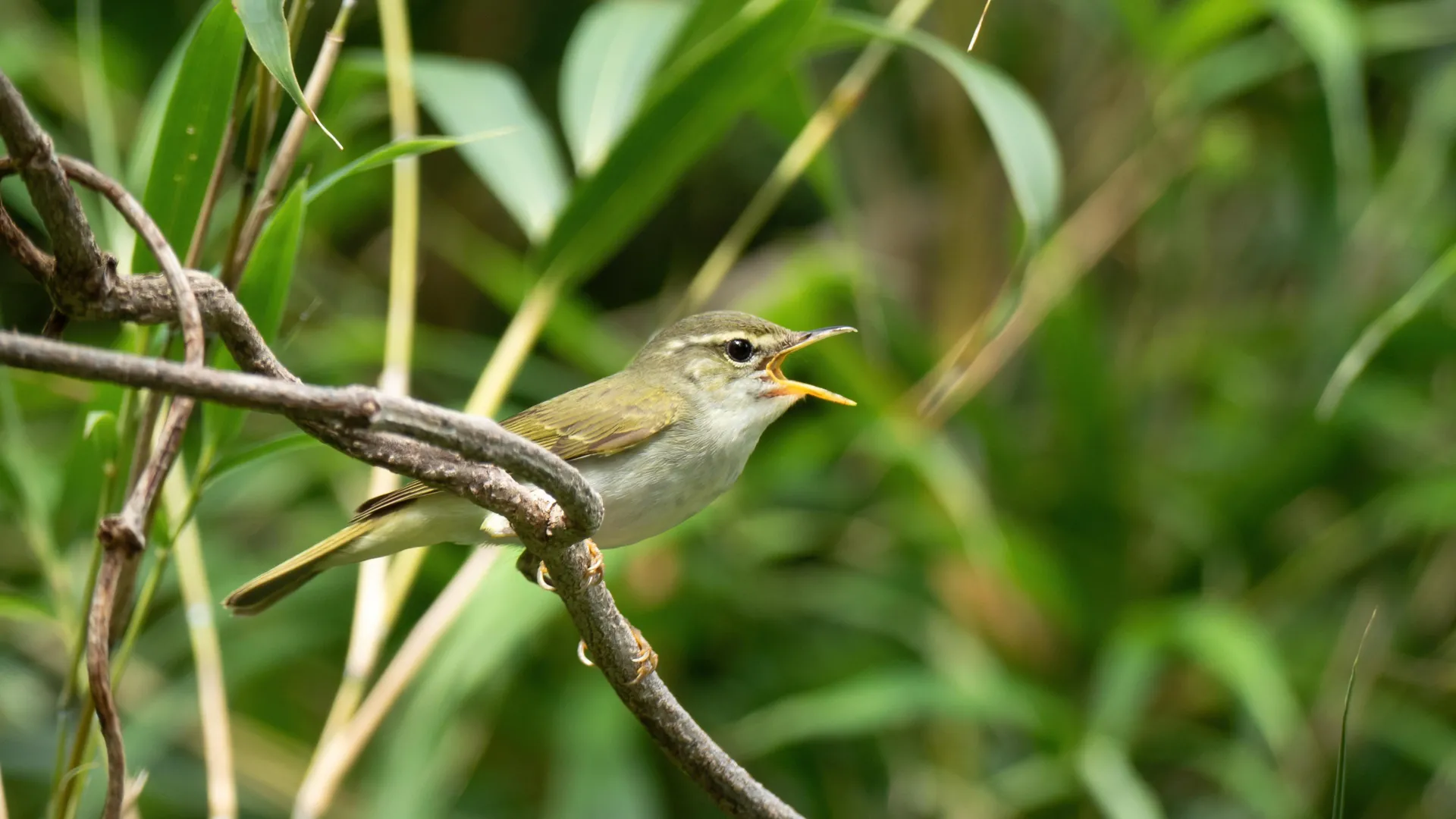
Researchers have identified a new bird species in Japan after DNA tests and song analysis showed that a rare island warbler was being counted as one species when it was two. Uppsala University said the finding adds the Tokara Leaf Warbler to Japan’s bird list and raises fresh conservation questions for two small island populations.
The work concerns Ijima’s Leaf Warbler, Phylloscopus ijimae, a migratory bird known from the Izu Islands south of Tokyo and the Tokara Islands about 1,000 kilometers farther southwest. According to Uppsala University, birds from the two island groups appear so similar that their separation was not evident from appearance alone.
Researchers from Uppsala University, the University of Gothenburg and two Japanese institutions described the Tokara Leaf Warbler, Phylloscopus tokaraensis, in a study published in PNAS Nexus. The university said it is Japan’s first newly described bird species since the Okinawa Rail, Gallirallus okinawae, was described in 1982.
Genetics pointed to a split
The research team first detected genetic differences between the island groups about a decade ago, according to Uppsala University. That led to broader work including field studies on the islands, examination of museum specimens and further DNA research.
Whole-genome analysis showed that the Tokara Islands birds differ clearly from the Izu Islands population, the university said. The researchers also compared vocalizations and found differences in song that supported the genetic evidence.
Per Alström of Uppsala University, one of the researchers behind the finding, said genetic methods can reveal biodiversity that would otherwise remain overlooked, especially as conservation decisions require more complete information. He also said the new species is hard to define by appearance because it does not visibly differ from Ijima’s Leaf Warbler.
Small ranges increase the stakes
Both species are tied to limited island habitats, meaning their populations are small, according to the researchers. The Tokara Islands have a total area of just over 100 square kilometers across 12 islands, Uppsala University said.
The study found very low genetic diversity in both species. The researchers said that could leave the birds more exposed to environmental change, habitat pressure and disease, though they also reported signs that the populations may have partly recovered after past declines.
Ijima’s Leaf Warbler is already listed as Vulnerable by the International Union for Conservation of Nature and has protection in Japan as a Natural Monument, according to Uppsala University. Because the Tokara Leaf Warbler appears to be at least as rare, the researchers recommend that both species be treated as Vulnerable.
The team also called for continued monitoring to track population changes. Uppsala University said the discovery shows how modern genetic tools can alter scientists’ understanding of species boundaries even among birds that have long been known to researchers.
This story draws on original reporting from ScienceDaily.