
Study finds ancient human DNA preserved on cave walls
Researchers say DNA recovered from caves in Portugal and Spain could help identify who used deep cave spaces when bones or artifacts are absent.
By Lucas Ferreira · Science & Environment Writer
3 min read
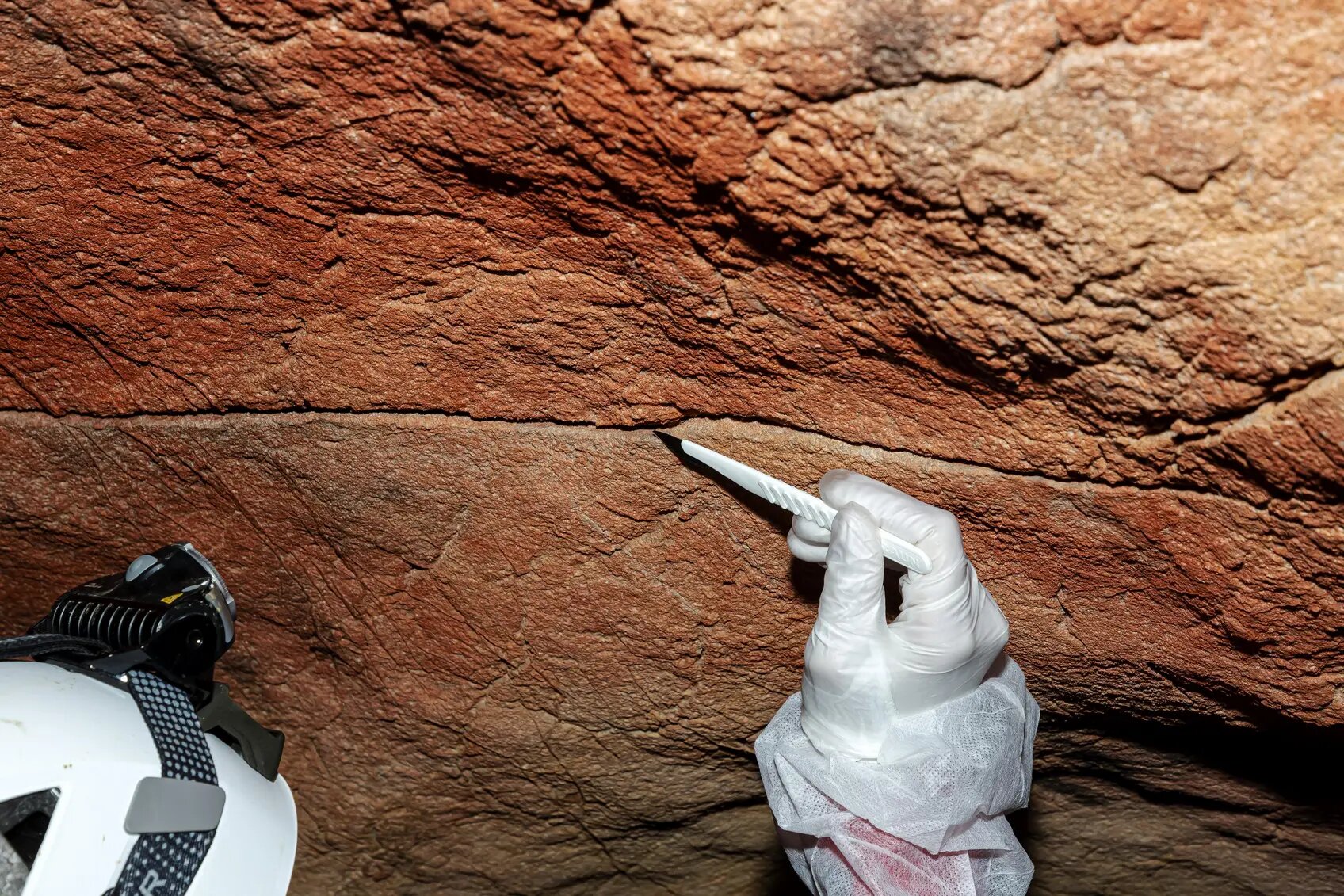
Researchers have recovered authentic ancient human DNA from cave wall material in Portugal and Spain, a finding they say widens the places scientists can look for traces of prehistoric people. The work could help researchers study cave use and rock art even when bones, sediments or tools do not contain usable genetic material.
The study, published in Nature Communications and described by the Max Planck Society, examined whether DNA can remain on cave surfaces for thousands of years. The research was carried out through the First Art project, led by researchers in Spain and Portugal with collaborators in Spain, Portugal, the U.K., China and Germany.
The team studied 24 rock art panels from 11 caves, according to the Max Planck Society. The material included simple markings, hand stencils, samples from pigmented and unpigmented wall areas, sediments, bones and an ancient bird-bone airbrush from Altamira Cave that had been used to apply red ocher.
Out of 54 samples, the researchers reported that five produced authentic ancient human mitochondrial DNA. One came from a calcite crust with pigment beneath it at Escoural Cave in Portugal, two came from unpainted wall areas in a deeper part of the same cave, and two came from unpainted samples near rock art in Covarón Cave in northern Spain.
The result surprised the team because some of the unpainted samples had been taken as controls, according to the Max Planck Society. The researchers said the finding shows that cave walls can retain human genetic traces even where there is no visible sign of human activity.
Two samples contained human DNA without detectable faunal mitochondrial DNA, which the researchers said points to direct deposition by people, possibly through saliva or other bodily fluids. Three other unpainted wall samples contained both human and animal DNA, which the team interpreted as more likely to have reached the wall indirectly through sediment movement or water.
Hipólito Collado Giraldo, an archaeologist and rock art specialist with the Extremadura government in Spain, said the team wanted to know whether techniques such as blowing or rubbing pigment onto rock could leave recoverable genetic traces. Alba Bossoms Mesa, the study’s first author and a doctoral researcher at the Max Planck Institute for Evolutionary Anthropology, said the team cannot tie the DNA directly to the making of the art.
The genetic findings were limited but informative, according to the study. The researchers reported that three samples appeared to come mostly from females, one mostly from males and one could not be assigned. Nuclear DNA from two Covarón wall samples placed the individuals within the Western hunter-gatherer genetic cluster, a result the team said fits other ancient Iberian evidence.
The Altamira airbrush did not yield ancient human DNA, despite the expectation that saliva might have survived on the tool, according to the Max Planck Society. The researchers attributed that failure to heavy modern human contamination and the small amount of material available for sampling.
The team said the method remains uncertain because ancient human DNA appeared in only one of the 24 rock art panels and in two nearby wall locations. Bossoms Mesa said preservation varies sharply, and the researchers now need to refine the approach and identify the conditions that improve the chance of recovery.
Matthias Meyer, a paleogeneticist at the Max Planck Institute for Evolutionary Anthropology and a senior author of the study, said cave walls can now be tested as records of past human presence. The researchers said further work may focus on more sites, art styles and techniques, including hand stencils and figurative art, where minimally invasive sampling is possible.
This story draws on original reporting from Phys.org.