
Cryogenic anti-spring cuts vibrations for low-temperature physics
A Leiden-built geometric anti-spring reduced vibrations to 0.185 hertz, a step toward quieter quantum and microscopy experiments.
By Priya Raghavan · Science Reporter
2 min read
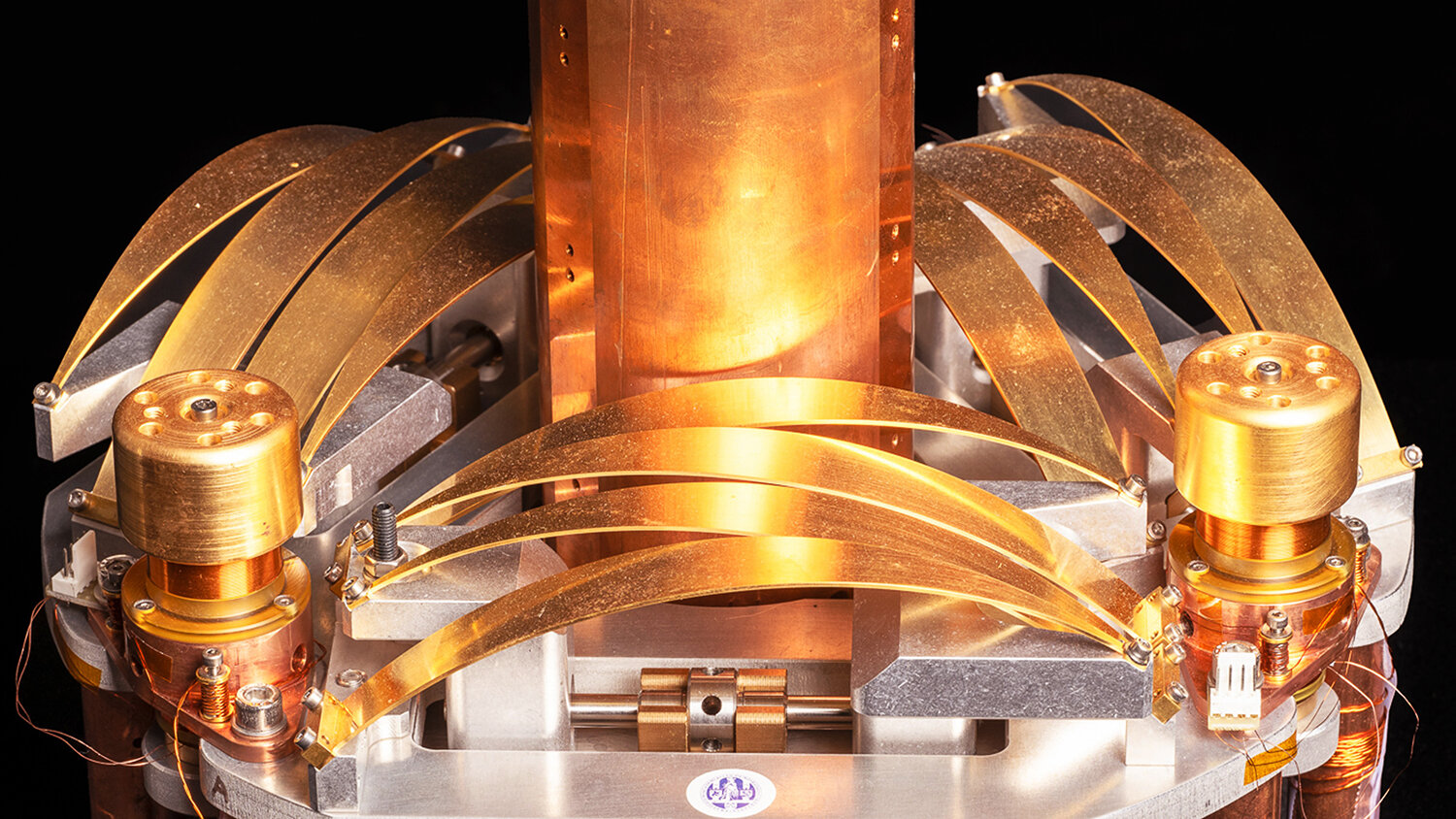
Physicists and instrument makers at Leiden University have demonstrated a geometric anti-spring vibration-isolation system that works in a cryogenic environment. Leiden University said the device could help sensitive low-temperature experiments by reducing mechanical noise from cryostat cooling systems, which can disturb measurements around 1 hertz.
The work was published in Measurement Science and Technology by Louw Feenstra and colleagues. According to Leiden University, the system reduced disruptive vibrations to 0.185 hertz, a level the team described as a major improvement for experiments that depend on very stable conditions.
Many precision physics measurements take place inside cryostats, which cool samples toward absolute zero. Leiden University noted that 0 Kelvin equals minus 273.15 degrees Celsius, and said the cooling equipment used in cryostats can create vibrations strong enough to affect results in delicate measurements.
The new device was designed and built by Leiden instrument makers Kees van Oosten and Hugo van Bohemen, who tested it in the lab with Feenstra. Leiden physicist Milan Allan said the project depended on combining the team’s technical and scientific expertise.
Van Oosten told Leiden University that the design was inspired by methods used in gravitational-wave research. He said collaboration with Alberto Bertolini of Nikhef helped the team develop a very soft suspension system that can operate at low temperatures without requiring a structure several meters tall.
The engineering was exacting. Van Bohemen told Leiden University that each spring needed adjustment within a few tens of micrometers, while the full system also had to keep working at extremely low temperatures.
A geometric anti-spring is meant to make a suspension behave as though it has an unusually low stiffness, allowing it to isolate slow vibrations. In this case, Leiden University said the milestone was showing that such a system can function under cryogenic conditions, where materials and mechanical assemblies face tight constraints.
The researchers see possible uses in ultra-stable microscopes, quantum experiments and future gravitational-wave detectors, according to Leiden University. The current system mainly reduces vertical vibration, and the team said later versions are expected to target horizontal vibration as well.
The publication is titled “Cryogenic geometric anti-spring vibration isolation system.” It appeared in Measurement Science and Technology with the DOI 10.1088/1361-6501/ae5404.
This story draws on original reporting from Phys.org.