
Brainstem neurons tied to mice’s ability to ignore distractions
Johns Hopkins researchers found that disabling a small set of brainstem cells made mice far more distractible in an attention task.
By Priya Raghavan · Science Reporter
3 min read
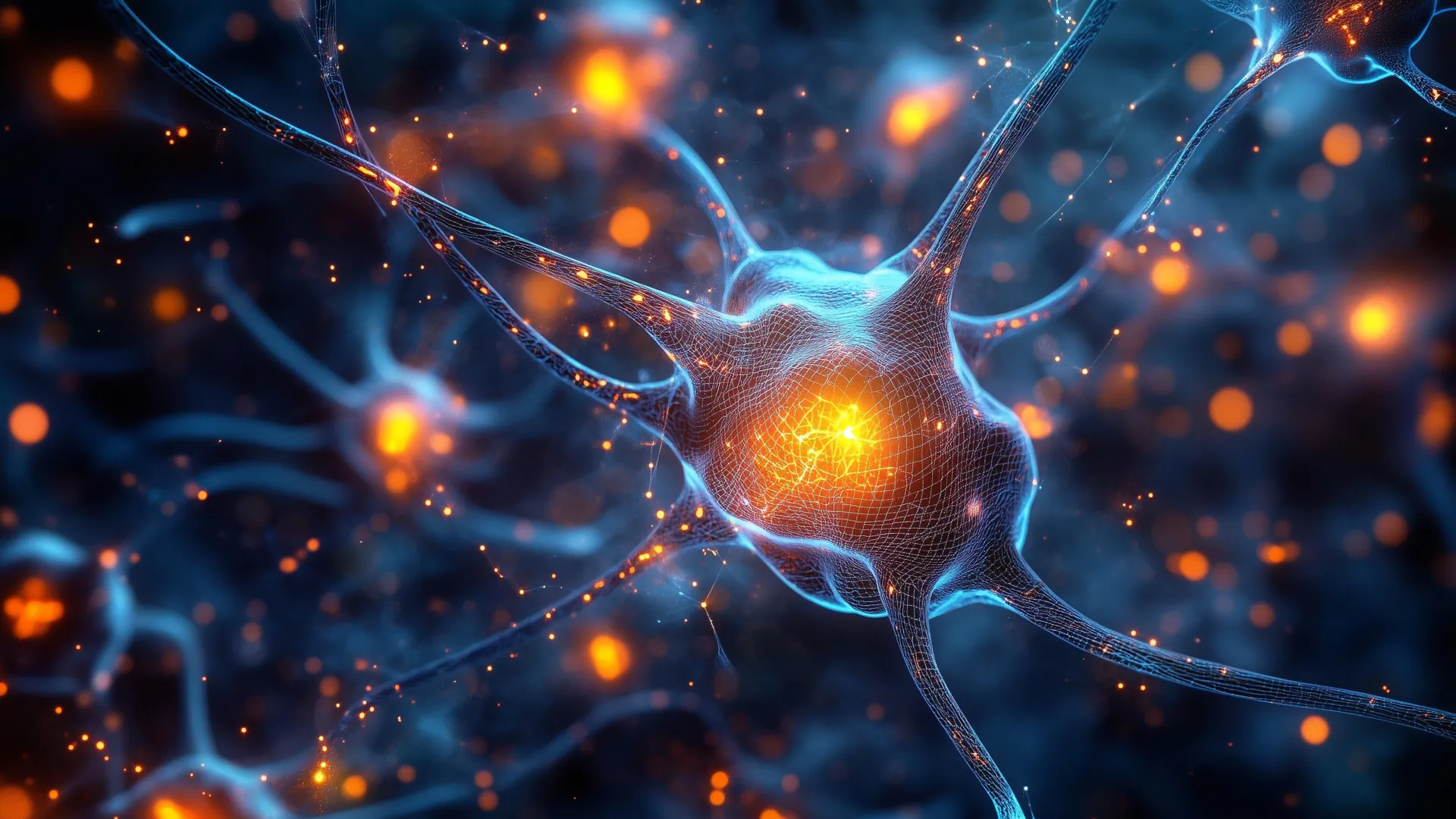
Johns Hopkins University researchers have identified a small group of brainstem neurons that mice need to stay focused when distracting visual cues compete for attention. The finding, reported in Nature Communications, points to an older attention-control system that could help scientists study disorders such as ADHD and autism.
The federally funded study focused on inhibitory neurons in a deep brain region shared across vertebrates, according to Johns Hopkins. The university said the cells appear to help the brain sort competing information and select the most relevant signal.
An older route for attention control
Researchers have long linked attention to the prefrontal cortex, a brain area especially developed in humans and other primates, Johns Hopkins said. But lead author Ninad Kothari, a postdoctoral fellow in the university’s Department of Psychological and Brain Sciences, said animals such as birds and fish can also focus without a highly developed prefrontal cortex.
The team investigated brainstem cells after earlier work by senior author Shreesh Mysore and other scientists in birds, frogs and turtles, according to the university. Johns Hopkins said the neurons studied in mice are found across vertebrate species, including birds and fish.
The study examined selective spatial attention, the ability to prioritize one location or signal while suppressing less relevant information nearby. Johns Hopkins said that process helps people, for example, follow one conversation in a noisy room or recognize someone in a crowd.
Mice lost focus when the cells were switched off
To test the cells’ role, the researchers trained mice on a screen-based attention task similar to those used in human studies, Johns Hopkins said. The animals received rewards when they responded correctly to visual information in front of them while ignoring cues that appeared to the side.
The mice could perform the task until researchers temporarily inactivated the brainstem neurons, according to the study summary. Kothari said the animals became “hyper distractable” when those neurons were turned off.
The researchers then checked whether the poor performance reflected problems with seeing or moving, Johns Hopkins said. The team ruled out those explanations and found that the deficit was specific to comparing competing cues and attending to the most important one.
Mysore, a neuroscientist who studies behavior-related neural circuits, said the effect resembled a key feature of ADHD: weak distractions pulling attention away. He said the same mice could ignore distractions again, including strong ones, after the neurons were reactivated the next day.
Possible path for future ADHD research
Johns Hopkins said the discovery may give researchers a more precise target for studying attention-related conditions, though the work was done in mice. The university said future studies may test whether the same neurons affect selective spatial attention in humans.
Mysore said current evidence suggests these neurons also exist in people, while noting that their role in human attention remains a hypothesis. Johns Hopkins said scientists may later examine whether the cells behave differently in people with ADHD or autism.
If those differences are found, the university said the work could help guide more targeted drugs or therapies. The study’s authors are Kothari, Arunima Banerjee, Qingcheng Zhang, Wen-Kai You and Mysore, all of Johns Hopkins University.
This story draws on original reporting from ScienceDaily.