
Study narrows Dutch agriculture’s claimed role in feeding the world
Wageningen researchers say Dutch farm exports rely heavily on imported feed and foreign land, limiting the country’s net contribution of calories and protein.
By Tom Brennan · Health & Medicine Correspondent
3 min read
The Netherlands’ reputation as a food-export powerhouse weakens when measured by land use, calories and protein rather than sales value, according to new research from Wageningen University & Research. The study matters because it challenges a common argument for high-volume Dutch agriculture: that the country helps feed the world through exports.
In a peer-reviewed paper published in Nature Food, the Wageningen team examined the Netherlands’ net role in food supply. The researchers counted exports, but also the food, animal feed and farmland the Dutch system draws from other countries.
Researcher Imke de Boer said export value gives an incomplete view of Dutch agriculture. When land use and imported feed are included, she said, the country’s net contribution to global food supply is much smaller than often assumed.
Imports change the export picture
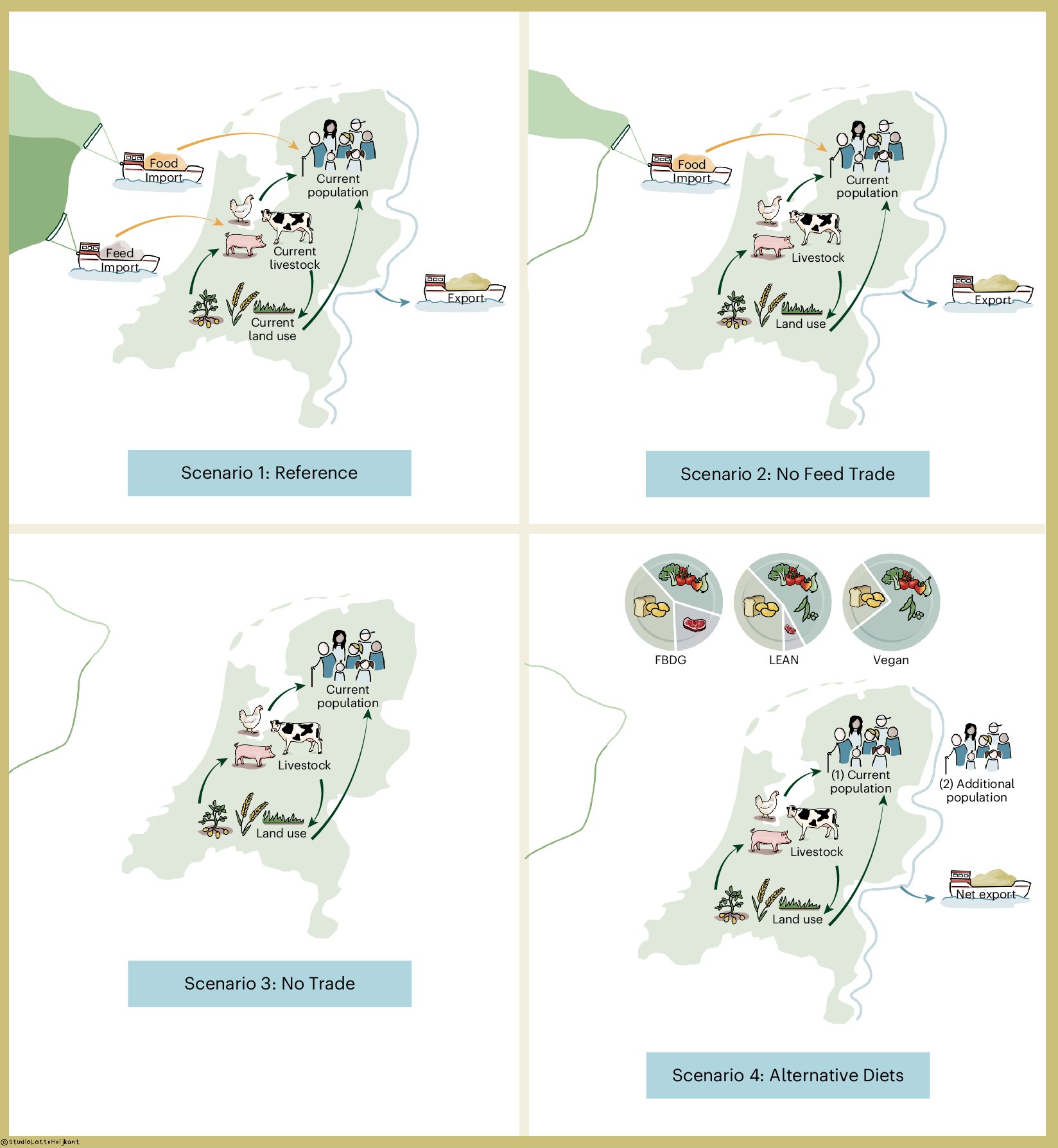
The researchers used an agroecological model to estimate how many people the Netherlands could feed with its own agricultural land. They also included the land abroad needed to produce imported food and feed.
Dutch agriculture uses about 1.6 million hectares, or 4 million acres, within the Netherlands, according to the study. Current production, consumption and exports also depend on about 4.7 million hectares, or 11.6 million acres, of agricultural land in other countries, much of it tied to animal feed imports.
That dependence alters the balance sheet. The researchers found that the Netherlands exports many farm products, yet imports more calories and protein than it sends abroad. By that measure, the country is a net importer of food energy and protein.
Livestock is central to the finding, according to the Wageningen team. Imported feed supports large animal numbers and exports of meat, dairy and other animal products. In a model scenario without animal-feed trade, animal-product exports fall while the need for foreign farmland drops sharply.
Diet choices affect land demand
The study found that the Netherlands could feed its current population from domestic farmland under the current diet only if products that cannot be grown locally, or can be grown only in small quantities, were replaced with local alternatives. That outcome would require all available Dutch agricultural land, leaving no space for export production or other goals such as nature expansion, bioenergy or sustainable bio-based materials.
The researchers also tested diets that use less land than the current Dutch diet, including the Dutch Wheel of Five guidelines, a vegan diet and a land-efficient LEAN diet. Under those scenarios, the model found the Netherlands could theoretically produce food for an additional 10 million to 18 million people.
Those gains would come with the same trade-off, the researchers said: using the land for food would leave no room for competing land uses. The LEAN diet used the least land in the model. It is mostly plant-based, with limited dairy, fish, eggs and meat from animals fed on grass, residues and byproducts that people cannot eat directly or that do not come from cropland suited to food crops.
A smaller export role
The Wageningen researchers did not argue for ending food trade. They said trade remains useful for products that cannot be grown in the Netherlands, such as coffee and citrus fruit.
They concluded that future Dutch food exports would fit the land-use limits better if they were mainly plant-based. Animal products could remain part of the system if animals largely consumed regional biomass unsuitable for direct human consumption, according to the study.
De Boer said the Netherlands still has an important agricultural role, but the researchers see that role less in high-volume exports and more in planting material, knowledge and innovations that help other countries produce and consume food more sustainably.
The authors described the work as a model-based assessment of theoretical possibilities. They did not evaluate the economic effects of changing agriculture, trade or diets, or the wider social consequences of those choices. The paper was authored by Ben van Selm and colleagues and published in Nature Food.
This story draws on original reporting from Phys.org.