
Cost of memory in organisms drives switch in decision strategy
University of Tokyo and RIKEN researchers modeled when memory pays off, linking resources and sensory uncertainty to decision strategies.
By Tom Brennan · Health & Medicine Correspondent
3 min read
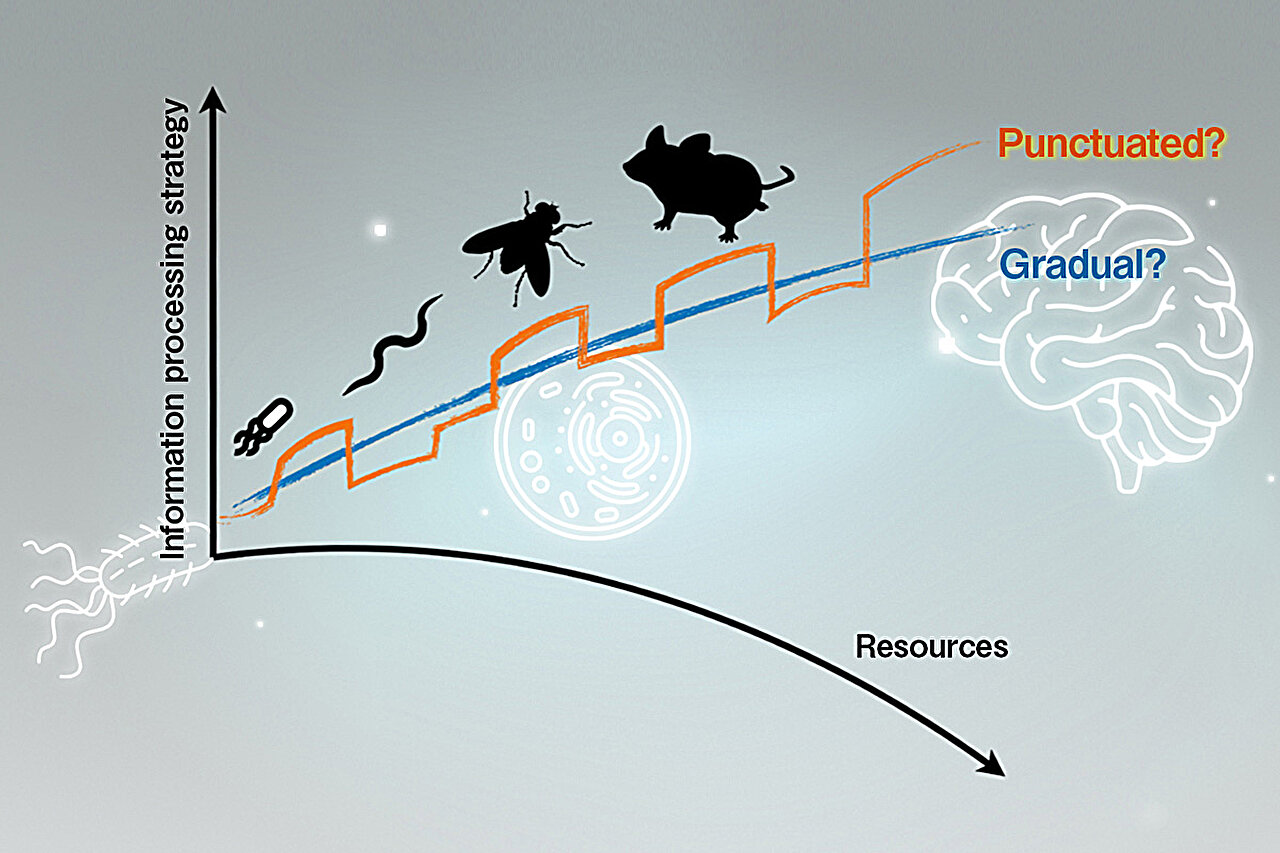
The cost of memory in organisms can determine whether they use past experience or respond only to what they sense at the moment, according to researchers at the University of Tokyo and RIKEN. Their mathematical model suggests that limited resources can trigger a sharp change in how living systems process information.
The work, published in Physical Review Letters, examines a problem that applies across biology: memory can improve decisions, but storing and using information takes energy and other resources. The researchers say that trade-off helps explain why organisms do not rely on memory under every condition.
When is memory worth the cost for organisms?
Memory is most valuable when current sensory information is neither highly reliable nor nearly useless, according to the study. If an organism can clearly read its surroundings, past observations add little; if the signals are too noisy, remembering them does not help much.
Between those two conditions, memory can improve estimates and decisions. The researchers describe this middle range as the point where past information can meaningfully fill gaps in uncertain sensory input.
How the model tested memory and sensing
The team built a simplified mathematical model of an organism trying to estimate events in a changing environment. The model allowed decisions to draw on two inputs: current sensory information and memories of earlier observations.
Because memory was assigned a cost, the model forced a trade-off between better accuracy and the resources needed to preserve and use past information. Takehiro Tottori, the study’s lead author, said the trade-off produced abrupt behavior in the model: under tight resource limits, relying on memory was not optimal, while above a certain level of available resources, memory suddenly became worthwhile.
That pattern is described in the paper as a resource-induced phase transition in estimation strategies. In practical terms, the model did not show a slow, steady increase in memory use; it showed a threshold where the best strategy changed from sensing-only to memory-based.
What sensory uncertainty changes
The researchers also found that resource levels alone did not decide whether memory helped. Sensory uncertainty changed the value of remembering.
Tetsuya J. Kobayashi, the senior author, said the findings show that organisms may avoid memory use even when memory could improve decisions in principle. According to Kobayashi, the usefulness of memory depends on both available resources and how uncertain the environment is.
The team said the results are consistent with recent behavioral experiments indicating that humans adjust their reliance on memory depending on resource availability and sensory uncertainty. The study presents a theoretical explanation for why such shifts could occur.
Why the study points to evolution
The researchers frame the findings as relevant to biological information processing at many scales, from single cells responding to their surroundings to animals searching for food. Different systems require different levels of memory capacity, and those requirements come with costs.
According to the University of Tokyo, the framework may help explain how more memory-heavy biological computing systems, including brains, could have emerged through evolution. The study does not claim to reconstruct that history, but it offers a mathematical basis for linking resource limits, environmental uncertainty and the diversity of information processing found in living systems.
This story draws on original reporting from Phys.org.