
Catalyst turns nitrate-polluted water into ammonia while making polymer feedstock
Tohoku University researchers reported an electrolysis system that treats nitrate pollution and produces glutaric acid using less energy-intensive chemistry.
By Lucas Ferreira · Science & Environment Writer
3 min read
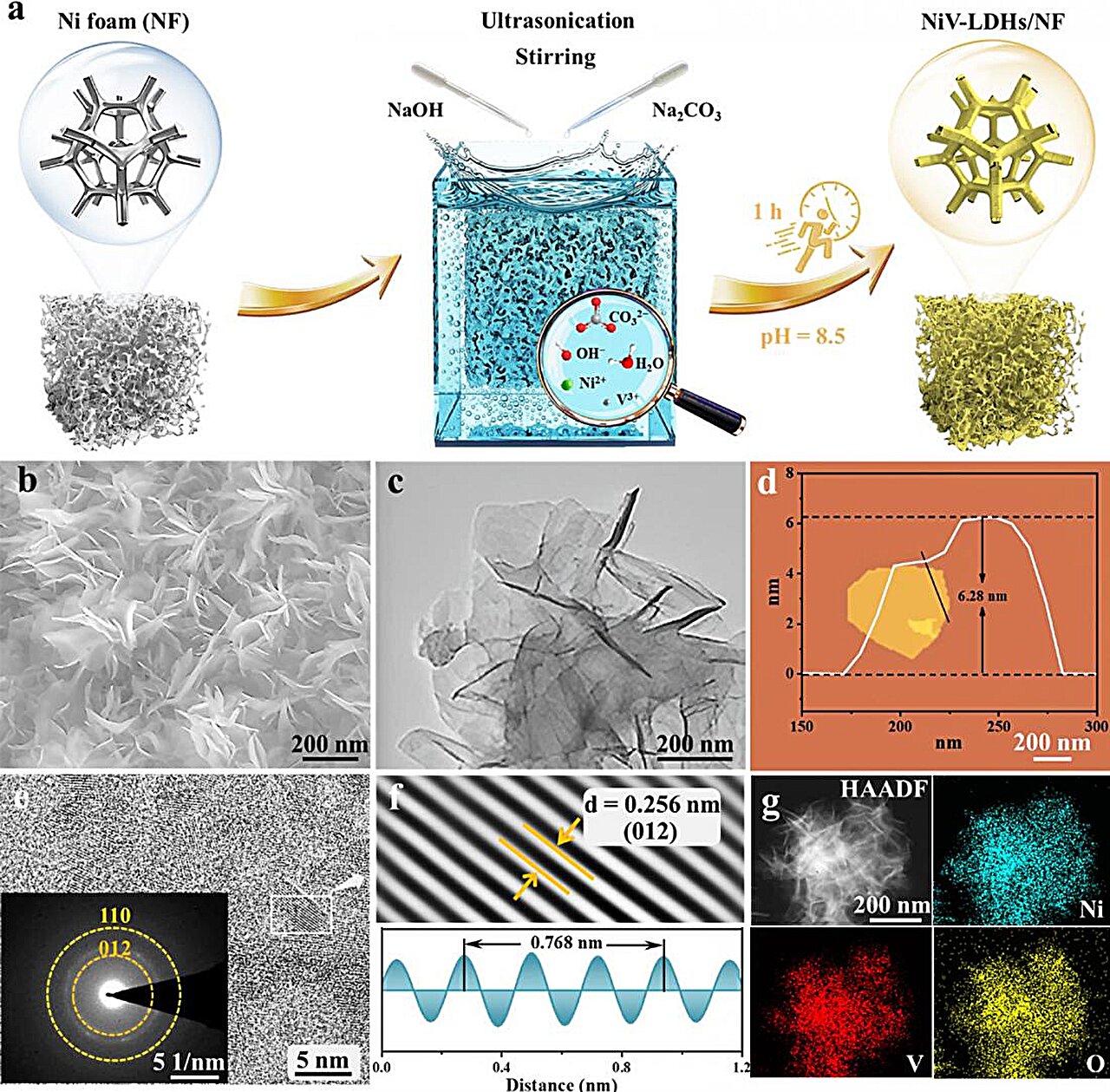
Researchers at Tohoku University have developed an electrochemical system that can treat nitrate-contaminated water while producing chemicals used in fertilizers and polymers. The work matters because the system links pollution cleanup with chemical manufacturing, two processes that are often handled separately.
The team reported the system June 8 in Angewandte Chemie International Edition. According to Tohoku University, the device uses a new electrocatalyst to run two useful reactions at the same time inside one electrolysis cell.
On one side, the system converts 1,5-pentanediol, a compound that can be derived from biomass, into glutaric acid. Glutaric acid is used in polymers and specialty materials, according to the university. On the other side, it reduces nitrate pollutants in wastewater into ammonia, a major ingredient in fertilizer and other industrial products.
Replacing an energy-heavy step
Conventional electrolysis often relies on oxygen evolution at the anode, Tohoku University said. That reaction helps the cell operate but uses substantial energy and does not yield a saleable chemical.
The new approach swaps that anode reaction for the oxidation of 1,5-pentanediol. The researchers said the change lets the system make glutaric acid while cutting energy demand compared with the conventional setup.
The catalyst is a nickel-vanadium layered double hydroxide, known as NiV-LDH. The team engineered nickel-oxygen-vanadium bridges within the material, atomic-scale structures that change the catalyst’s electronic behavior.
According to the study, those bridges help the catalyst speed both reactions in the electrolysis cell. Experimental measurements and computer simulations showed that interactions between nickel and vanadium atoms improve how reacting molecules bind to the catalyst surface.
High efficiency in lab tests
The researchers reported a Faradaic efficiency of 98.5% for converting 1,5-pentanediol into glutaric acid. Faradaic efficiency measures how much of the electrical input goes toward the target reaction.
For the nitrate-to-ammonia reaction, the study reported a Faradaic efficiency of 96.1%. Tohoku University said that result exceeded many previously reported catalysts.
The team also tested durability under solar power. In a continuous 240-hour run, the device produced nearly 56 grams of glutaric acid and more than 23 grams of ammonium chloride, an ammonia-derived compound, according to the university.
Hao Li, a distinguished professor at Tohoku University’s Advanced Institute for Materials Research, said the research aims to address environmental problems and chemical production needs in one process. He said the work shows that waste streams and renewable materials can be converted into useful products through an efficient, energy-saving system.
The researchers said they plan to scale up the technology and test it with real industrial wastewater. They also plan to study greener ways to separate the products and assess the system’s environmental and economic performance.
The paper was authored by Bin Liu and colleagues under the title “Modulating Ni‐O‐V Bridges in NiV‐Layered Double Hydroxides Microspheres for Robust Electrocatalytic Coupling of 1,5‐Pentanediol Oxidation and Nitrate Reduction.”
This story draws on original reporting from Phys.org.