
Bag of Bones fossil shows three-step Cretaceous food chain in Queensland
A Richmond ichthyosaur fossil preserves pterosaur remains in its gut and bite damage tied to a larger marine predator.
By Priya Raghavan · Science Reporter
3 min read
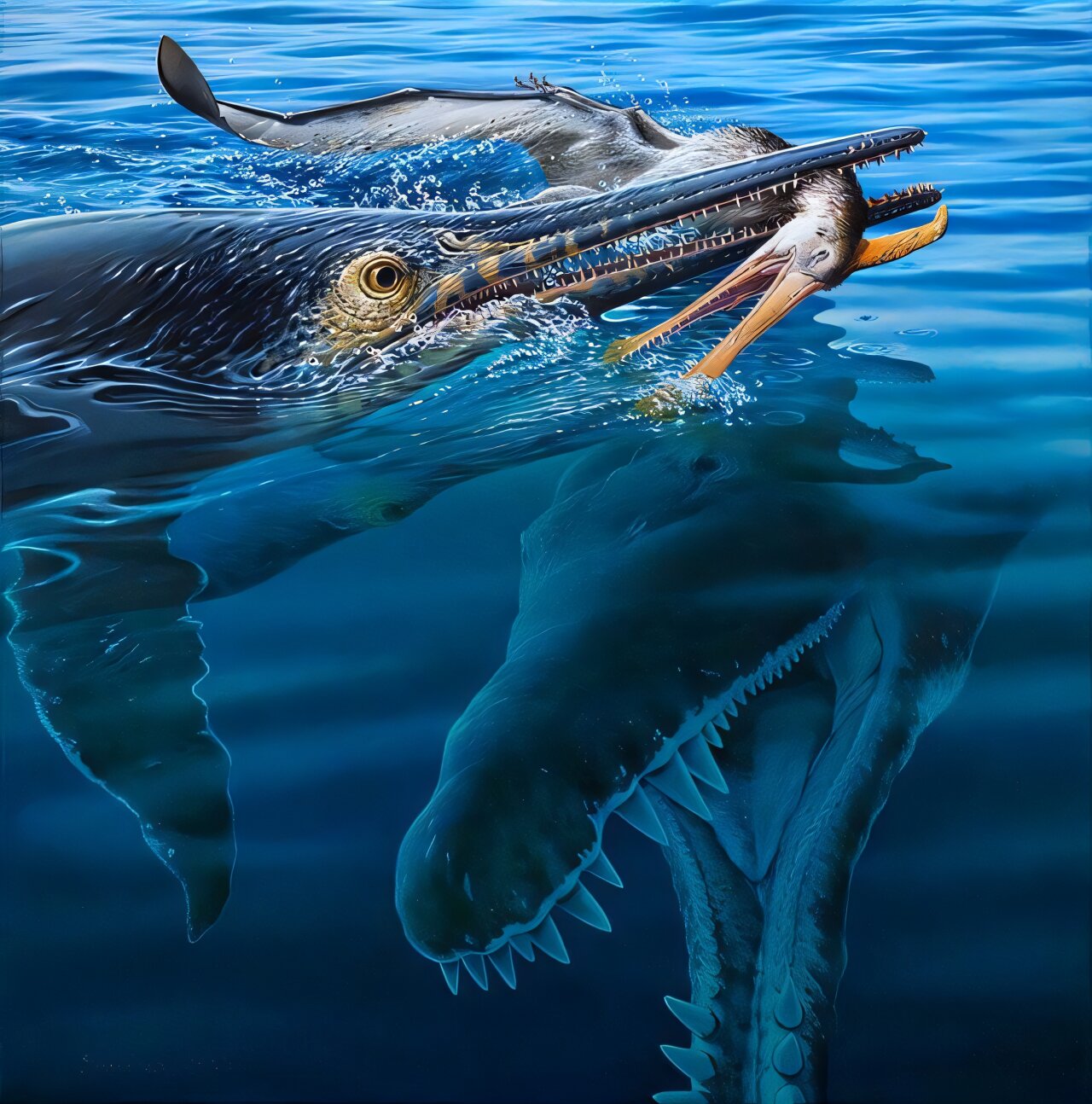
The Bag of Bones fossil found near Richmond in Outback Queensland has preserved rare evidence of one prehistoric animal eating another before being fed on itself. A study published in Gondwana Research says the specimen records a Cretaceous food chain involving a pterosaur, an ichthyosaur and the giant pliosaur Kronosaurus queenslandicus.
The research, led by University of New England research associate Dr. Matt White, describes a large ichthyosaur whose gut contents include fragments from a flying reptile. Dinosaur Experiences Australia said the finding is the first definitive evidence that an ichthyosaur consumed a pterosaur.
The same ichthyosaur also carries severe bite damage, broken bones and missing sections that researchers link to an attack or scavenging by Kronosaurus queenslandicus, one of the top predators in Queensland’s ancient inland sea. Dr. Dean Lomax, a paleontologist involved in the work, said the specimen gives direct evidence of behavior in the Eromanga Sea.
What is the Bag of Bones fossil?
The Bag of Bones fossil, nicknamed B.O.B., is a partly articulated ichthyosaur specimen collected from a public fossicking area near Richmond. Ichthyosaurs were marine reptiles with streamlined bodies; this one belonged to Platypterygius australis and was roughly six to seven meters long, according to the study summary.
The fossil began as loose bones found in August 2019 by Richmond visitors Mike and Cathy Freeman and Gary and Barb Flewelling. Kronosaurus Korner curator Kevin Petersen later returned to the site and uncovered the rest of the animal, with the excavation stretching almost eight meters across.
More than 600 hours of volunteer and staff preparation work went into the specimen, according to Dinosaur Experiences Australia. The prepared fossil is now held by Kronosaurus Korner Museum.
How scientists found the last meal
Researchers focused on several unusual rock nodules behind the ichthyosaur’s skull. Rather than cut them open and risk destroying evidence, they sent the material to the Australian Nuclear Science and Technology Organisation, where synchrotron CT scanning and neutron tomography allowed the team to examine the contents.
The scans showed fish remains, shell material, squid-like cephalopods known as belemnites and fragments of a pterosaur jaw. White said the team was struck by both the ichthyosaur’s size and the combination of bite marks and exposed pterosaur material near the skull.
The evidence sets out a three-level interaction:
- A pterosaur was eaten by an ichthyosaur.
- The ichthyosaur was later bitten or scavenged.
- The larger predator implicated by the damage was Kronosaurus queenslandicus.
The Eromanga Sea covered much of what is now Outback Queensland more than 100 million years ago. The study says the fossil adds direct evidence that its marine food webs included layered predator interactions, with hunters also becoming prey.
The paper, titled “Beneath the waves: Extraordinary dietary insights from a dismembered ichthyosaur from the lower Cretaceous,” was published in Gondwana Research. Scientific artist Dr. Peter Trusler contributed artwork for the publication, including revised depictions of Kronosaurus skull proportions and the interaction between the ichthyosaur and pterosaur.
This story draws on original reporting from Phys.org.