
Australia’s reefs face dual pressure from starfish and urchins
Researchers say coordinated control, predator protection and urchin harvests could reduce damage to coral and kelp reefs.
By Lucas Ferreira · Science & Environment Writer
3 min read
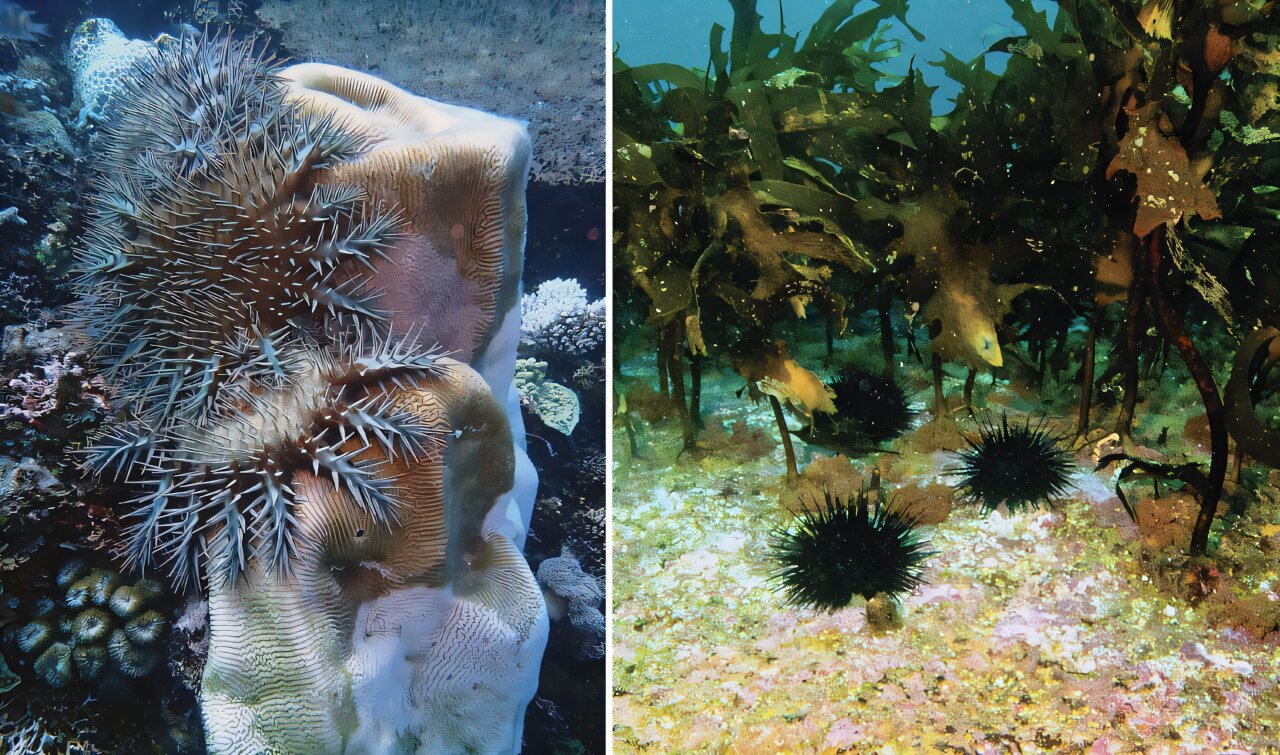
Australia’s tropical and temperate reefs are being damaged by outbreaks of two native marine animals: crown-of-thorns starfish on the Great Barrier Reef and long-spined sea urchins on the Great Southern Reef. Researchers Sterling B. Tebbett, John Keane and Scott Ling wrote in The Conversation that both species can reach unusually high numbers and strip reefs of the organisms that support them.
The researchers said crown-of-thorns starfish eat coral, adding pressure to a Great Barrier Reef already affected by climate change. Long-spined sea urchins graze kelp forests in southern waters, where their spread into Tasmania has caused extensive losses in recent decades.
Two native species, two different threats
According to the researchers, crown-of-thorns starfish are native to the Great Barrier Reef and rise and fall in repeated outbreaks. Since records became available in the 1950s, their numbers have increased by more than 1,500 per square kilometer about every 15 years, before crashing after they exhaust available coral.
Long-spined sea urchins are native to waters off mainland Australia, the researchers said, but warming oceans have allowed them to move south into areas that were once too cold, including Tasmania. The urchins can occur at densities hundreds of times higher than peak crown-of-thorns starfish densities, according to the study discussed by the researchers.
The urchin problem can also last longer, they said. Because the animals can survive on microalgae, drifting seaweed and invertebrates, barren reef areas created by heavy grazing can persist for decades.
Management gaps
The researchers said the two animals are handled differently by conservation agencies. Crown-of-thorns starfish on the Great Barrier Reef are monitored by the Australian Institute of Marine Science and managed by the Great Barrier Reef Marine Park Authority.
Long-spined urchins are spread across several state jurisdictions from northern New South Wales to southern Tasmania, the researchers said. They argued that the problem crosses state borders because urchin larvae can travel hundreds of kilometers south on prevailing currents.
Funding also differs sharply. The researchers said the federally backed crown-of-thorns starfish control program receives about $20 million a year and is planned years in advance, while funding for urchin control in Tasmania is about 40 times lower.
Commercial use adds another difference. Crown-of-thorns starfish have no economic value, the researchers said, while long-spined sea urchins can be harvested for roe, a seafood product valued in markets including Japan. They said the industry is not yet large enough to solve the problem, but expanding it could remove more urchins while helping protect reefs.
Predators as reef protection
The researchers also pointed to natural predators as part of reef management. A 2026 study identified the spangled emperor as a key predator of crown-of-thorns starfish on the Great Barrier Reef, and found six times more of the fish in areas closed to fishing.
In Tasmania, southern rock lobsters prey on long-spined sea urchins, according to research cited by the authors. The researchers said lobster populations can increase when fishing pressure eases, which may help limit urchin numbers.
Tebbett, Keane and Ling said reef protection should combine control programs, stronger research and measures that rebuild predator populations. They argued that coordinated action could reduce the damage from outbreaks as climate change increases stress on Australia’s reefs.
This story draws on original reporting from Phys.org.