
Medicare physician payment cuts linked to wider care gaps
A Neiman Institute study of 4.7 million patients found falling Medicare physician payments were tied to poorer access for underserved patients.
By Priya Raghavan · Science Reporter
3 min read
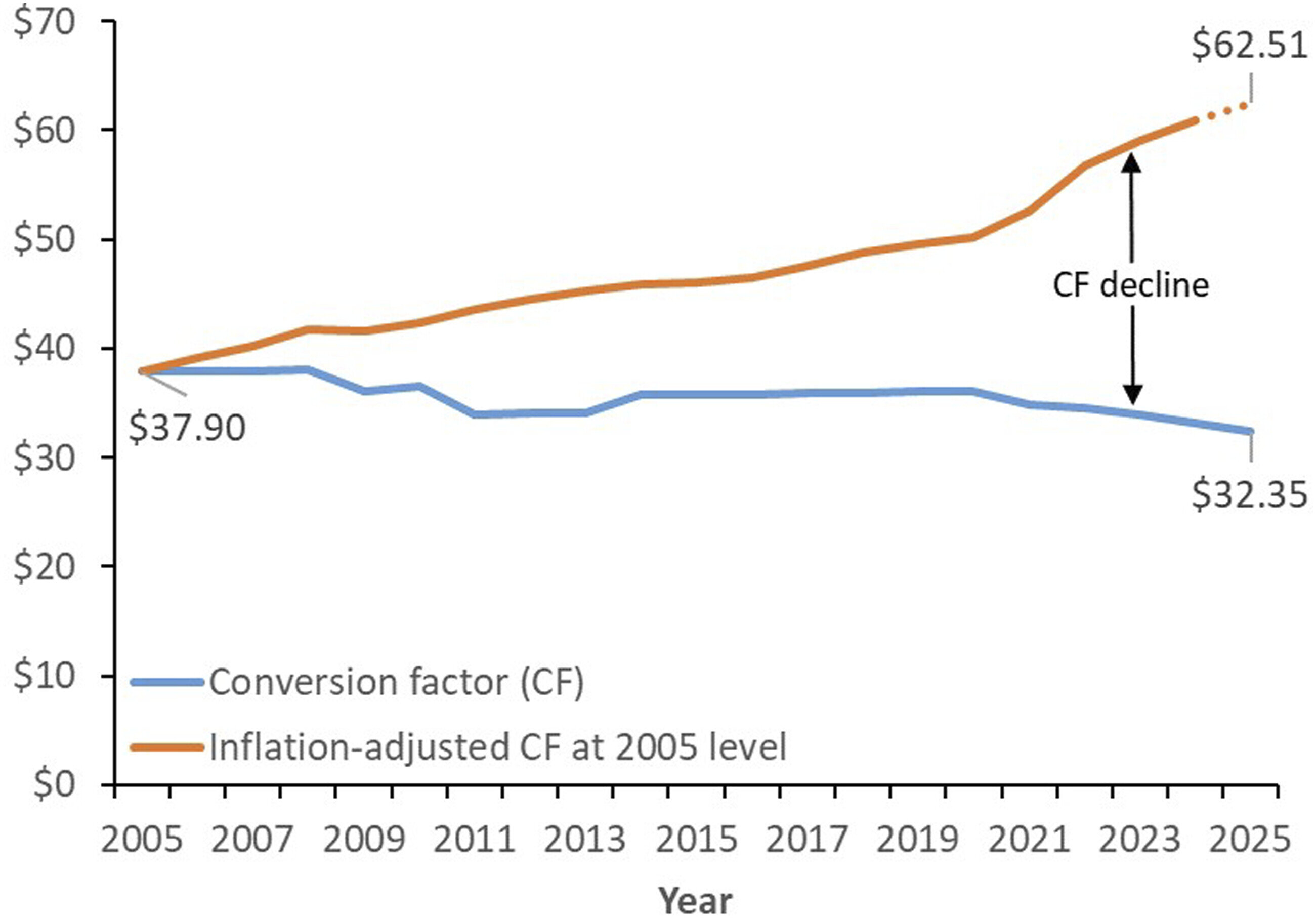
Medicare physician payment cuts over the past two decades were associated with growing gaps in patients’ ability to get care, according to a Harvey L. Neiman Health Policy Institute study. The findings point to the heaviest effects in rural communities, lower-income areas and disadvantaged neighborhoods.
The study, published in INQUIRY: The Journal of Health Care Organization, Provision, and Financing, examined 4.7 million unique patients from 2005 through 2023. Researchers compared access to clinicians across communities and modeled whether widening gaps were tied to declines in inflation-adjusted Medicare physician payment.
How do Medicare payment cuts affect patient access?
The researchers found that as Medicare payments lost value after inflation, underserved patients became less likely than more advantaged patients to see a physician, nurse practitioner or physician assistant. The pattern appeared across rural versus metropolitan areas, lower- versus higher-income communities, and less- versus more-advantaged neighborhoods.
The widest increase in the access gap was seen in low-income communities, according to the study. Eric Christensen, research director at the Neiman Institute and lead author, said the same pattern appeared across geography, income and neighborhood disadvantage, with primary care showing larger widening disparities than any other medical specialty.
The study also found that the trend could not be explained by patients shifting from physicians to nurse practitioners or physician assistants, because those clinicians were included in the access measure. The authors said that is relevant because Medicare has pursued policies intended to support primary care access.
What is the Medicare conversion factor?
Medicare pays clinicians through a formula that includes a rate set by the Centers for Medicare and Medicaid Services, known as the conversion factor. Because Medicare physician payment changes must be budget neutral under federal law, increases in one area can lead CMS to lower the conversion factor to offset added spending elsewhere.
According to Christensen, the conversion factor fell from $37.90 in 2005 to $32.35 in 2025, a 14.6% nominal decrease. After accounting for inflation, the researchers calculated that Medicare physician payments declined 48.3% over the two-decade period.
Joshua Hirsch, incoming chair of radiology at the Keck School of Medicine of the University of Southern California and a study co-author, said the impact of lower reimbursement on clinicians and health systems is better documented than the effect on patients. He said the study suggests patients lose access when payments fail to keep up with inflation, especially people who already face barriers to care.
Lauren Nicola, CEO of Triad Radiology Associates, a member of the American College of Radiology Board of Chancellors and a study co-author, said the findings frame Medicare reimbursement as a patient access issue as well as a physician payment issue. She said policymakers should weigh payment policy by its effect on patients.
Greg Nicola, a board member of Hackensack Meridian Health Partners, vice chair of the American College of Radiology Board of Chancellors and a study co-author, pointed to two options for Congress and CMS: tying Medicare physician payments to inflation and updating budget-neutrality thresholds. He said the $20 million threshold, unchanged since 1992, would equal $47.3 million in today’s dollars if adjusted for inflation.
This story draws on original reporting from Medical Xpress.