
22q11.2 deletion NAC therapy redirects neuron growth in mice
Virginia Tech researchers found NAC helped neurons grow and connect more normally in a mouse model of 22q11.2 deletion syndrome.
By Tom Brennan · Health & Medicine Correspondent
3 min read
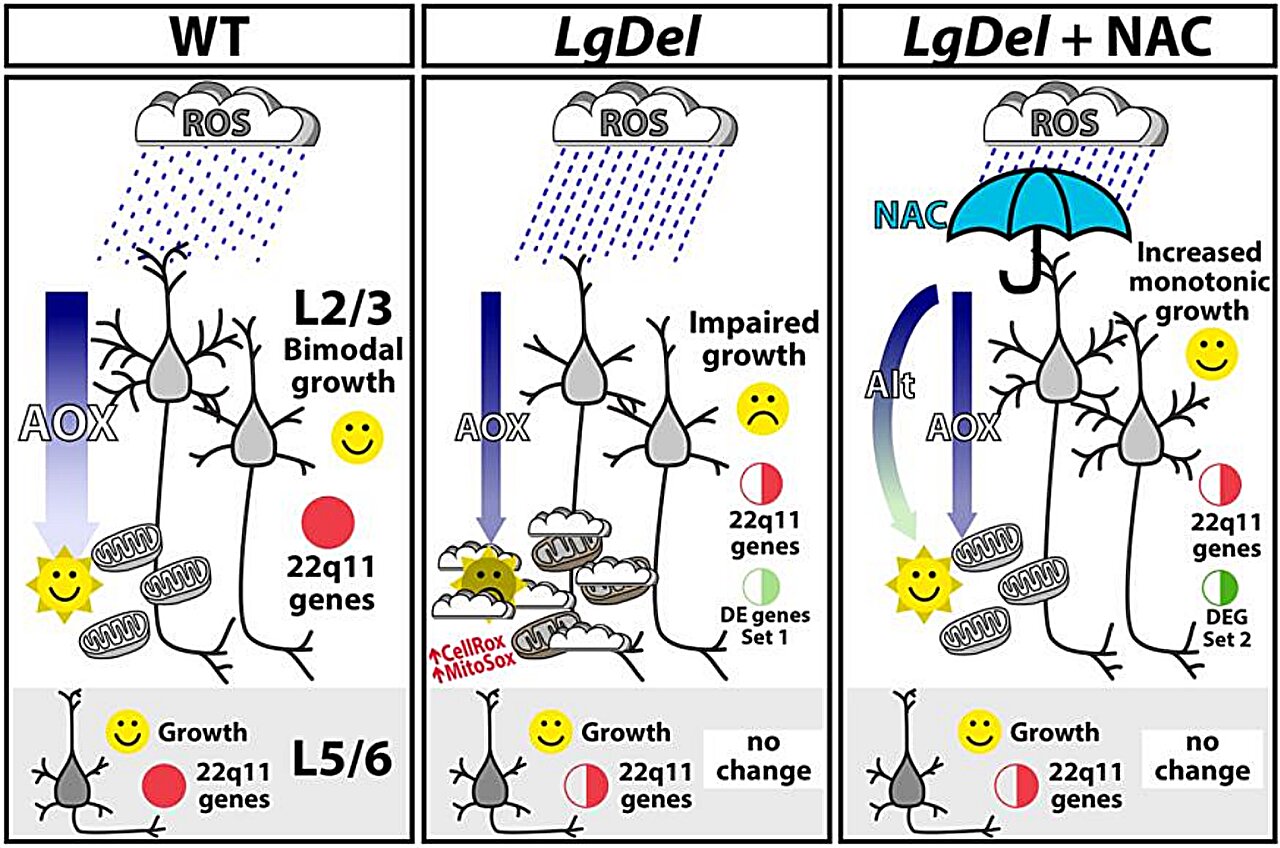
22q11.2 deletion NAC therapy helped brain cells develop more normally in a mouse model of the genetic disorder, according to researchers at Virginia Tech’s Fralin Biomedical Research Institute at VTC. The finding matters because the treatment appeared to work without repairing the deletion itself, pointing to a possible strategy for genetic brain disorders that targets disrupted cell processes instead of the missing DNA.
The study, published in Disease Models & Mechanisms, focused on N-acetylcysteine, or NAC, an antioxidant that can cross the blood-brain barrier. The Virginia Tech team reported that NAC reduced problems linked to oxidative stress, improved mitochondrial health, strengthened neuron-to-neuron connections and restored growth of dendrites, the branching structures that receive signals from other brain cells.
How could NAC therapy help 22q11.2 deletion syndrome?
22q11.2 deletion syndrome is a genetic condition caused by a missing segment of chromosome 22. Virginia Tech described it as the second most common genetic deletion disorder and one of the strongest known genetic risk factors for schizophrenia; it is also associated with autism spectrum disorder and cognitive and developmental challenges.
The syndrome affects about 1 in 2,000 to 4,000 births, according to Virginia Tech. In the mouse model, the researchers identified oxidative stress as a contributor to abnormal brain development. Oxidative stress means harmful oxygen-containing molecules build up inside cells and can interfere with normal cell function.
NAC was tested because it acts as an antioxidant. According to the study, reducing oxidative stress helped vulnerable neurons support healthier development, including better dendrite growth and stronger synaptic communication within brain circuits.
The treatment used a different genetic path
The researchers found that NAC did not restore normal activity in the genes directly disrupted by the deletion. Instead, the treatment activated a separate set of genes that helped neurons reach some of the same developmental outcomes through a different route, according to Anthony-Samuel LaMantia, the study’s corresponding author and a professor at the Fralin Biomedical Research Institute.
LaMantia said the results challenge the assumption that a therapy must return gene expression to its original state to be useful. He said the work suggests that alternate genetic programs can produce therapeutic effects when the original genetic pathway remains disrupted.
The paper identifies Shah Rukh and colleagues as the authors of the study, titled “An antioxidant therapy elicits distinct transcriptome responses in 22q11-deleted upper layer cortical projection neurons.” The work examined upper-layer cortical projection neurons, a class of brain cells involved in the circuits affected in the mouse model.
What changed in the mice?
Virginia Tech reported that NAC did not replace missing neurons. The treatment instead strengthened the connections among neurons that were already present, increasing the combined signaling strength in circuits tied to learning and cognitive flexibility.
Those cellular changes were accompanied by better performance on behavioral tasks that rely on the affected circuits, according to the researchers. The findings offer a possible explanation for how antioxidant treatment improved brain function in the model.
The researchers cautioned that more work is needed before the approach can be translated into therapies for people. LaMantia said the study points to the flexibility of gene networks as a possible treatment target for genetic brain disorders, especially when directly correcting a genetic or molecular defect may be difficult.
This story draws on original reporting from Medical Xpress.