
Engineered gut probiotic is set for human testing in Australia
UBC Okanagan researchers say a modified E. coli probiotic designed to grow during gut inflammation will enter clinical trials in August.
By Priya Raghavan · Science Reporter
3 min read
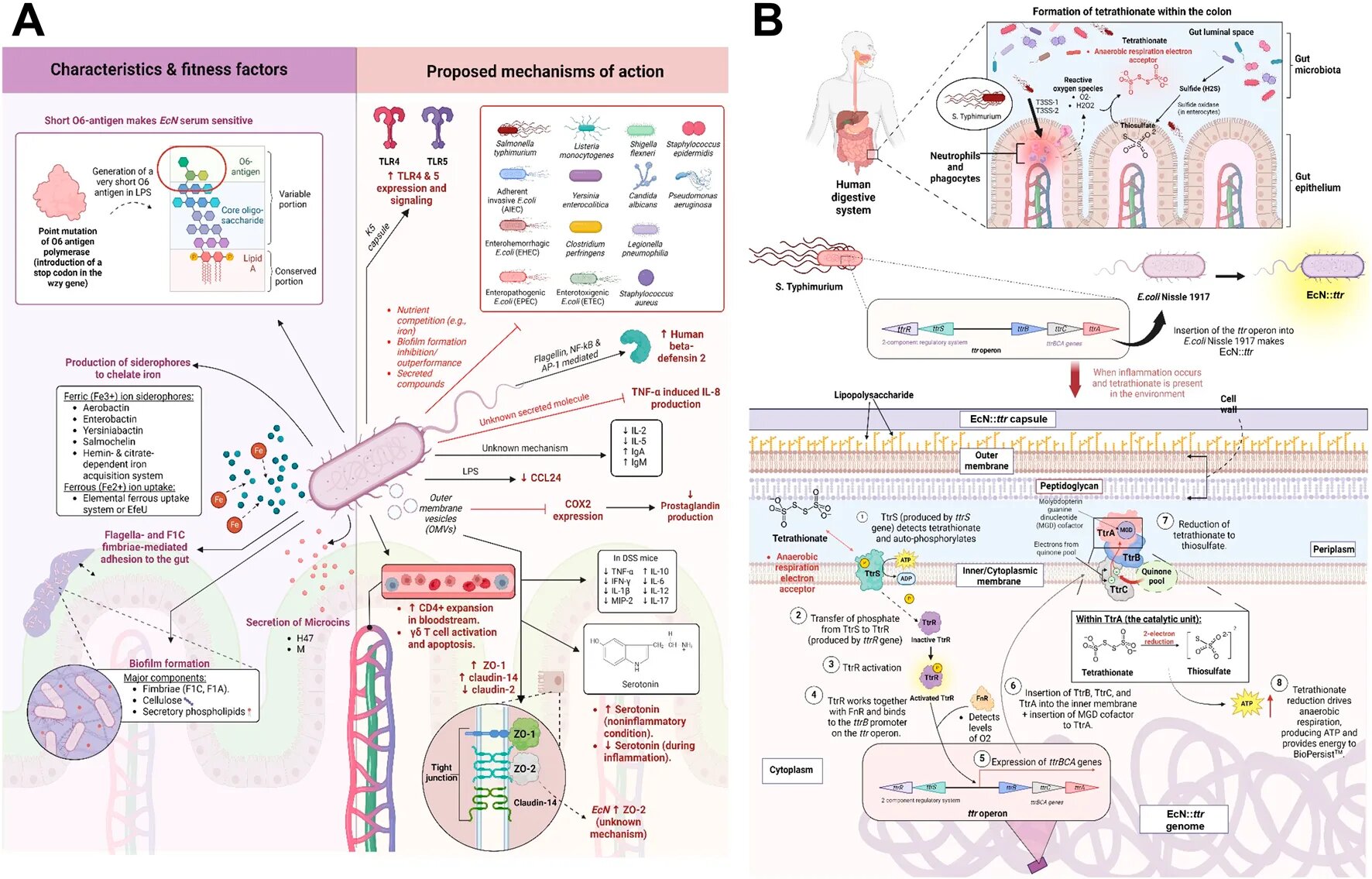
An engineered probiotic designed to survive in an inflamed intestine is scheduled to move into human clinical trials in Australia in August, according to the University of British Columbia Okanagan. The work matters because ordinary probiotics have often struggled to show clear clinical effects in inflammatory bowel disease when inflammation is active.
UBC Okanagan said the candidate therapy grew out of more than a decade of research led by Deanna Gibson, a biology professor in the Irving K. Barber Faculty of Science. The strategy is described in a proof-of-concept study in Gastroenterology.
The researchers focused on Escherichia coli Nissle 1917, a probiotic strain that UBC Okanagan said has been used in humans for intestinal conditions for more than 100 years. The university said the unmodified strain can help maintain remission in ulcerative colitis but has limited effect once disease becomes active.
The UBC Okanagan team altered the bacterium by adding genes that allow it to use a compound produced during inflammation as an energy source. According to the researchers, that design gives the strain an advantage in the gut at the point when inflammation would usually make it harder for probiotics to persist.
Andrea Verdugo-Meza, who completed her Ph.D. in Gibson’s lab, and Sandeep Gill, a former master’s student in the lab, carried out the study, according to UBC Okanagan. The university said Verdugo-Meza led work testing how the system functions, including immune-cell experiments and animal studies.
In mouse models of colitis, the study reports, the engineered strain expanded during active disease and declined as the animals recovered. UBC Okanagan said the modified probiotic performed better than the original probiotic and standard first-line drugs used for mild to moderate ulcerative colitis in the preclinical tests.
The university said one chronic disease model showed a sharper difference: untreated mice and mice given the standard probiotic developed severe colitis, while none of the mice receiving the engineered probiotic had severe colitis by 16 weeks.
The researchers also reported effects beyond a single inflammatory pathway. According to UBC Okanagan, the live biotherapeutic appeared to reinforce the gut barrier, shift immune activity toward a less inflammatory state and change the resident microbiome in favor of more beneficial bacteria. The university said those effects were seen with low and infrequent dosing and without antibiotics.
The human trials follow testing in several mouse models, lab-grown human colon tissue and a pig study that UBC Okanagan said supported regulatory preparations for human testing.
The strain has been patented by UBC and licensed to Melius MicroBiomics, a UBC Okanagan spinoff co-founded by Gibson, according to the university. The researchers said the same general approach could point toward other microbiome-based treatments if microbes can be designed to grow at specific disease sites and times.
This story draws on original reporting from Medical Xpress.