
Low-intensity ultrasound shows early promise in joint inflammation study
UAH researchers found that continuous low-intensity ultrasound shifted immune-cell signals in lab tests toward a repair-linked state.
By Priya Raghavan · Science Reporter
3 min read
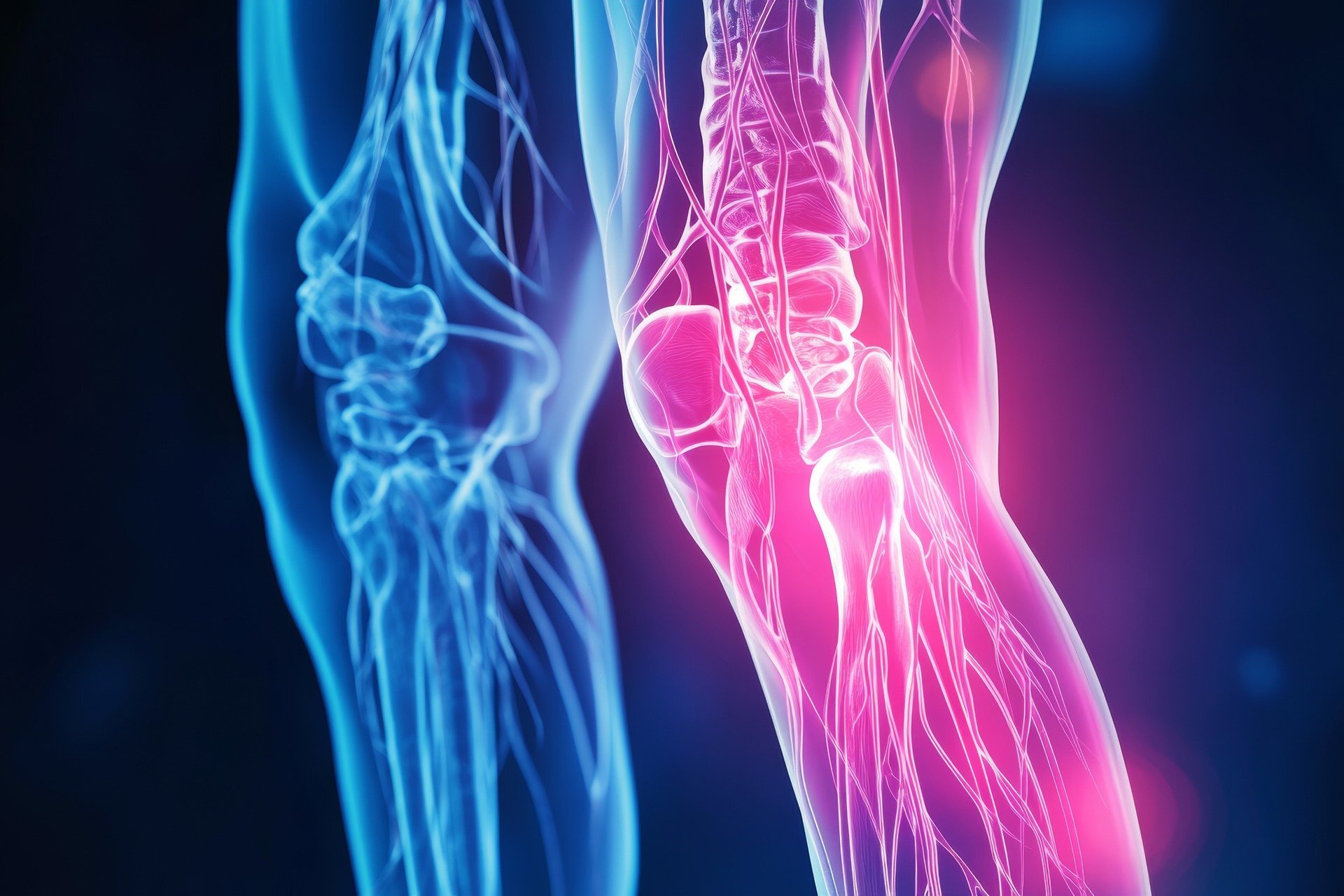
Researchers at the University of Alabama in Huntsville reported that continuous low-intensity ultrasound changed immune-cell activity in lab tests, reducing inflammation-linked signals and increasing markers tied to tissue repair. The finding matters because persistent inflammation after joint injury can contribute to post-traumatic osteoarthritis, though the work has not yet been tested in animals or patients.
The study was published in Scientific Reports by a UAH team led by Anuradha Subramanian, a professor of chemical and materials engineering, according to the university. Shahid Khan conducted the biological experiments as part of his doctoral work, while Satyaki Roy, a professor of mathematical sciences, developed computational and statistical methods used in the analysis; graduate student Owen Trippany also contributed.
Focus on macrophages
The research centered on macrophages, immune cells that help control both inflammation and repair after injury. UAH said the team studied whether ultrasound could influence macrophages that had been pushed into an M1 state, a condition associated with inflammatory activity.
Subramanian said, according to UAH, that injury draws in M1 macrophages that help clear damaged tissue and M2 macrophages that support recovery. If M1 activity persists, she said, the inflammatory environment can damage healthy tissue and play a role in post-traumatic osteoarthritis.
The team tested whether continuous low-intensity ultrasound could shift macrophage behavior away from that prolonged inflammatory pattern and toward an M2-like state linked with repair. Roy said, according to UAH, that the approach is of interest because it is noninvasive and does not rely on drugs.
A lab model closer to joint injury
To model the conditions found after a joint injury, the researchers used fibronectin fragments, which are molecules generated during tissue breakdown, UAH said. The university said that method was intended to better reflect the environment inside an injured joint than standard lab approaches that trigger inflammation more generally.
The analysis also used transcriptomics, which examines gene activity on a broad scale. Roy combined that with a computational method called differential clustering, according to UAH, to identify groups of genes whose behavior changed together after ultrasound exposure.
That method let the researchers look beyond individual gene changes and assess broader patterns in how immune cells responded. Roy said, according to UAH, the approach showed how coordinated gene activity shifted under ultrasound stimulation.
Early-stage results
The study found that continuous low-intensity ultrasound lowered markers associated with inflammation and raised markers associated with an M2-like, repair-oriented macrophage state, according to UAH. The findings suggest ultrasound could help influence immune behavior in ways that support healing after joint injury.
The work remains at the laboratory stage, and UAH did not report any clinical results in patients. The researchers said the approach could eventually be studied as a complement to future strategies aimed at slowing osteoarthritis progression and improving recovery after joint trauma.
Subramanian said, according to UAH, that the next phase will test the findings in animal models of early post-traumatic osteoarthritis and examine how ultrasound-based immune modulation affects longer-term tissue repair. The paper is titled “Continuous low-intensity ultrasound influences the transcriptomic profile in M1 macrophages by downregulating inflammation and promoting M2-like markers,” with DOI 10.1038/s41598-026-53228-6.
This story draws on original reporting from Medical Xpress.