
U.S. pours $46 billion into high-tech Mexico border wall
The Trump administration is expanding steel barriers, AI-enabled towers and sensors as critics question the cost and impact on border communities.
By Hana Yoshida · Markets Reporter
4 min read
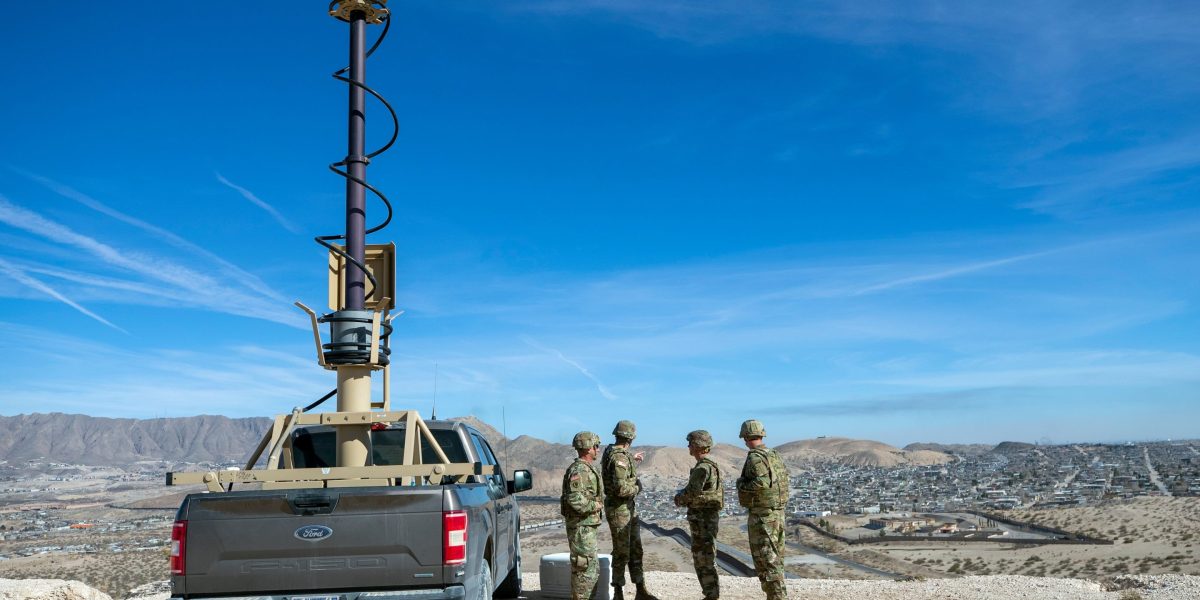
The Trump administration is using $46 billion approved by Congress to expand a high-tech barrier system along the U.S.-Mexico border, according to The Associated Press. The project matters because it pairs new steel fencing with artificial intelligence, sensors and surveillance towers at a time when border crossings have fallen to the lowest levels in decades.
Customs and Border Protection Commissioner Rodney Scott told Congress the administration views the project as a “smart wall” rather than only a physical barrier. He said technology helps agents cover more ground and spend less time monitoring screens.
CBP is awarding contracts worth tens of billions of dollars to extend and upgrade the wall, AP reported. Homeland Security Secretary Markwayne Mullin said an initial section is expected to be completed by around this time next year, while Scott said crews are building about 6 miles of wall each week.
According to AP, hundreds of miles of wall were already in place before President Donald Trump returned to office. CBP had added 74 miles as of mid-June 2026 and plans to build hundreds more. The agency does not plan to place a wall along about 535 miles of the roughly 2,000-mile border, where officials say difficult terrain already acts as a barrier.
In those areas, CBP plans to use towers and ground sensors instead, AP reported. The agency is also adding roads, lighting and surveillance equipment to sections already built. In Texas, it is using 12- to 15-foot cylindrical buoys in river sections of the border to deter crossings by migrants and smugglers.
Technology draws scrutiny
AP reported that the technology push reflects CBP’s broader shift since the Sept. 11, 2001, attacks into an intelligence and surveillance agency with tools reaching beyond the border itself. Critics say the expansion risks harming nearby communities and pushing migrants into more dangerous areas.
Ricky Garza, border policy counsel at the Southern Border Communities Coalition, told AP that surveillance technology is spreading across border areas and that the wall, in its different forms, damages communities. He said residents have found ground sensors on private property without permission.
Nayda Alvarez, whose family owns land along the Rio Grande about 125 miles from the Gulf of Mexico, told AP she has found cameras on her family’s land. She also said she recently saw a surveillance tower about a quarter-mile downriver from her home and questioned whether the buildout made residents safer.
Dave Maass, director of investigations at the Electronic Frontier Foundation, told AP the technology has made the border region hostile for local residents and migrants. The group has published a guide to help people identify different surveillance towers in use near the southern border.
Those towers include fixed systems using video, infrared and radar equipment with an approximately 8-mile range, as well as mobile systems mounted on vehicles, AP reported. Some newer towers operate autonomously, scanning areas, using AI to assess what they detect and alerting Border Patrol agents to activity deemed suspicious.
Supporters say autonomous systems keep agents in the field rather than at monitors, AP reported. Critics warn that more AI use at the border raises risks tied to bias and flawed decision-making.
The Republican tax and spending law passed last summer requires CBP to buy only autonomous towers, and the agency is deploying 95 additional units, according to AP. The agency also uses buried fiber-optic cables, ground sensors and trail cameras to detect movement and smuggling routes.
Cost questions remain
Taxpayers for Common Sense, a nonpartisan watchdog group, has questioned whether the wall spending gives the public enough value, AP reported. Josh Sewell, the group’s director of research and policy, called for stronger review of the technology and criticized what he described as weak oversight, a charge CBP denied while citing oversight mechanisms.
AP noted that a previous effort to build a technology-based “virtual wall” was canceled in 2011 under Homeland Security Secretary Janet Napolitano after cost overruns, technical problems and delays.
In Texas’ Big Bend region, opposition to wall plans drew bipartisan support, especially around a state park, a national park and a wildlife area, according to AP. CBP now says it does not plan to build a 30-foot bollard wall there, but intends to use patrol roads, vehicle barriers and detection technology.
Clara Benson, a founder of the No Big Bend Wall coalition, told AP residents remain worried that lighting and other border infrastructure could damage an area known for dark skies and star views.
This story draws on original reporting from Fortune.