
Poll finds World Cup buzz has limits for U.S. soccer
An Ipsos Sports survey found strong enthusiasm among U.S. soccer fans, but far broader public interest in the World Cup remains modest.
By Maya Lindqvist · Senior Technology Correspondent
3 min read
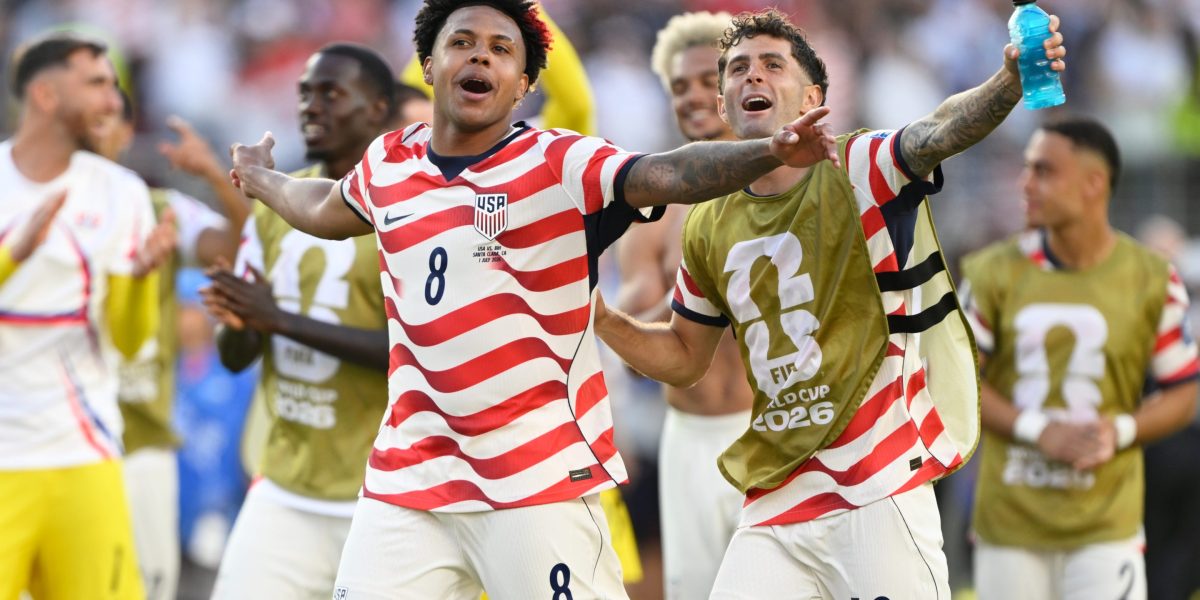
The World Cup is energizing U.S. soccer fans, but a new Ipsos Sports poll suggests the tournament has not turned most Americans into followers of the sport. The survey, conducted as the United States advanced in the tournament it is co-hosting, shows a wide gap between soccer fans’ excitement and the broader public’s interest.
Ipsos Sports conducted the poll June 26-28, after the United States moved out of the group stage and before its first knockout-round win over Bosnia-Herzegovina, according to The Associated Press. The survey included 1,027 adults drawn from Ipsos’ probability-based KnowledgePanel and had a margin of sampling error of plus or minus 3.5 percentage points.
Among U.S. soccer fans, about 6 in 10 said they were extremely or very excited that the U.S. men’s national team reached the knockout round, Ipsos found. Among all U.S. adults, 25% said the same.
The timing matters because the U.S. men had historically struggled once reaching the knockout stage, according to the AP. Before the win over Bosnia-Herzegovina on Wednesday in Santa Clara, California, the team had not won a World Cup knockout match since 2002.
Fans give the U.S. team high marks
Ipsos found that 55% of U.S. soccer fans said the national team’s performance was going extremely or very well before the Bosnia-Herzegovina match. Roughly one-quarter said the team was doing somewhat well.
About half of soccer fans also said the United States’ role as a World Cup co-host was going at least very well, according to the poll. Views of FIFA were cooler: only about one-third of U.S. soccer fans said the governing body was managing the tournament extremely or very well.
The AP reported that FIFA has drawn criticism during the tournament over mandated hydration breaks, which some critics say disrupt matches, and over cooperation with travel restrictions and visa refusals involving Iran. Ipsos found that the wider U.S. public was largely undecided on FIFA, with 20% holding a favorable view, 25% an unfavorable view and 55% expressing no opinion.
Broader interest remains limited
The poll found that about 2 in 10 Americans identify as fans of international or U.S. soccer, trailing the shares who follow professional football, basketball or baseball. About one-third of U.S. adults said they had heard or read a lot about the World Cup, while most said they had heard at least a little.
Only 17% of U.S. adults said they were extremely or very excited about the rest of the tournament, Ipsos found. That was slightly higher than Ipsos polling in May, but still showed the limits of the World Cup’s reach beyond existing fans.
Many Americans expect the tournament to help soccer’s profile, even if fewer say it has changed their own interest. About 6 in 10 U.S. adults said the World Cup would increase Americans’ interest in soccer generally, while 24% said it had increased their personal interest.
Soccer fans were more optimistic. Ipsos found that about three-quarters of U.S. soccer fans expected the World Cup to boost overall interest in the sport, compared with about half of non-fans. Roughly half of soccer fans said the tournament had increased their own interest, versus 17% of non-fans.
How Americans are following
Ipsos found that about 4 in 10 U.S. adults, including about half of soccer fans, had used social media to follow World Cup teams and players. Roughly one-quarter had gone to a restaurant or bar to watch a match or planned to do so, and about 2 in 10 had attended a watch party.
About 2 in 10 U.S. adults said they had bought official merchandise such as jerseys, posters or scarves, including 33% of U.S. soccer fans. The poll also found that about 1 in 10 Americans had placed an official bet on World Cup matches, 5% had traded on game outcomes through a prediction market and 8% had watched a match from a host city.
This story draws on original reporting from Fortune.