
Trump oil prices options narrow as crude hovers near $100
Energy analysts say dwindling reserves, Red Sea attacks and Hormuz tensions leave Trump with few near-term tools to curb fuel costs.
By Daniel Okafor · Business Editor
3 min read
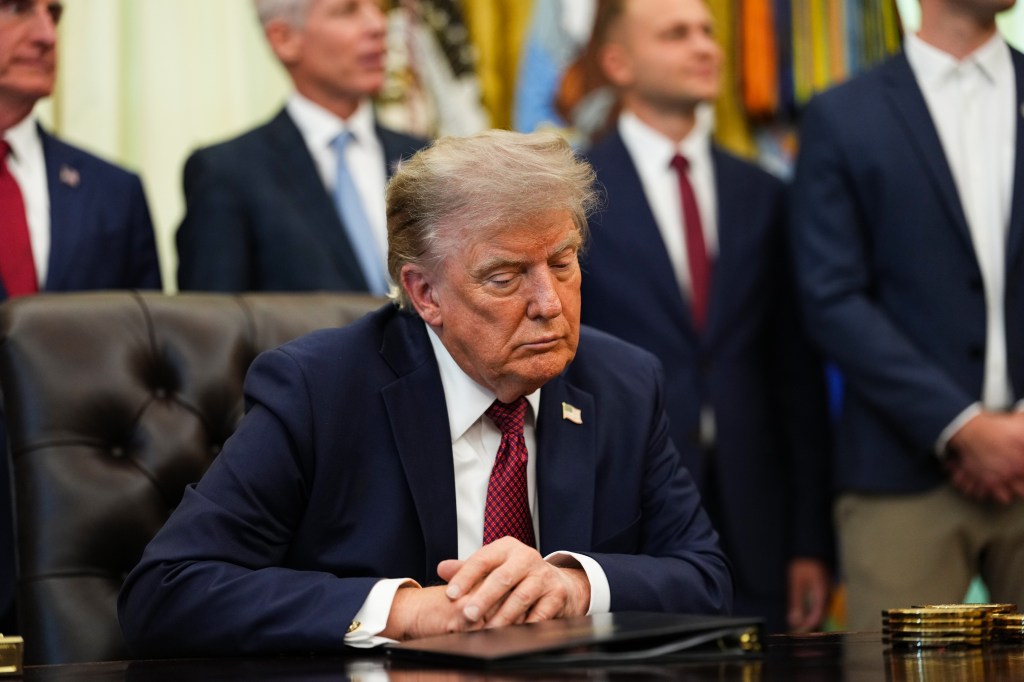
Trump oil prices pressure is rising as crude trades around the $100-a-barrel mark, a level energy analysts say can unsettle markets even when the physical difference from the high $90s is small. The pressure is coming as the Iran conflict enters a new phase, emergency oil reserves are thinner and fighting has spread to the Red Sea route used by Saudi oil exports.
Dan Pickering, founder of Pickering Energy Partners, told Fortune that many of the demand-side tools available in the first stage of the crisis have already been used. He said the administration faces a harder choice between intensifying military action or backing away after a period of escalation.
The market reaction sharpened after an interim peace deal collapsed and the conflict widened earlier this month. Oil moved back above $100 a barrel before slipping below that level Friday, after Yemen’s Houthis fired on two Saudi Arabian oil tankers in the Bab el-Mandeb strait, Fortune reported.
What can Trump do about oil prices?
Analysts cited by Fortune say the remaining options are limited. Emergency reserves in the U.S. and abroad have been drawn down, a federal gasoline tax holiday would need approval from a divided Congress, U.S. producers and refiners are already running near record levels, and the administration has already waived the Jones Act to allow more fuel shipments from the Gulf Coast to the East and West coasts.
China has also cut oil imports sharply, according to Fortune, which has helped keep prices from moving closer to record levels. Pickering said those steps leave little else that can quickly reduce demand or increase available supply.
If the Bab el-Mandeb and the Strait of Hormuz are both nearly closed, Pickering said oil could return in August to the late-April high near $124 a barrel. Fortune reported that the average U.S. price for regular unleaded gasoline is already above $4.10 a gallon and climbing.
Why does the Strait of Hormuz matter?
The Strait of Hormuz is a key passage for oil shipments from the Persian Gulf. Control of that route matters because restrictions or fees imposed there could raise costs and disrupt supplies for buyers far beyond the region.
Andy Laperriere, head of U.S. policy at Piper Sandler, wrote in a note cited by Fortune that Iran appears unwilling to reopen the strait under current conditions unless the U.S. accepts Iranian control and tolling of the route. Laperriere said Iran may believe waiting will improve the terms it can demand.
That assessment leaves Trump with no clear compromise option, according to Laperriere’s note. He wrote that Trump can either continue fighting, with results that may disappoint, or accept Iranian control of the Strait of Hormuz.
How low are U.S. emergency oil reserves?
The U.S. Strategic Petroleum Reserve peaked above 726 million barrels in the final week of 2009, Fortune reported. It stood at 311 million barrels last week, down nearly 60% and at its lowest level since early 1983, when the reserve was still being filled.
The reserve was at 415 million barrels in late March, meaning it has fallen by more than 100 million barrels in four months. Trump has authorized withdrawals of up to 172 million barrels, which would take the reserve below the long-cited minimum operating threshold of about 250 million barrels.
The U.S. Department of Energy has said cavern mechanics would allow the reserve to fall as low as 70 million barrels. Pickering told Fortune that further releases beyond what is already authorized would make the U.S. and other countries look as if they were nearing the bottom of available storage.
This story draws on original reporting from Fortune.