
Rocket Lab files NASA Mars protest over Blue Origin’s $700 million award
Rocket Lab challenged NASA’s Mars orbiter award to Blue Origin, alleging the selection conflicted with congressional eligibility rules.
By Maya Lindqvist · Senior Technology Correspondent
3 min read
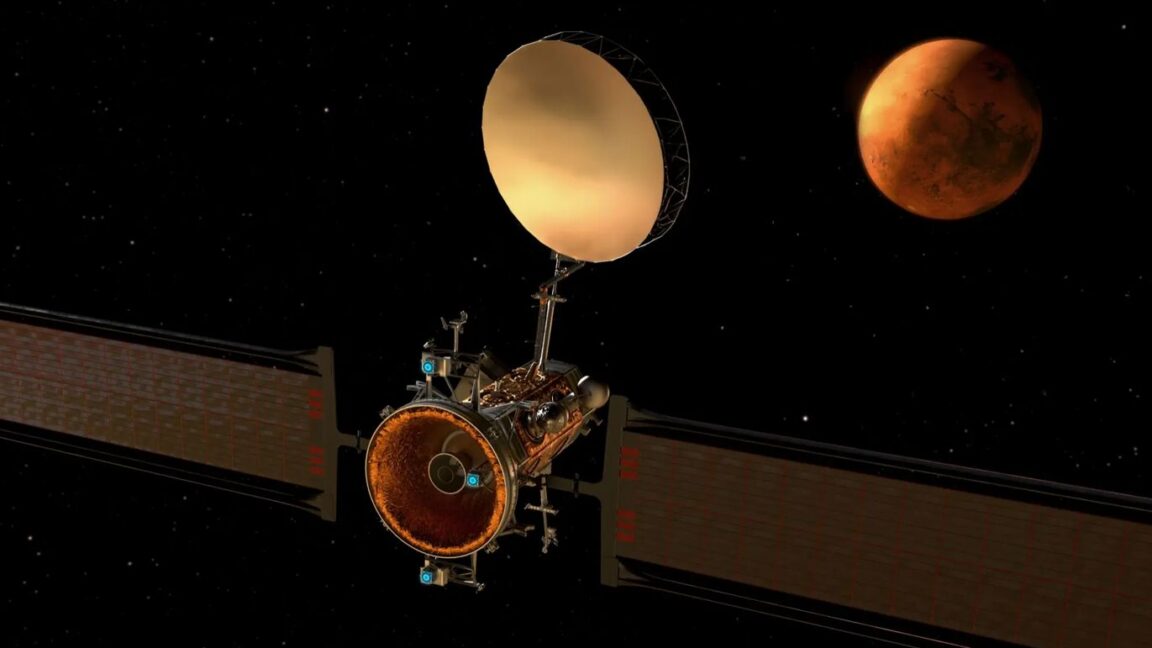
Rocket Lab has filed a protest over NASA’s decision to award Blue Origin a $700 million Mars communications-orbiter contract. The rocket lab nasa mars protest challenges an award that would have Blue Origin develop, launch and operate a spacecraft designed to relay communications between Mars missions and Earth, according to Ars Technica and SpaceNews.
Rocket Lab said its filing with the U.S. Government Accountability Office argues that NASA’s decision “appears to be inconsistent” with eligibility conditions set by Congress. The company also alleged that NASA’s evaluation of Rocket Lab’s technical proposal was punitive and inconsistent, according to Ars Technica’s report on the company’s statement.
Why is Rocket Lab protesting NASA’s Mars award?
The dispute centers on the conditions Congress attached to the Mars Telecommunications Network procurement. Ars Technica reported that a bidder had to have received administration funding in fiscal 2024 or 2025 for commercial Mars Sample Return design studies, and also had to have proposed a separately launched Mars telecommunications orbiter supporting a complete Mars sample-return mission.
The available record does not establish whether NASA misapplied those requirements or whether Blue Origin failed to meet them. Ars Technica reported that Rocket Lab was among several companies eligible under the commercial design-study condition; it named Blue Origin, L3Harris, Lockheed Martin, Northrop Grumman, SpaceX, Quantum Space and Whittinghill Aerospace among the others.
NASA had not publicly released a source-selection statement setting out the technical basis for the award at the time of the report, according to Ars Technica. Without that document, the public evidence supplied does not resolve Rocket Lab’s allegations or explain why NASA selected Blue Origin.
What would the Mars telecommunications spacecraft do?
The planned spacecraft is intended to serve as a communications relay, carrying transmissions between Mars missions and large receiving dishes on Earth. Rocket Lab says such relays are necessary to return data from Mars and describes the current Mars relay network as aging and limited.
That description is the company’s position, rather than an independently established finding in the available material. Still, the contract’s scope makes the procurement notable: Ars Technica characterized it as NASA’s first fixed-price agreement with a U.S. company to build a spacecraft, launch it and operate a network around another planet.
The program emerged from NASA funding included in the 2025 One Big Beautiful Bill, Ars Technica reported. The report said the mission was due for a late-2028 launch, while emphasizing that possible explanations for NASA’s choice had not been confirmed.
For now, the central facts are narrower: NASA selected Blue Origin, and Rocket Lab has formally challenged that choice. NASA’s unpublished selection rationale leaves the merits of the protest unresolved in the public record described by the reports.
This story draws on original reporting from Ars Technica.