
Trump’s dealmaking brings direct federal leverage into business decisions
Fortune reported nine unusual first-year deals that tied tariffs, approvals and market access to concessions from companies and institutions.
By Daniel Okafor · Business Editor
3 min read
President Donald Trump’s first year back in the White House has produced a series of deals that put federal bargaining power directly into corporate and institutional decisions, Fortune reported. The arrangements matter because several moved beyond traditional regulation, tying approvals, exemptions or market access to payments, investments or operational concessions.
Fortune said Trump is also pressing for what it described as an even larger deal: bringing Greenland under U.S. control. The publication framed that effort alongside a broader pattern of one-on-one bargaining that has left companies and economies adjusting to a less predictable policy process.
Tariffs as opening bids
On April 2, 2025, Trump imposed reciprocal tariffs on 57 countries, according to Fortune. The tariffs were treated as starting points for negotiations, and Fortune reported that several countries later reached deals with the administration.
Fortune said the approach marked a break from the multilateral trade system that had shaped global commerce for roughly 80 years. Companies faced uncertainty as negotiations shifted toward country-by-country bargaining.
Federal stakes and veto power
On June 13, Trump allowed Nippon Steel to buy U.S. Steel only after requiring the U.S. to receive several powers over the company, Fortune reported. Those powers included control over independent board directors and veto authority over office and factory locations.
On July 10, the U.S. paid $400 million for a large equity stake in MP Materials and signed a 10-year contract to buy all of the company’s rare earth magnets, according to Fortune. The reason for taking an equity stake was not disclosed, Fortune said.
Another equity deal came on Aug. 22, when Intel gave the U.S. government a 9.9% stake in exchange for $8.9 billion, Fortune reported. Fortune said that money may already have been owed to Intel under the CHIPS and Science Act, and called the transaction unusual because Intel was not in immediate danger and was not significantly affecting the broader economy.
Chip sales and university funding
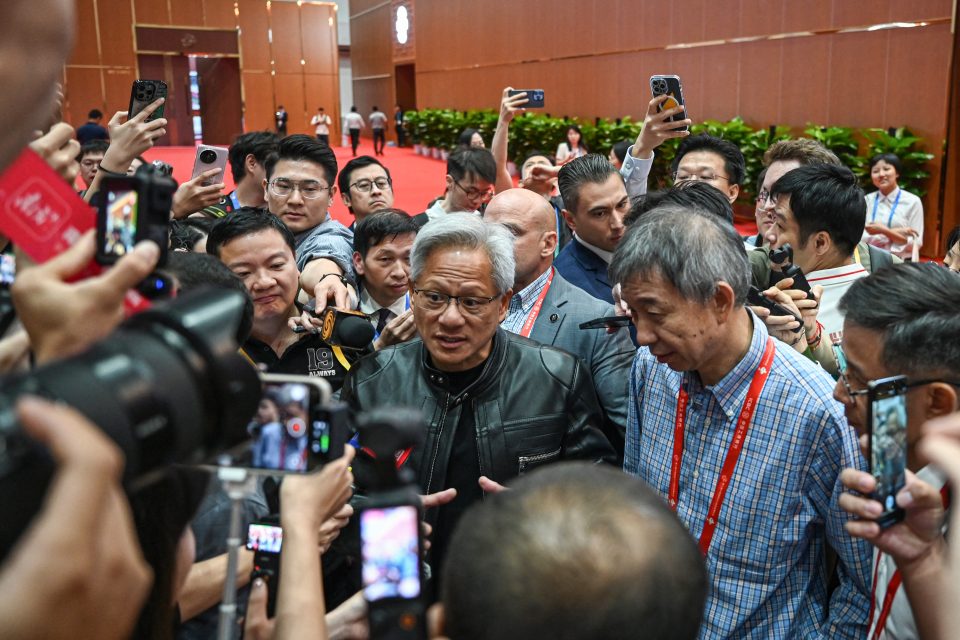
Fortune reported that Trump reversed a U.S. ban on selling Nvidia H20 chips to China on July 14 in exchange for Nvidia paying the U.S. 15% of the revenue. On Dec. 8, Trump reversed a ban on sales of more powerful Nvidia H200 chips in exchange for a 25% revenue payment, according to Fortune.
Fortune said both Nvidia arrangements were unusual because the export-based payments to the U.S. appear to be barred by the Constitution.
On July 23, the Trump administration restored $400 million in canceled federal research funding to Columbia University under a multipoint agreement, Fortune reported. The deal required Columbia to give the federal government applicant data broken down by race, color, GPA and standardized test performance, according to Fortune, which said a few other schools later reached similar agreements.
Apple and drugmakers
On Aug. 6, Apple CEO Tim Cook appeared publicly with Trump and announced that Apple would invest an additional $100 billion in the U.S. over four years, Fortune reported. Trump then said Apple would be exempt from a planned tariff on imported chips that Fortune said would have doubled U.S. iPhone prices.
On Dec. 19, nine pharmaceutical companies reached separate agreements with Trump intended to lower drug prices, according to Fortune. Fortune said the deals were unusual because they were negotiated separately and their terms were not released.
Fortune reported that Trump had hinted he could announce additional high-stakes agreements at the World Economic Forum in Davos.
This story draws on original reporting from Fortune.