
Trump data center pledge gains support as power bill worries grow
The White House says 23 governors and 187 companies signed a nonbinding pledge, while ICF projects bills could rise 15% to 40% by 2030.
By Daniel Okafor · Business Editor
4 min read
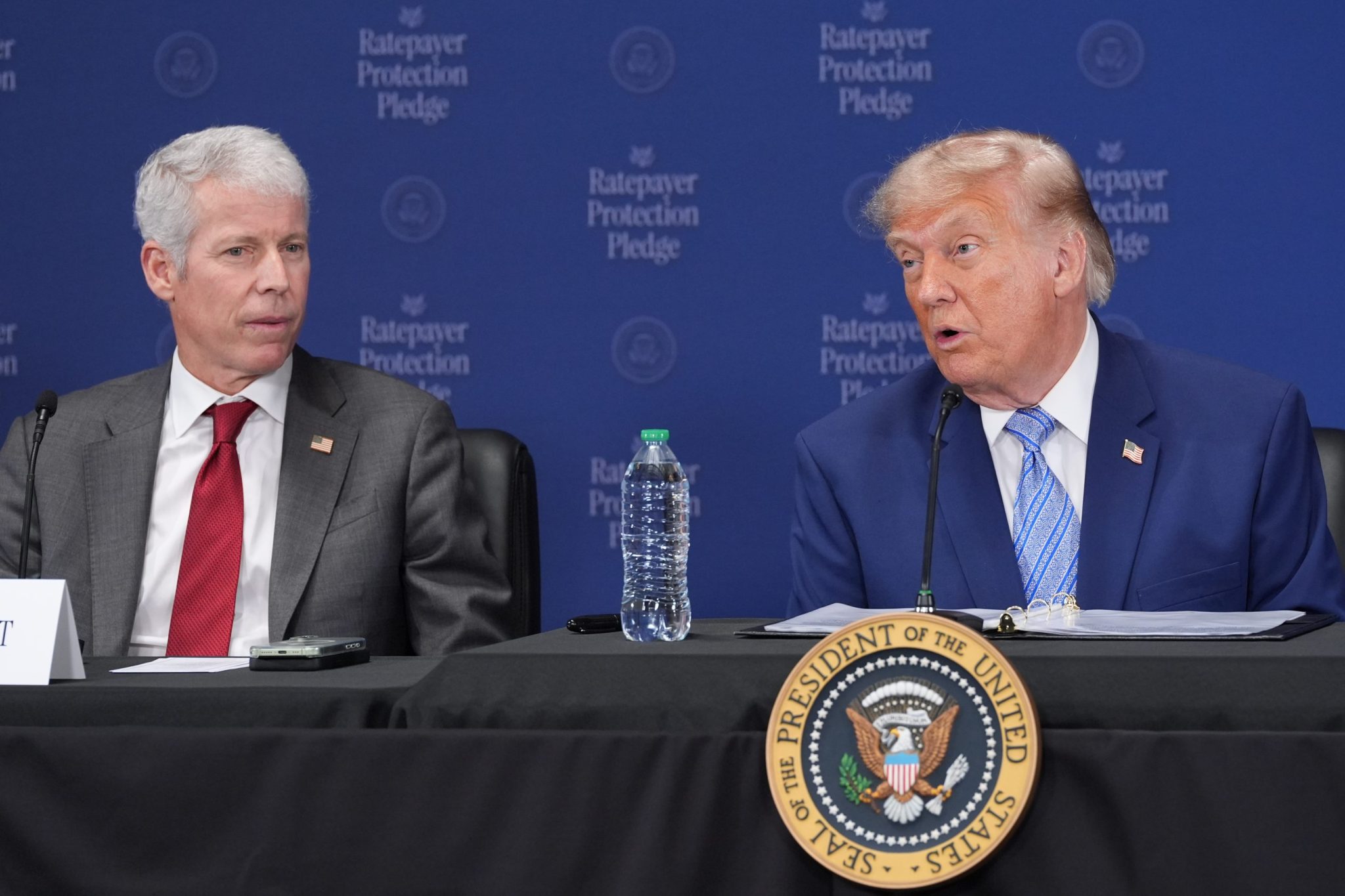
President Donald Trump used a Thursday event at the Environmental Protection Agency to promote the Trump data center pledge, a voluntary effort meant to keep consumers from paying higher electric bills tied to the artificial intelligence boom. The push comes as data centers have become a political flashpoint before the midterm elections, with voters worried about power costs, water use and local development.
Trump first announced the pledge with major AI and technology companies in March. On Thursday, he brought governors and electricity companies into the effort and urged executives and state leaders to persuade communities to accept data centers, saying towns that host them would become “rich.”
“You have to convince your community,” Trump said. “You can’t fight it. You have to go with it.” He added that communities should take the money because “somebody else is going to take it.”
Will data centers raise electricity bills?
Trump said the pledge would lead to lower utility bills because data centers would generate extra power and send it to the grid. “Electricity bills for American families will actually come down,” he said.
That outcome is uncertain. ICF, a consulting and technology services company, recently projected that rising electricity demand could push monthly utility bills up 15% to 40% by 2030.
The White House said 23 governors and at least 187 companies have signed the nonbinding pledge, including 55 utilities and 27 data center developers. Utilities listed by the White House include NextEra Energy, Duke Energy, American Electric Power, Southern Co. and Pacific Gas & Electric. Data center developers that signed include Equinix, Digital Realty and Prologis.
A nonbinding pledge is a voluntary promise rather than a law. The Trump administration says the promise is meant to ensure that households do not pay the costs of building out data centers, but state regulators and lawmakers are also weighing legal requirements.
Why the politics are getting harder
Data center construction has been a major driver of U.S. economic growth, according to the Associated Press, and supporters warn that slowing it could weaken the country’s position in AI against China and raise national security concerns. Nvidia CEO Jensen Huang told the Associated Press last month that the United States lacks enough power generation to support further AI development.
Public resistance has grown across party lines. Voters have raised concerns about environmental effects, AI in schools and whether large server facilities will make communities more expensive or less livable. Data center companies say their projects can add tax revenue for school districts and reduce homeowners’ property tax burdens.
In Texas, opposition has reached rural Republican areas and created political pressure on Gov. Greg Abbott, who signed the pledge. Gina Hinojosa, the Democratic nominee for Texas governor, has attacked Abbott over the issue, saying data centers are owned by “the richest men in the world” and that residents are “footing the bill.”
Other states are taking different approaches. New York Gov. Kathy Hochul signed an order blocking construction of large server warehouses in the state for one year. Florida Gov. Ron DeSantis signed a law in May that he said would stop utilities from passing data center energy costs to residential and small-business customers.
State legislatures and utility commissions in several states have considered or adopted rules requiring data centers to pay for their electricity needs, including costs for new power plants or transmission upgrades. In California, Matthew Freedman, a staff attorney for the Utility Reform Network, said the industry is opposing legislation meant to protect consumers from data-center-related power price increases.
The White House has also criticized PJM Interconnection, the grid operator serving 13 states from Virginia to Illinois. White House spokeswoman Taylor Rogers said PJM has not carried out a bipartisan statement of principles backed by the Trump administration and the region’s governors, and she urged changes to its stakeholder process and board governance.
Congress is also moving on the issue. The House Energy and Commerce Committee has approved a bipartisan bill that would require data centers to pay the costs of grid upgrades.
This story draws on original reporting from Fortune.