
South Korea’s AI stock swings move onto global investors’ screens
Samsung and SK Hynix have made Seoul a key early signal for AI and chip trading, though leverage has added sharp volatility.
By Daniel Okafor · Business Editor
4 min read
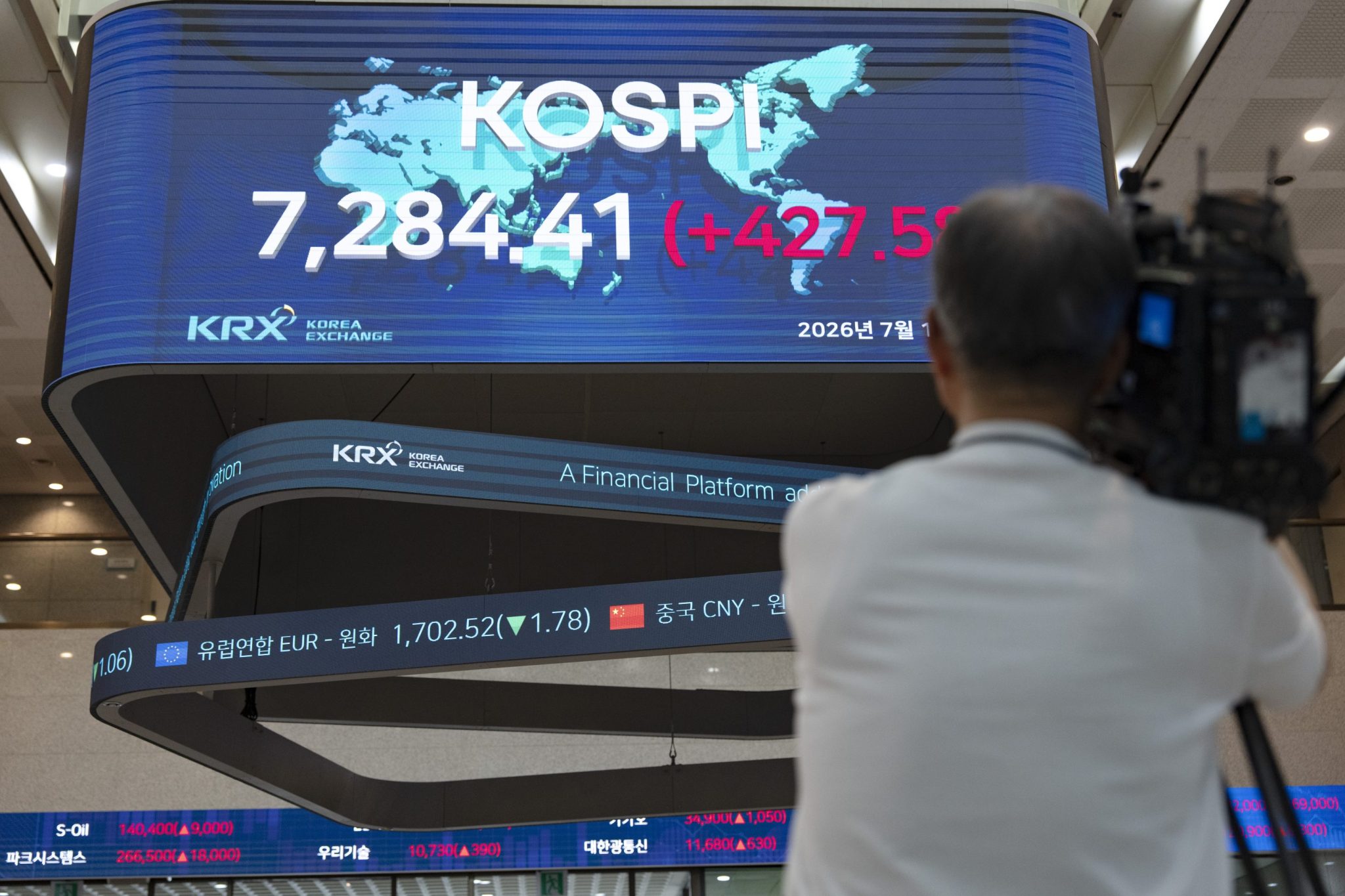
South Korea’s stock market has moved from a secondary watch item to an early signal for global investors tracking the AI trade. Large swings in Samsung Electronics and SK Hynix are now feeding into chip shares in the United States, Japan and other major markets.
The country’s equity market is worth about $4 trillion, according to Bloomberg. Fund managers and traders in London, New York and Tokyo are increasingly looking at the Kospi before their own markets open, using Seoul’s moves to gauge demand for AI-linked risk.
Hani Redha, a London-based portfolio manager at PineBridge Investments, said investors have had to treat Korea as a core market. He told Bloomberg that he begins his day by checking Seoul, then follows SK Hynix’s American depositary receipts and Korea-focused exchange-traded funds in New York after the local market closes.
The shift has been driven by the central role of Samsung and SK Hynix in memory chips, a key part of the AI supply chain. SK Hynix’s recent U.S. listing has also given Wall Street another direct way to trade Korean chip sentiment outside Seoul’s regular hours.
Volatility spreads across markets
Korea’s growing importance has come with sharper price moves. Bloomberg reported that the Kospi has become one of the most volatile major indexes, with leveraged trading adding to the swings.
Last week showed how quickly weakness in Seoul can travel. A selloff in Korea on Monday, fueled by renewed doubts about future AI demand, sent the Kospi down nearly 9%, according to Bloomberg. SK Hynix’s U.S.-listed shares later fell 9.3%, and other large chip stocks declined as well.
Another bout of pressure could follow when Korean trading resumes after a long weekend. Bloomberg reported that global chip peers sold off Friday after a surprise advance by a Chinese AI startup raised fresh questions about large capital spending plans.
The market links are also showing up in correlation data. The 60-day correlation between the Kospi and the Nasdaq 100 has risen to 0.46, close to a two-year high and nearly three times its five-year average of 0.16, according to Bloomberg-compiled figures.
Ivan Feinseth, chief investment officer at Tigress Financial Partners in New York, told Bloomberg that Korea now trades inside the same volatility pattern as the Nasdaq and the Philadelphia semiconductor index. He said SK Hynix, Samsung and the Kospi give investors an early reading on U.S. AI and semiconductor risk.
More desks add Korea to daily checks
The change is altering routines across major investment firms. Tai Hui, JPMorgan Asset Management’s chief market strategist for Asia Pacific, told Bloomberg he had not presented on Korea to his global team until this year, despite 14 years in the role.
HSBC’s head of Asia Pacific equity strategy, Herald van der Linde, said Korea is now discussed in all meetings, according to Bloomberg. Andrew Jackson, head of Japan equity strategy at Ortus Advisors, added a Kospi chart to his regular monitoring this year for the first time in more than two decades.
Korean stocks appear to matter most to global markets when they fall. Bloomberg-compiled data showed the Nasdaq 100’s sensitivity to Kospi declines reached its highest level since 1990 on July 7, while a similar measure for the MSCI World Index recently hit a four-year high.
The Kospi’s influence could fade if losses continue. The index has dropped 25% from its June high, wiping out $1 trillion in market value, according to Bloomberg. Samsung and SK Hynix have each lost at least 30% of their value.
South Korea has also temporarily stopped new listings of single-stock leveraged exchange-traded products, a step Bloomberg said may reduce speculation and volatility. Even after the decline, the Kospi remains up 62% this year, ranking among the world’s strongest performers.
Chisa Kobayashi, Japan equity strategist at UBS SuMi TRUST Wealth Management, told Bloomberg that investors must accept this pattern while the AI rally lasts. She said leverage-linked moves in a relatively immature market can make trading harder when prices stray from company fundamentals.
This story draws on original reporting from Fortune.