
Nvidia’s paid cafeteria stands apart from Big Tech’s perk culture
The AI chip leader subsidizes meals but does not make all food and drinks free, a contrast with perks long associated with Silicon Valley rivals.
By Daniel Okafor · Business Editor
3 min read
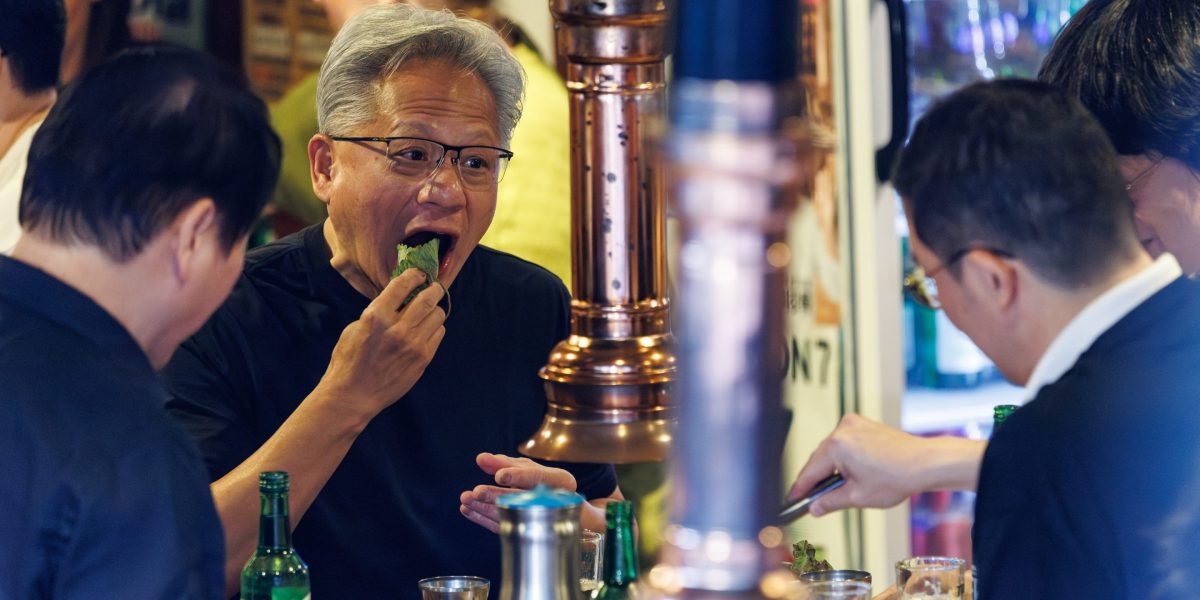
Nvidia’s employees still pay for cafeteria meals at a company Fortune valued at $4.8 trillion. The policy matters because the AI chipmaker’s rise has come with a more restrained workplace culture than the free-food model long tied to Big Tech.
Fortune reported that Nvidia, led by CEO Jensen Huang, is the world’s most valuable company by market capitalization and sits ahead of Google, Apple and Amazon. Even so, the company does not provide free lunch across its cafeterias, according to Fortune.
Gergely Orosz, a software engineer and author of The Pragmatic Engineer newsletter, drew attention to Nvidia’s food setup after visiting its Santa Clara, California, headquarters. In a post on X cited by Fortune, Orosz wrote that snacks and coffee were not free and that employees had to pay for them, adding that the arrangement would be unusual at a large technology company.
Former Nvidia employees told Business Insider that cafeteria meals are subsidized rather than free, according to Fortune. Those former employees also said coffee is generally free, while some bottled drinks and beverages from on-site cafés require payment.
Fortune said Nvidia did not immediately respond to a request for comment.
A long-running policy
The approach is not new, according to Fortune. A 2014 blog post by a former Nvidia intern said food at the company was subsidized at the time and averaged about $6, which Fortune said is about $8.50 today.
The former intern’s blog listed options including chicken and pasta, chicken and rice, fish and chips, and sandwiches, according to Fortune. The post suggests Nvidia’s cafeteria policy predates the company’s current AI-driven market surge by more than a decade.
Fortune contrasted Nvidia’s policy with Google’s approach. Google offers free breakfast, lunch and dinner at cafeterias across its offices, and a Serious Eats report cited by Fortune said the company’s Mountain View, California, headquarters had about 30 places for employees to get food.
Ruth Porat, chief investment officer of Google and parent Alphabet, said in a recent interview cited by Fortune that food at Google supports workplace connection. Porat said Google’s stocked micro-kitchens help bring together employees from different teams who might not otherwise talk regularly.
Huang’s culture of restraint
Fortune tied Nvidia’s food policy to Huang’s broader management philosophy. Huang founded Nvidia in 1993, and Fortune described the company’s shift from a video-game chipmaker into a central supplier for the AI boom.
Huang has said he works seven days a week, including weekends and holidays, according to Fortune. In a Joe Rogan interview cited by Fortune, Huang said he has used the phrase “30 days from going out of business” for 33 years and that his sense of vulnerability has not left him.
Fortune also cited Huang’s 2024 address to Stanford students, where he said, “I wish upon you ample doses of pain and suffering.” Huang argued in that speech that discomfort can produce strong results, according to Fortune.
Some other tech companies have pulled back on food perks, Fortune reported. Meta, which once offered free meals at its Menlo Park headquarters, now uses meal vouchers, and in 2024 fired two dozen employees it said had abused them, according to Fortune. Twitter, now X, reduced many food options after Elon Musk bought the company in 2022, Fortune reported, citing Business Insider.
Nvidia has offered employees another form of compensation upside, according to Fortune. The company’s employee stock purchase plan lets workers buy Nvidia shares at a 15% discount with a two-year lookback, and Fortune reported that Nvidia’s stock had risen about 1,400% over the past five years.
This story draws on original reporting from Fortune.