
Eli Lilly backs Absci’s AI-designed injectable for hair loss
Eli Lilly invested $40 million in Absci as the biotech advances ABS-201, an injectable antibody for pattern hair loss and endometriosis.
By Daniel Okafor · Business Editor
3 min read
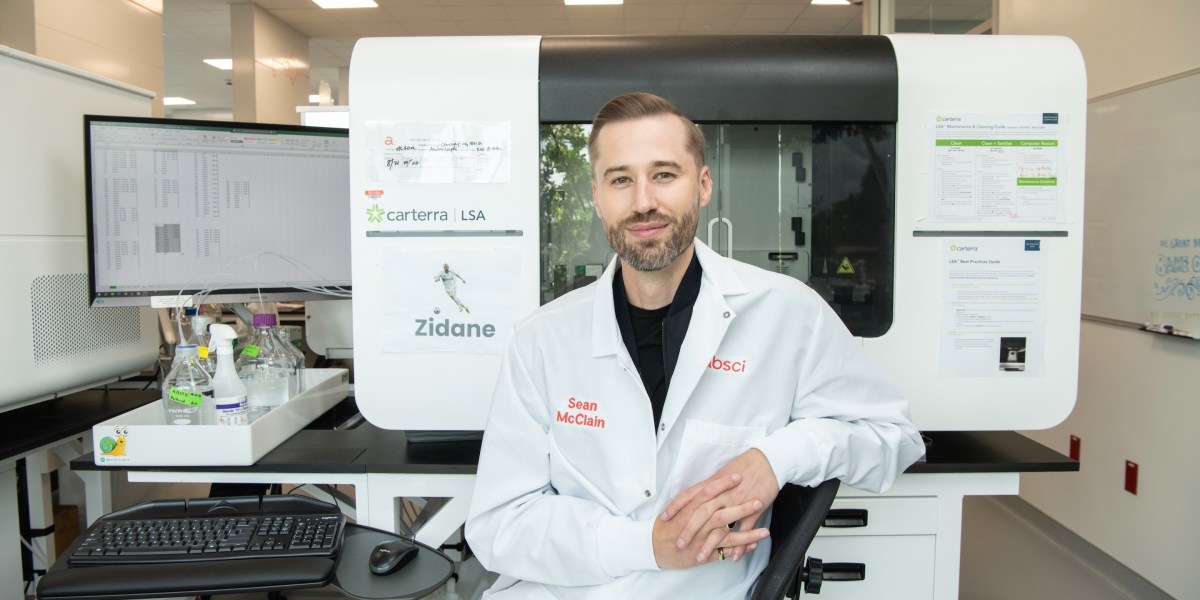
Eli Lilly has put $40 million into Absci, a generative AI drug developer working on an injectable antibody for pattern hair loss and endometriosis. The investment gives the maker of Zepbound and Mounjaro a stake in another potential consumer-facing injectable market, according to Fortune.
Absci said Lilly led a $100 million underwritten stock offering that also drew Adage, BVF Partners, Columbia Threadneedle, Invus and Redmile. The financing gives Absci more backing as it studies ABS-201, a drug candidate designed with AI to target the prolactin receptor, which Fortune described as tied to hair growth and reproductive health.
According to Fortune, ABS-201 is being developed for androgenetic alopecia, commonly called male or female pattern baldness, and endometriosis. Fortune reported that no approved injectable antibody currently treats either condition.
The deal closed on the same day Absci released positive interim Phase 1 safety data for ABS-201, Fortune reported. Phase 1 studies are early human tests, and Fortune said it remains unknown whether ABS-201 will prove effective in people.
Absci CEO Sean McClain told Fortune that Lilly’s investment buys the drugmaker “tickets to the game,” describing the value as proximity rather than control. Fortune reported that McClain also raised the possibility that a future product could combine ABS-201 with a GLP-1 compound, pairing hair regrowth and weight-loss treatment in one injection.
The tie-up comes after GLP-1 drugs helped make self-injection more familiar to U.S. consumers, according to Fortune. Lilly sells Zepbound for weight loss and Mounjaro for diabetes, while Novo Nordisk competes in the same drug class.
Market researchers cited by Fortune put the overall injectable drugs market at $650 billion in 2026. Morgan Stanley, also cited by Fortune, has projected GLP-1 sales could reach $190 billion to $200 billion by 2030.
Absci Chief Medical Officer Ransi Somaratne told Fortune that ABS-201 is expected to remain an injectable because proteins are broken down in the stomach. Fortune reported that Somaratne also said an oral version could reach the brain differently than an injection.
McClain told Fortune that Absci’s broader strategy is built around owning drug candidates, rather than only licensing AI discovery tools to pharmaceutical companies. As AI tools become cheaper and more common, Fortune reported, McClain expects pharma companies to pay less for access to the tools themselves.
Absci’s plan also includes running clinical trials in China at far lower cost than in the United States, according to Fortune. Fortune reported that Absci aims to cut the cost of moving from target selection to Phase 2 proof-of-concept from $150 million to $15 million to $20 million.
Investor money has been flowing into AI drug development. Fortune cited Isomorphic Labs’ $2.1 billion Series B in May, Earendil Labs’ $787 million raise in March and Xaira Therapeutics’ $1 billion launch before it had a drug in the clinic.
Absci has raised more than $530 million in total, according to its announcement cited by Fortune. With Lilly now on its shareholder list, Absci has added one of the most prominent names in injectable drugs while ABS-201 remains in early clinical testing.
This story draws on original reporting from Fortune.