
Bipartisan bill would make national AI research resource permanent
The CREATE AI Act would place the National Artificial Intelligence Research Resource at the NSF, extending a pilot that supporters say widened access to AI tools.
By Daniel Okafor · Business Editor
3 min read
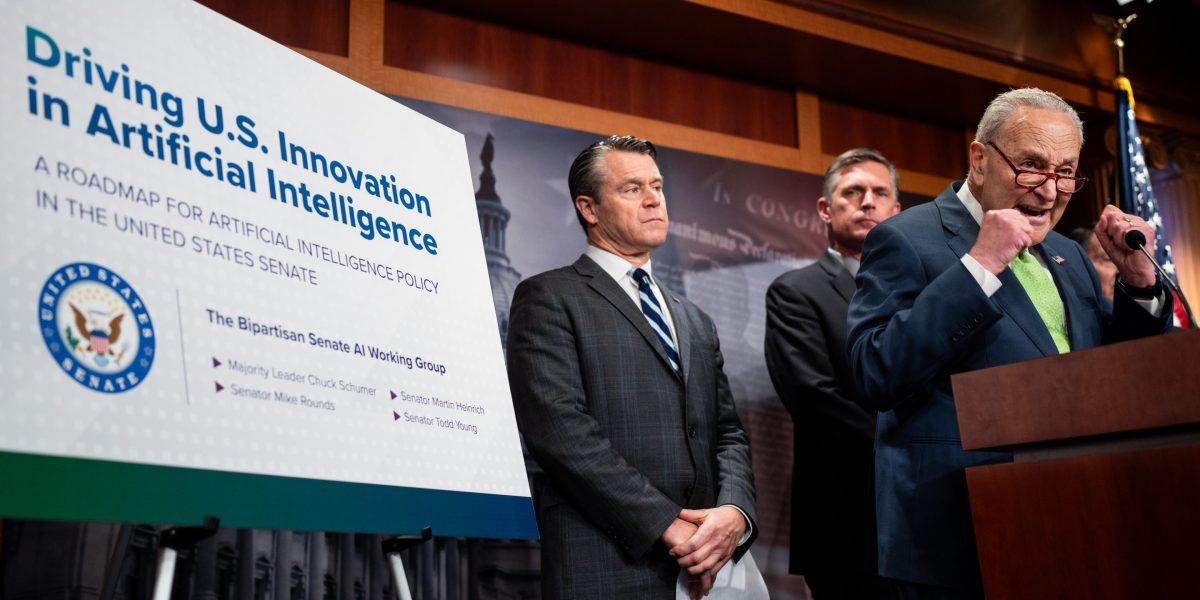
A bipartisan group in Congress is pushing legislation that would make a national artificial intelligence research program permanent. Backers say the bill matters because advanced AI research often requires computing power, datasets and testing tools that many universities, startups and nonprofits cannot afford.
The measure is the Creating Resources for Every American to Experiment with Artificial Intelligence Act, known as the CREATE AI Act. Neil Björkman and Betsy Brewer, government affairs executives at Cognizant Technology Solutions, wrote in Fortune that the bill would put the National Artificial Intelligence Research Resource, or NAIRR, on a permanent basis at the National Science Foundation.
According to Björkman and Brewer, Congress has seen more than 300 AI-related bills introduced in the current session. They argued that the CREATE AI Act stands out because it has bipartisan sponsors and builds on a pilot program already in operation.
The NAIRR pilot began in early 2024, according to Björkman and Brewer. They said it has supported more than 600 AI research projects across all 50 states by giving researchers and other users access to computing capacity that is often beyond the reach of institutions outside the largest technology companies.
The Senate bill is backed by Sens. Todd Young, R-Ind., Martin Heinrich, D-N.M., Mike Rounds, R-S.D., and Cory Booker, D-N.J., according to the Cognizant executives. A House companion bill was introduced by Reps. Jay Obernolte, R-Calif., and Don Beyer, D-Va., and has continued to draw bipartisan support, they said.
Björkman and Brewer said the program has also crossed administrations. They wrote that NAIRR began under the Biden administration and was endorsed in the Trump administration’s AI Action Plan.
The bill’s supporters frame the program as a way to broaden AI research beyond a small group of private companies. Björkman and Brewer argued that major technological advances often come from work shared across universities, government-funded research and industry, and that today’s most valuable AI resources are concentrated inside a few companies.
They also linked the bill to global competition. China is developing a state-directed AI research system through its National Integrated Computing Network, while the United Kingdom has committed up to £2 billion through 2030 for a public AI Research Resource, according to Björkman and Brewer. They also cited the European Union’s InvestAI effort, which aims to mobilize up to €200 billion for public-private AI infrastructure partnerships.
The Cognizant executives said large cloud and chip companies could benefit from publicly supported research as well. They argued that shared research could help improve energy use and guide hardware development for training and inference, the computing processes behind many AI systems.
Björkman and Brewer said the bill would not create new industry compliance rules or require Congress to settle broader disputes over AI regulation. They described it as public infrastructure meant to expand access to AI research tools, support startups and help smaller organizations take part in AI development.
This story draws on original reporting from Fortune.