
AI scrutiny grows as companies push systems into daily life
A new AI-focused business survey finds advances in language, health care and facial recognition are moving quickly from labs into products and policy fights.
By Sofia Marchetti · World Affairs Correspondent
3 min read
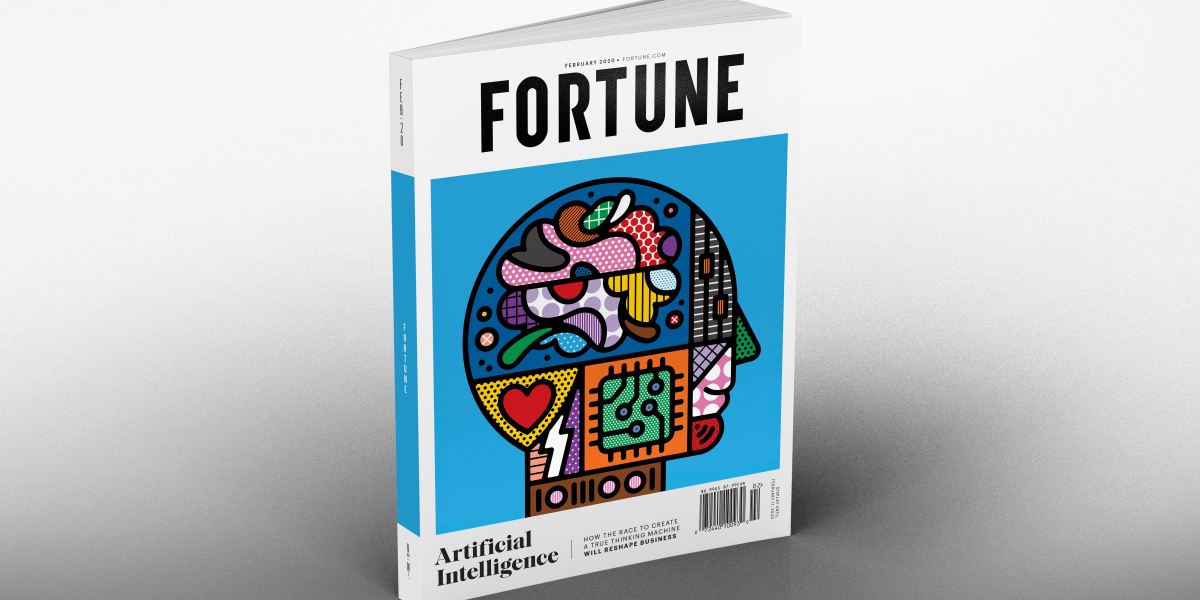
Artificial intelligence is moving from research projects into business tools, medical software and consumer platforms, while regulators and civil rights advocates press for tighter controls. Fortune AI editor Jeremy Kahn described a new Fortune magazine package as a field guide to the technology’s current state, covering corporate bets on advanced AI, hiring software, drug discovery and China’s ambitions.
Kahn said one focus is Microsoft’s $1 billion investment in OpenAI, the San Francisco research company pursuing artificial general intelligence, or systems with broad human-like abilities. He wrote that many AI researchers believe that goal remains decades away, if it is achievable, but companies see possible side benefits in better algorithms, stronger cloud infrastructure and branding.
Fortune also examined recent progress in natural language processing, an area where Kahn said advances over the previous 18 months had begun reaching products used by large audiences. In a separate story, Fortune’s Maria Aspan reported that employers are adopting machine-learning tools in recruiting and human resources in hopes of reducing human bias and broadening applicant pools, while critics warn opaque systems may introduce new forms of bias.
Health care is another major thread. Freelance reporter Jennifer Alsever reported on startups using AI in drug discovery, including Toronto-based Deep Genomics, which used machine learning to identify a potential therapy for Wilson’s disease. Cardiologist and geneticist Eric Topol told Fortune the field has significant promise but limited proof.
Regulation and surveillance draw attention
Alphabet CEO Sundar Pichai called for government regulation of AI in a Brussels speech and a Financial Times opinion piece, according to Fortune’s roundup. Pichai said AI should be regulated and urged coordination between the United States and European Union, which was preparing its own AI rules. Fortune said he also backed a moratorium on facial recognition until standards and rules are in place.
The New York Times reported that Clearview AI built a facial-recognition database with images of more than 3 billion people, largely by scraping social media sites such as Facebook in violation of those sites’ terms. Fortune said the company’s work with law enforcement has intensified privacy and civil rights concerns.
Other corporate moves underscored how quickly the field is spreading. GeekWire reported that Apple bought Seattle-based Xnor.ai, a company focused on running efficient AI on phones, cameras and other edge devices, for about $200 million. Technode reported that Huawei created a cloud computing and AI business unit led by Hou Jinlong as the Chinese telecom company sought to diversify.
Medical approvals and research accelerate
The Jerusalem Post reported that the U.S. Food and Drug Administration approved Aidoc software that flags possible strokes in brain scans in near real time. Fortune said the Tel Aviv startup’s tool is meant to prioritize cases for doctors rather than make a final diagnosis, and that the approval was Aidoc’s fourth after earlier clearances involving brain bleeds, spinal fractures and pulmonary embolisms.
Fortune also highlighted new research claims from major AI labs. Facebook said it trained a neural network on 100 million problem-solution pairs to solve advanced math equations by treating them like language. Google researchers said they built a machine-learning model that can forecast rain up to six hours ahead at one-square-kilometer resolution.
Google AI also introduced Reformer, a more efficient version of the transformer architecture that underpins many language models, with the ability to process context windows of up to 1 million words using one AI accelerator chip and 16 gigabytes of memory, according to Fortune. DeepMind published work in Nature on protein folding and, in a second paper, on dopamine-sensitive neurons with differing reward expectations, which the company said could inform future work on motivation disorders.
This story draws on original reporting from Fortune.