
Lamborghini adds plug-in hybrid power to faster Urus SUV
The Urus SE Performante pairs a V-8 with an electric motor as Lamborghini shifts toward hybrids after shelving full EV plans.
By Maya Lindqvist · Senior Technology Correspondent
3 min read
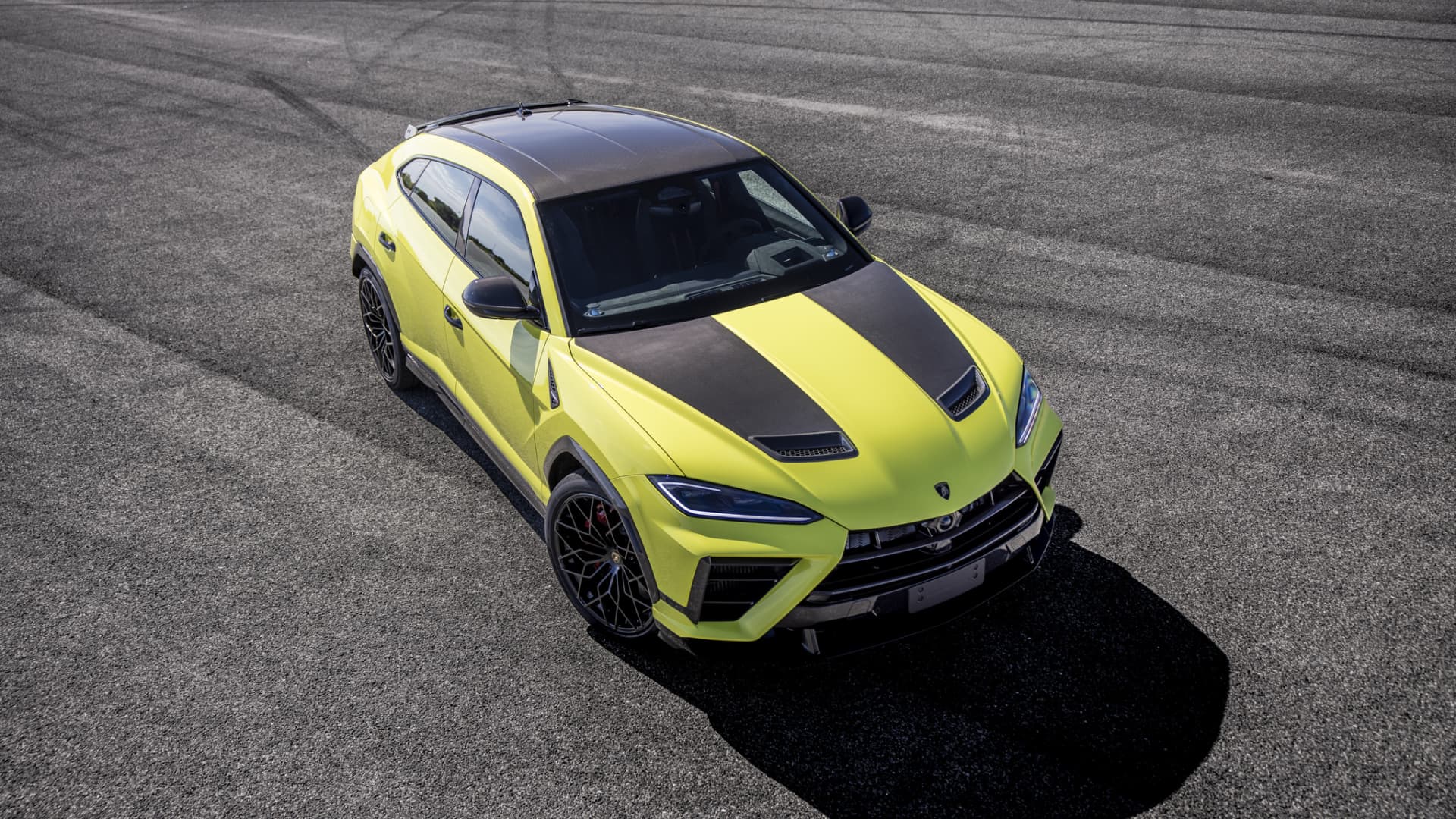
Lamborghini unveiled a plug-in hybrid performance version of its Urus SUV on Wednesday, extending its shift toward gas-electric models after scrapping plans for a fully electric vehicle. The Urus is central to the Italian automaker’s business, accounting for about half of global sales each year, CEO Stephan Winkelmann told CNBC.
The new model, called the Urus SE Performante, pairs an electric motor with a 4-liter twin-turbo V-8 engine. Lamborghini said the setup produces 812 horsepower and about 738 pound-feet of torque.
The company says the SUV can accelerate from 0 to 100 kph, or about 0 to 60 mph, in 3.3 seconds. Lamborghini also lists a top speed of 312 kph, or 194 mph, and is describing the vehicle as the world’s fastest “Super SUV.”
A faster Urus with hybrid hardware
As a plug-in hybrid, the Urus SE Performante has a gasoline engine and a battery that can be charged from an external power source. Lamborghini said the electric system is intended to improve performance, rather than mark a move into fully electric propulsion.
The exterior changes include a larger front grille and hood scoops, according to CNBC. Lamborghini also said the cabin has been updated compared with the current Urus lineup.
Pricing has not been announced. Lamborghini, which is owned by Volkswagen AG, told CNBC it will disclose U.S. pricing closer to customer deliveries. The 2026 Urus SE starts at about $250,000 to $280,000, depending on the version, CNBC reported.
Hybrids over EVs
The reveal follows Lamborghini’s confirmation earlier this year that it had dropped plans for an all-electric model and would keep focusing on hybrids. Winkelmann declined to tell CNBC whether the brand could return to gasoline-only vehicles, saying “never say never” when asked about that possibility.
Winkelmann told CNBC the company watched customer demand for EVs and concluded that acceptance among Lamborghini buyers was not rising enough to support a fully electric model. He said that led the company to move from a full-electric plan to a plug-in hybrid approach.
The decision puts Lamborghini on a different path from Ferrari, which introduced its first all-electric vehicle, the Luce, in late May. CNBC reported that Ferrari’s EV drew strong criticism after its debut.
Winkelmann has not directly commented to CNBC on Ferrari’s Luce or the reaction to it. He has said innovation is essential for success, while adding that companies should not force technology on customers or pursue innovation for its own sake.
Lamborghini’s sales approached 11,000 vehicles last year, according to Winkelmann. With the Urus carrying a large share of that volume, the new hybrid performance model gives the automaker another high-priced SUV offering while it waits for more clarity on demand for full EVs among supercar buyers.
This story draws on original reporting from CNBC.