
Business leaders look beyond Silicon Valley for the next wave of innovation
Steve Case and David Rubenstein told Fortune that entrepreneurship and civic initiative remain widely spread across the U.S.
By Hana Yoshida · Markets Reporter
3 min read
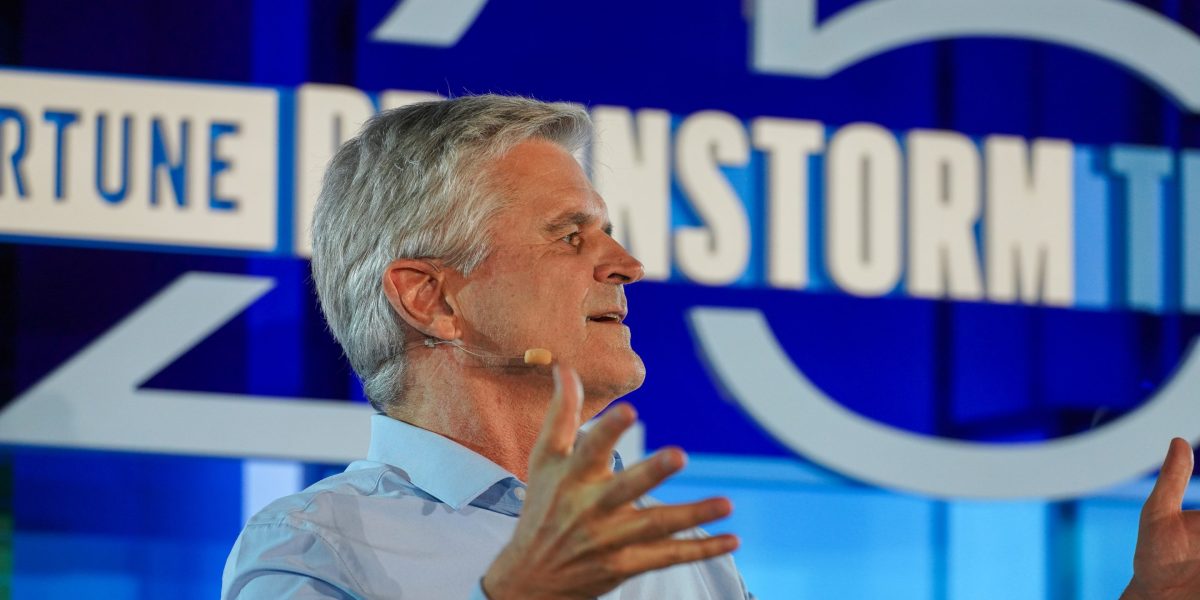
Business leaders are casting the next phase of innovation as a broader American story, with opportunity extending beyond Silicon Valley, New York and Boston. Fortune’s Diane Brady reported that recent conversations with Steve Case and David Rubenstein pointed to a business culture placing more value on local expertise, civic initiative and nontechnical backgrounds as artificial intelligence reshapes work.
Brady wrote in Fortune’s CEO Daily that both Case and Rubenstein studied political science before becoming billionaires. She framed their careers as examples of entrepreneurs who found openings in markets and worked with people who had the technical or operational knowledge to carry out their ideas.
Case argues for a wider innovation economy
Case, now chairman and CEO of Revolution, spoke Monday at a C-suite dinner co-hosted by Fortune and the U.S. Chamber of Commerce at the chamber’s headquarters near the White House, according to Brady. He argued that the U.S. should build a more inclusive innovation economy.
Case told the gathering, according to Fortune, that it is “not good” for so much wealth creation to be concentrated in places such as Silicon Valley, New York and Boston. He said the next stage could come from “vertical AI” that helps companies in the middle of the country with knowledge in fields such as health care and farming.
Case’s own career began far from the center of the tech industry, Brady reported. He was working as a marketing manager at a Pizza Hut in Wichita, Kansas, when he joined a struggling startup in the Virginia suburbs of Washington, D.C., that had been spun out of a failed gaming company.
He later became the founding CEO of America Online, which Fortune said brought internet access to 30 million American households through services including email, chatrooms and news on demand. Case now leads Revolution, an investment firm, and Brady reported that he is also moving into hospitality and real estate because he believes an AI-heavy economy will increase demand for “real people, real places, and real authentic experiences.”
Rubenstein points to volunteerism and initiative
Brady also interviewed Rubenstein at the 2026 conference for Points of Light, the volunteerism organization founded by President George H.W. Bush. Rubenstein, the son of a Baltimore postal worker, co-founded Carlyle Group in 1987 shortly before turning 38, according to Fortune.
Before that, Brady reported, Rubenstein had been dissatisfied at a Washington law firm and was influenced both by a successful leveraged buyout and by a book arguing that the chances of starting a company successfully dropped after age 37. His remarks at Points of Light focused on civic action as much as business formation.
Rubenstein discussed Alexis de Tocqueville’s observation about America’s “spirit of association,” Brady reported, describing the country’s tendency toward voluntary cooperation to address problems. Fortune said Rubenstein has donated millions of dollars to repair prominent Washington monuments and left the conference to attend the opening of a new museum at the Jefferson Memorial.
Neil Bradley, chief policy officer of the U.S. Chamber of Commerce, also tied entrepreneurship to economic growth at the Monday dinner, according to Fortune. Bradley said no one defines the American Dream as 3% real GDP growth, but added that an economy growing at that rate doubles in size in 23 years.
Bradley said the U.S. recorded more new business applications last year than at any point in its history, according to Brady. He described the country’s entrepreneurial spirit as “alive and well.”
This story draws on original reporting from Fortune.