
Reid Hoffman criticizes SpaceX and xAI in AI market assessment
The LinkedIn co-founder said SpaceX lacks core AI credentials, questioned xAI’s stability and argued OpenAI and Anthropic can both win.
By Hana Yoshida · Markets Reporter
3 min read
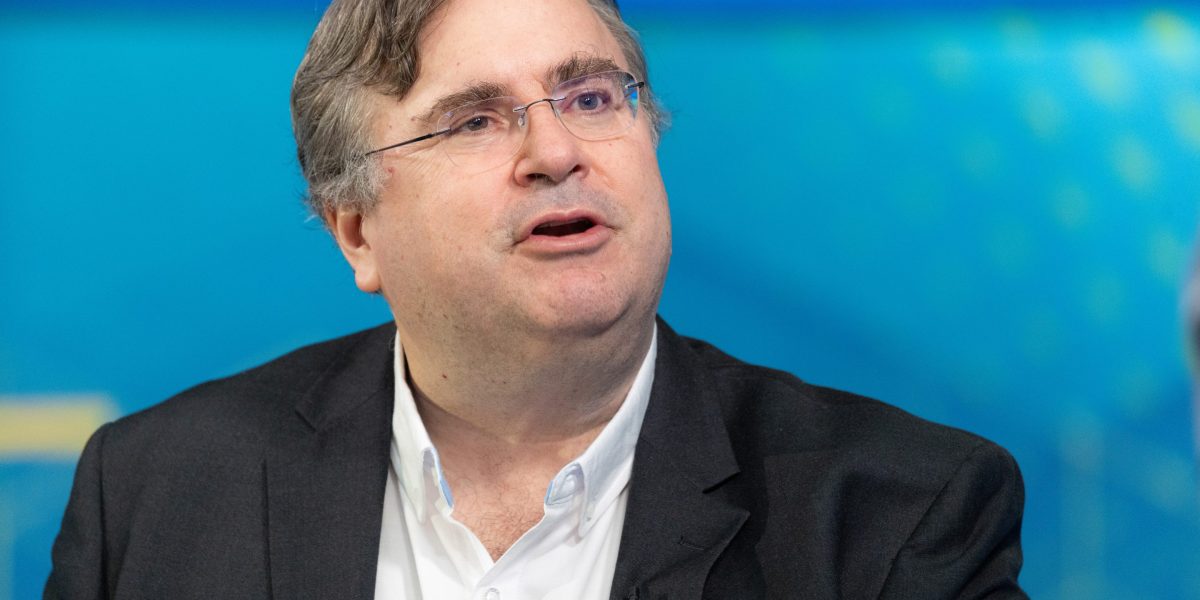
Reid Hoffman sharply criticized Elon Musk’s AI strategy, saying SpaceX is not an AI company and calling xAI a “complete train wreck” in a conversation on Rana el Kaliouby’s Pioneers of AI podcast. The remarks matter because Hoffman is an investor in both OpenAI and Anthropic and has watched the AI sector as a founder, investor and Microsoft board member.
Hoffman said SpaceX’s AI push looks like an effort to use its market value to buy relevance, according to Fortune. He pointed to SpaceX’s public-market debut on June 12 and its subsequent deal to acquire Cursor, the AI coding tool, as evidence that the company was buying AI assets rather than proving it had built them internally.
“SpaceX isn’t an AI company,” Hoffman said on the podcast, according to Fortune. He compared the company’s strategy to IAC’s acquisition-driven internet model and said its infrastructure leasing business made it more like a premium-priced CoreWeave than a core AI developer.
Hoffman questions xAI’s direction
Hoffman was more direct about xAI, Musk’s AI company. He said xAI had gone through repeated restarts and described its work on foundation models as a “complete train wreck,” Fortune reported.
The Next Web reported that all 11 of xAI’s original co-founders had left by May 2026, according to Fortune. Bloomberg reported that Tony Wu, described by Fortune as one of xAI’s most operationally central co-founders, resigned in February, after which Musk restructured the company’s teams.
Fortune reported that xAI’s Grok models have faced criticism for trailing models from Anthropic and OpenAI on benchmark performance. Hoffman also questioned whether Cursor, now being acquired by SpaceX, had already passed its strongest period as products such as Claude Code and OpenAI’s Codex gained developer attention.
OpenAI and Anthropic can both grow, he says
Hoffman rejected the idea that OpenAI and Anthropic are locked in a winner-take-all contest, according to Fortune. He said there is room for both companies to succeed, with Anthropic showing strength in coding and moving into areas such as design and legal work, while OpenAI’s ChatGPT acts more like a consumer search entry point.
Hoffman also said OpenAI’s Codex product does not receive enough attention for its strength, Fortune reported. As an investor in both OpenAI and Anthropic, Hoffman has a financial interest in both companies’ prospects.
Asked about an AI bubble, Hoffman said some valuations may be excessive while others may prove justified, according to Fortune. He argued that if AI becomes as widely used as electricity, OpenAI and Anthropic could become two of the central utilities in the field.
Anthropic order draws concern
Hoffman also criticized the U.S. government’s handling of Anthropic’s Fable and Mythos models, Fortune reported. The government issued an export control order on June 11 that suspended all foreign national access to the two models.
Fortune reported that the order followed Amazon CEO Andy Jassy raising concerns about a jailbreak found in the Fable 5 model, which Anthropic had been working to fix. Hoffman said the government’s action appeared unpredictable and uneven, while acknowledging there may have been a cybersecurity basis for concern.
Hoffman said the different treatment of Anthropic and OpenAI troubled him, according to Fortune. He described the government’s approach as “autocratic willy-nilly” and “very sub-optimum.”
Advice for younger workers
Hoffman urged younger workers to treat AI as a career tool rather than a threat, Fortune reported. He said college graduates should present themselves as people who can help employers become AI-native organizations.
Goldman Sachs’ AI tracker found in April 2026 that AI was eliminating about 16,000 net U.S. jobs per month and 11,000 earlier in June, with Gen Z more exposed because entry-level knowledge roles face higher displacement risk, according to Fortune. Hoffman argued that some job-market pain is being wrongly blamed on AI and also reflects global turbulence, pandemic-era overhiring and the difficulty of making remote work effective.
This story draws on original reporting from Fortune.