
Pakistan seeks regional payoff after role in US-Iran talks
Islamabad’s mediation has won praise from Washington and Tehran, but analysts say the economic gains may be limited and uneven.
By Lucas Ferreira · Science & Environment Writer
4 min read
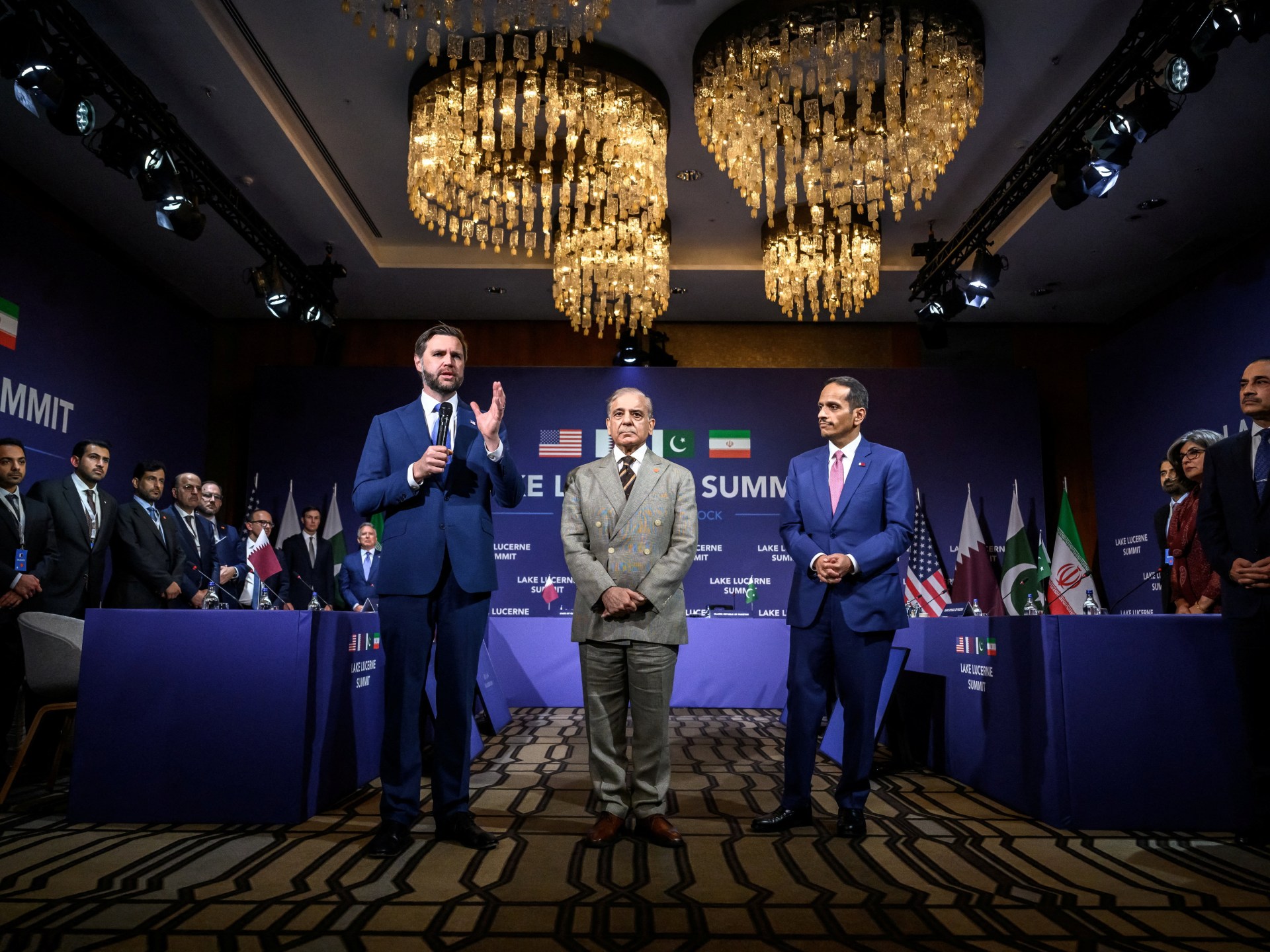
Pakistan has emerged as a visible intermediary in the US-Iran diplomatic track, a role that has brought public praise from both Washington and Tehran. Al Jazeera reported that Islamabad is now weighing whether that visibility can produce economic relief, regional influence or political benefits at home.
The latest signal came at the Burgenstock resort in Switzerland, where US Vice President JD Vance appeared with Pakistani Prime Minister Shehbaz Sharif and Qatari Prime Minister Sheikh Mohammed bin Abdulrahman bin Jassim Al Thani during talks involving the United States, Iran, Pakistan and Qatar. According to Al Jazeera, Vance singled out Pakistan’s army chief, Field Marshal Asim Munir, and said the talks would not have happened without his “statesmanship and military leadership.”
Iranian President Masoud Pezeshkian also traveled to Islamabad on Monday for a state visit, Al Jazeera reported. It was his first foreign trip since Iran was attacked by the US and Israel on February 28, and he thanked Pakistan for helping bring Tehran and Washington to negotiations.
Economic hopes remain narrow
Al Jazeera reported that Pakistan spent much of the past four months enabling backchannel contacts, hosting talks in Islamabad and managing political risks linked to transit routes to Iran while balancing ties with Gulf states. A peace framework was agreed on June 18, followed by 60 days of negotiations.
Pakistan’s economy gives Islamabad a clear reason to seek gains from the diplomacy. Figures cited by Al Jazeera show gross domestic product grew 3.7 percent in the past financial year, the fastest rate in four years, while remittances rose 8.2 percent to $30.3bn and the fiscal deficit narrowed.
Hina Shaikh, a Lahore-based economist at the International Growth Centre, told Al Jazeera that the benefits may be modest. She said Pakistan could see lower energy import costs if the Strait of Hormuz reopens and possible progress on the Iran-Pakistan gas pipeline if sanctions relief holds.
Shaikh also cautioned that recent growth reflected a fall in oil and gas imports during the Hormuz closure rather than stronger production. Al Jazeera reported that Pakistan remains in a $7bn International Monetary Fund programme approved in 2024, its 25th arrangement with the lender since the 1950s.
According to Shaikh, Pakistan’s main economic problems cannot be solved by diplomatic stature alone. She told Al Jazeera that goodwill may still give Islamabad “breathing room” to speed up reforms.
Regional opening, with limits
Al Jazeera reported that Pakistani policy circles see the larger prize in regional changes that could follow a lasting US-Iran agreement. Possible benefits include restored trade along the Balochistan border and renewed attention to the long-stalled Iran-Pakistan gas pipeline, which has faced pressure from US sanctions for more than a decade.
Umer Karim, an associate fellow at the King Faisal Center for Islamic Research and Studies in Riyadh, told Al Jazeera that Pakistan filled a communications gap at a time when the Trump administration did not trust other possible mediators. He said Islamabad was also acceptable to Iran and coordinated with Egypt, Turkiye and Saudi Arabia.
Karim said Pakistan’s reach remains limited. He told Al Jazeera that Islamabad has gained a place in the Middle East security discussion, but not enough leverage to force concessions from Iran, persuade the US to accept Iranian demands or keep relations balanced with all Gulf players.
Military visibility raises domestic questions
Al Jazeera reported that Munir’s prominent role has focused attention on who inside Pakistan benefits most from the mediation. The military has ruled Pakistan directly for more than 30 years of the country’s nearly 80-year history and continues to exert influence over politics and foreign affairs, according to the report.
Tughral Yamin, a retired brigadier and Islamabad-based defence analyst, told Al Jazeera that any economic gains should reach Balochistan, Pakistan’s poorest province and the site of a more than two-decade armed separatist campaign. He said sharing benefits with people there could help eliminate terrorism, while warning Pakistan has missed opportunities before.
This story draws on original reporting from Al Jazeera.