
Zimbabwe’s lithium gains raise questions over local benefits
Chinese-backed projects are lifting Zimbabwe’s lithium exports, but analysts, unions and community advocates say benefits near mines remain uneven.
By Sofia Marchetti · World Affairs Correspondent
4 min read
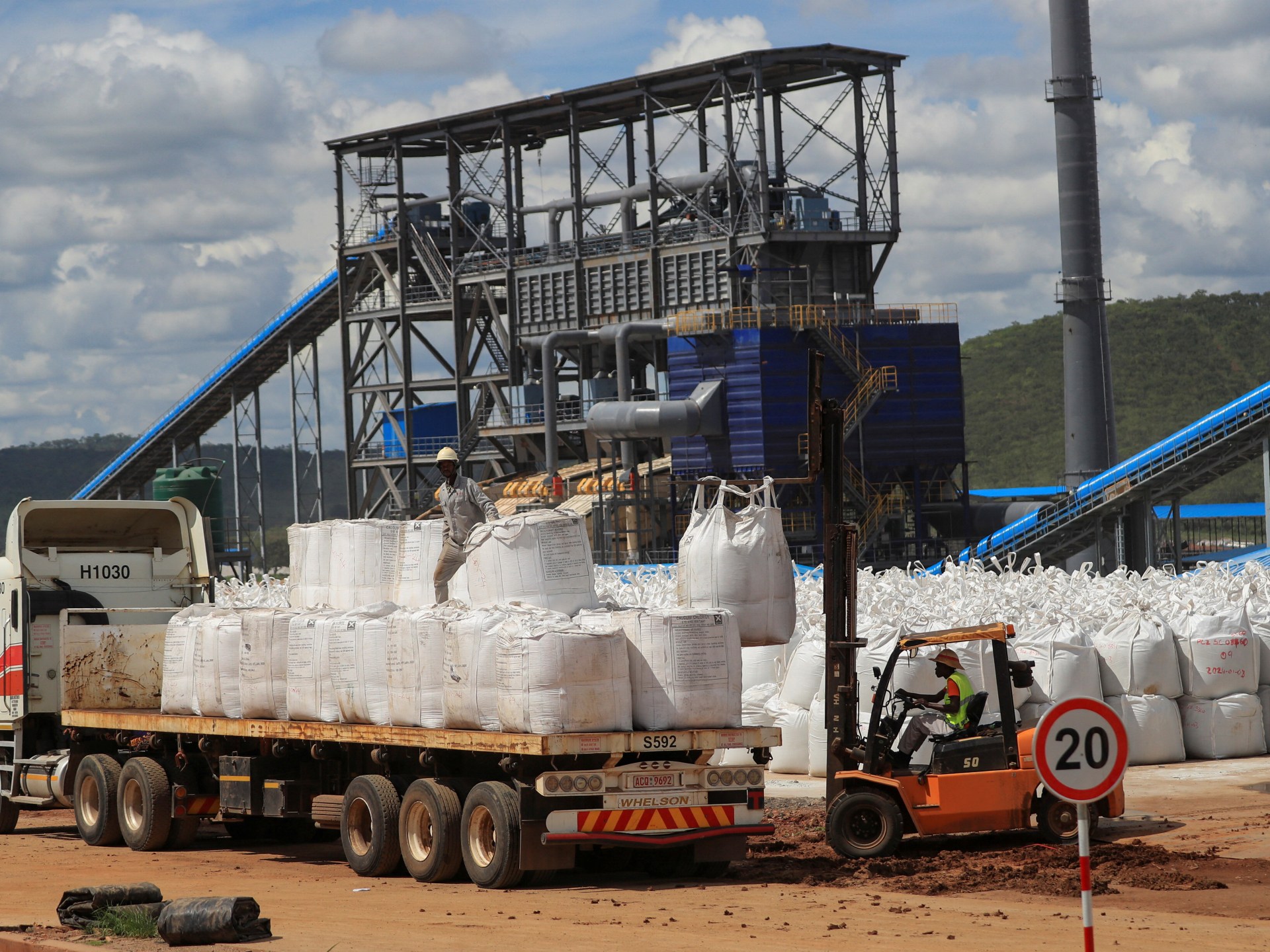
Zimbabwe is earning more from lithium as new processing projects come online, but communities near several mines say the boom has not yet delivered the jobs and services they expected. Al Jazeera reported that the sector is led by a small group of large projects, many financed by Chinese companies, as the country tries to capture more value from battery minerals.
The main producers include Bikita Minerals in Masvingo Province, Prospect Lithium Zimbabwe’s Arcadia mine near Harare, Kamativi Lithium Mine in Matabeleland North, Sabi Star Lithium Mine in Buhera, Sandawana Mine in Mberengwa and Gwanda Lithium Mine in Matabeleland South, according to Al Jazeera. Their output has helped make Zimbabwe one of Africa’s key lithium suppliers for electric vehicles and renewable energy technologies.
Processing push lifts export earnings
Prospect Lithium Zimbabwe said in April that it had shipped lithium sulphate from its Arcadia operation, marking a step beyond raw mineral exports, Al Jazeera reported. The company’s Arcadia processing plant cost $400m, according to the report, and PLZ is fully owned by China’s Zhejiang Huayou Cobalt.
Al Jazeera said PLZ communications manager Patience Mushore initially indicated the company would respond to questions but later declined to comment and referred the outlet to earlier company statements.
Bikita Minerals is also planning to move further into processing. In a statement seen by Al Jazeera, the company said it is carrying out a $400m programme aimed at shifting from lithium concentrate exports to lithium precursor chemicals, supported by in-house laboratories for mineral testing, quality control and export compliance.
The company said the first phase of its lithium sulphate project is expected to start in the second quarter of 2027 and produce 60,000 tonnes a year, according to Al Jazeera. Mutapa Energy Minerals, part of Zimbabwe’s state-owned Mutapa Investment Fund, also said it is preparing a lithium concentrate processing plant at Sandawana with Zhejiang Huayou Cobalt and Tsingshan Holding Group.
Minerals Marketing Corporation of Zimbabwe data cited by Al Jazeera showed mineral sales of $983.85m in the first quarter of 2026. Export volumes rose 27 percent and export values increased 79 percent after the government banned exports of unprocessed minerals, while lithium export earnings climbed from $84.19m in the first quarter of 2025 to $178.64m in the same period of 2026.
Mines and Mining Development Minister Polite Kambamura told state media that the mining sector had generated at least $2bn this year, Al Jazeera reported. He linked the performance to strong gold and platinum group metal prices and investment in lithium processing, including the Arcadia project. Al Jazeera said attempts to obtain comment from Kambamura were unsuccessful.
Analysts warn gains may stay narrow
Political analyst Rashweat Mukundu told Al Jazeera that local processing is a positive move but needs long-term planning, infrastructure, technology and industrial capacity. He also said Zimbabwe should reduce reliance on China as both investor and market by improving relations and broadening export destinations.
Farai Maguwu, executive director of the Centre for Natural Resource Governance, told Al Jazeera that Zimbabwe’s lithium industry faces policy shifts, weak infrastructure, limited industrial capacity and insufficient community benefits. He cited damaged roads, few local jobs, pressure on livelihoods and inadequate spending on health, education and public infrastructure around Bikita Minerals, Prospect Lithium in Goromonzi and Sabi Star.
Mountain Mujakachi, director of the Bikita Land Institute of Development, told Al Jazeera that promised gains from value addition had not produced visible employment benefits in the area. He also alleged concerns over hiring practices, water shortages, environmental effects and unfulfilled infrastructure commitments, including a $10m bridge project announced after Sinomine Resource Group acquired Bikita Minerals.
Bikita Minerals rejected the picture of neglect in a statement seen by Al Jazeera, pointing to a $1m health facility serving more than 5,000 people, nutrition support for nearly 10,000 learners, a 132kV power line project valued at up to $30m and more than $500,000 spent on roads and community infrastructure.
Justice Chinhema, general secretary of the Zimbabwe Diamond and Allied Minerals Workers Union, told Al Jazeera that the export restriction fits wider African industrialisation goals. He said processing minerals locally must come with labour protections, unionisation, social dialogue, community benefits and transparent revenue use if workers and mining communities are to gain from the lithium trade.
This story draws on original reporting from Al Jazeera.