
MIT analysis points to radioactive exhaust from Russia’s Skyfall missile
Researchers say Russia’s Burevestnik likely uses a direct nuclear air cycle that could spread radioactive material during flight.
By Lucas Ferreira · Science & Environment Writer
4 min read
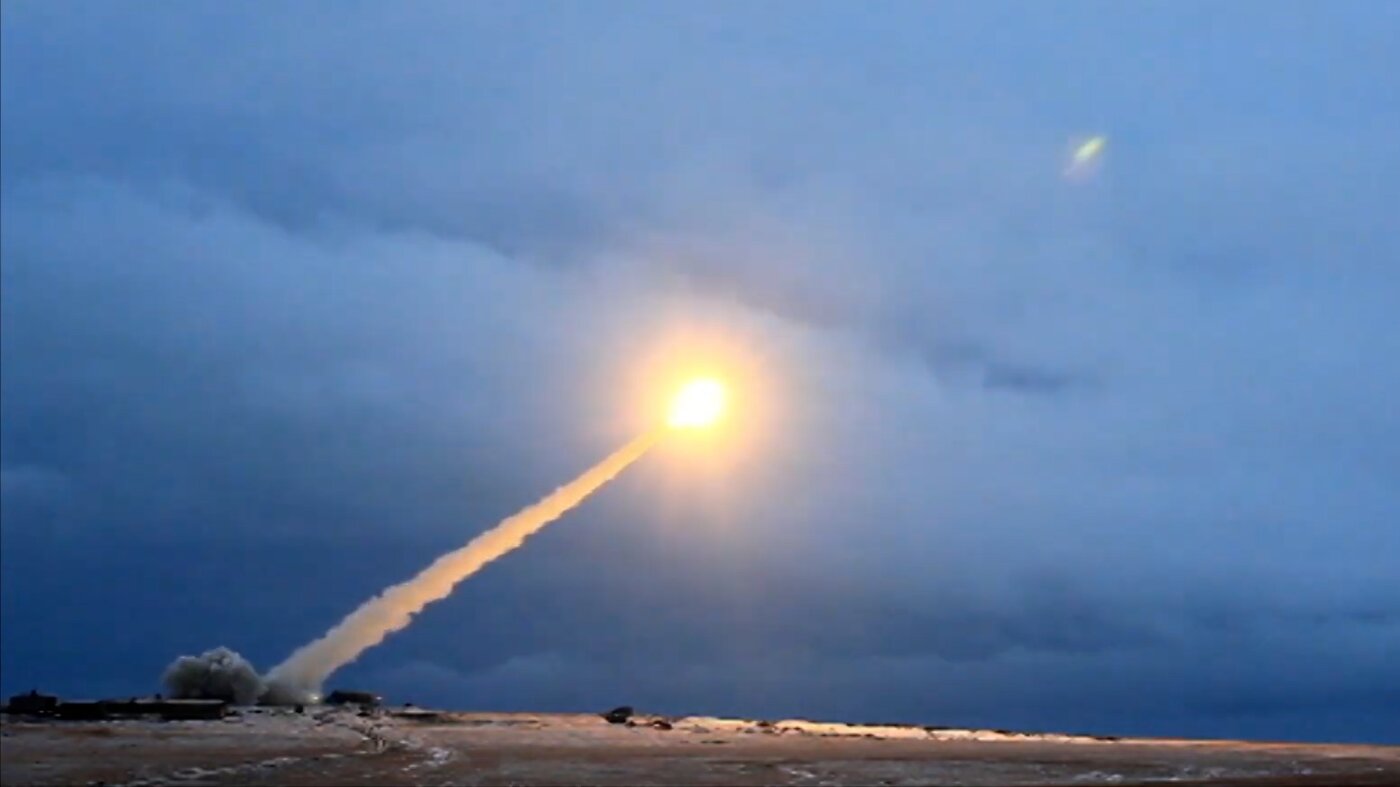
Russia’s Burevestnik cruise missile likely flies by pushing outside air through a small nuclear reactor, an MIT analysis says, a design researchers warn could release radioactive material as the weapon travels. The finding adds technical detail to a Russian system that Moscow says is nuclear-powered and that NATO calls Skyfall.
According to Russian and Western accounts cited by NPR, Russia launched the missile on Oct. 21 from an island above the Arctic Circle. The missile flew northeast before turning and circling for hours over a remote frozen area, NPR reported.
Jake Hecla, a Massachusetts Institute of Technology professor with appointments in aerospace and nuclear science and engineering, led the new analysis with R. Scott Kemp. Hecla told NPR the concept appears technically possible but costly and dangerous.
Researchers model the missile
Hecla based part of the analysis on videos released by Russian media, NPR reported. He used items visible in the footage, including a desk and a fire extinguisher, to estimate the missile’s dimensions and build a three-dimensional model.
The MIT researchers concluded that Burevestnik is bigger than Russia’s largest cruise missiles but still relatively compact, according to NPR. Their aerodynamic modeling indicated the weapon would need to fly at about Mach 0.75, or roughly 575 mph, a speed comparable to a commercial jetliner such as an Airbus A320.
With estimates for the missile’s size and required thrust, Hecla modeled the reactor that could power it. He told NPR the system almost certainly uses direct-cycle, air-breathing nuclear propulsion, most likely connected to a turbojet.
In that type of engine, compressed air from the atmosphere passes through narrow channels in the reactor core, heats as nuclear reactions occur, and expands out the rear of the engine. Hecla told NPR he could not completely exclude an indirect system, but said the added weight and complexity make that less likely.
Radioactive exhaust risks
The direct-cycle design raises the main safety concern in the MIT analysis. Hecla told NPR that air passing through the reactor would become irradiated and that fission products from the fuel could escape through the engine exhaust.
According to Hecla’s calculations, NPR reported, the engine could generate radioactive isotopes of argon, krypton and carbon. Hecla also said corrosion inside the reactor during a long flight could release additional radioactive material, because hot compressed air can wear away engine components.
If the MIT assessment is correct, NPR reported, the October test would mark the first flight of a nuclear-powered aircraft. The researchers said such a system could put people near the test area at significant risk.
Cold War ideas revived
The United States and the Soviet Union both studied nuclear-powered aircraft during the Cold War, NPR reported. In 1955, the U.S. Air Force placed a small reactor aboard a Convair B-36 bomber to study radiation exposure, though the reactor did not power the engines. The Soviet Union conducted related tests in 1961 using a modified Tupolev TU-95, according to NPR.
The United States also pursued Project Pluto, a nuclear-powered missile program that used a ramjet concept. NPR reported that a reactor tested in Nevada in 1964 ran for five minutes and produced 513 megawatts, equivalent to more than 35,000 pounds of thrust.
Hecla told NPR that a Pluto-style ramjet is unlikely for Burevestnik because the Russian weapon appears to be subsonic, while ramjets work best at supersonic speeds.
Questions about military value
Jeffrey Lewis, a Middlebury College scholar who studies missiles and was not involved in the MIT study, told NPR the weapon poses environmental and handling risks. He also said safely loading a missile with a live reactor would be difficult.
NPR reported that a 2019 accident off Russia’s coast killed several Russian nuclear personnel and was followed by a nearby radioactivity spike. The accident is widely believed to have involved an attempt to recover a prototype Burevestnik reactor, according to NPR; Hecla said the reactor may have restarted while being lifted from the seabed.
Russia has said Burevestnik would carry a nuclear warhead, NPR reported. Lewis told NPR he sees little practical reason to use such a reactor-powered missile for conventional explosives, given the radiation hazard that would remain at the impact site.
Russian President Vladimir Putin introduced Burevestnik in 2018 and described it as able to evade U.S. missile defenses, NPR reported. Hecla told NPR that modern forces already shoot down cruise missiles and said Burevestnik does not appear especially hard to intercept.
This story draws on original reporting from NPR.