
Filton 4 sentencing fuels debate over UK protest prosecutions
An Al Jazeera commentary argues Britain is using terrorism powers against Palestine solidarity activists while Israel faces war-crimes accusations.
By Sofia Marchetti · World Affairs Correspondent
3 min read
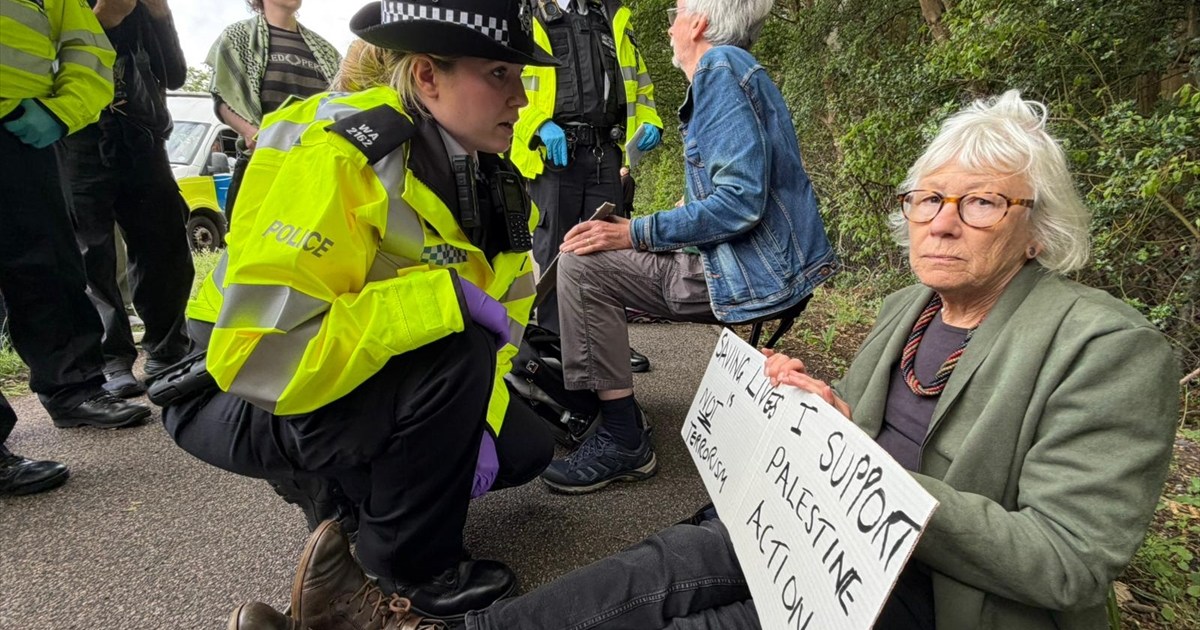
The sentencing of four Palestine Action-linked activists in Britain has become a flashpoint in the debate over how the UK treats protest against Israel’s war in Gaza. Al Jazeera columnist Ahmed Najar argued that the case shows Britain directing severe legal powers at activists rather than at those he says support or enable Israel’s actions.
The case concerns a 2024 protest at an Elbit Systems facility in Filton, near Bristol. According to an Anadolu photo caption published by Al Jazeera, four activists appeared for sentencing at Woolwich Crown Court on June 12 after being found guilty of criminal damage, violent disorder and grievous bodily harm with intent.
Al Jazeera described the defendants as part of the “Filton 4” and linked the case to terrorism charges. Protesters gathered outside the London court in support of the activists as police stood outside the building, according to the same caption.
Arguments over terrorism law
Najar, a Palestinian political analyst and playwright, wrote that the case raises questions beyond the fate of the four defendants. He argued that Britain’s use of terrorism-related language and powers against Palestine solidarity activism sends a wider signal about what the state treats as a security threat.
His commentary said the issue is not whether activists are exempt from criminal law. Rather, he argued, the central question is why opposition to Israel’s conduct in Gaza is increasingly framed through extremism and terrorism while political backing for Israel remains acceptable within British politics.
Najar said terrorism legislation holds a distinct place in democratic legal systems because it is designed for conduct seen as an exceptional threat to public safety and national security. Applying that framework to protest activity, he argued, changes how political dissent is viewed.
Gaza and the Elbit protest
The Filton protest targeted a facility linked to Elbit Systems, which Najar described as Israel’s largest weapons manufacturer. He wrote that the company’s products and technologies have been used by the Israeli military during the destruction of Gaza.
Najar argued that the activists’ actions were politically directed at Britain’s relationship with companies involved in supplying Israel’s military. He said it is legitimate to debate criminal penalties for such acts, but also legitimate to ask why more scrutiny falls on those disrupting the supply chain than on the supply chain itself.
The commentary noted that Israel and its leaders face accusations before international courts of genocide, war crimes and crimes against humanity. Najar also wrote that growing numbers of legal scholars, United Nations experts, human rights organisations and genocide scholars have described Israel’s war in Gaza as genocide.
He said Gaza has suffered destruction across neighbourhoods, hospitals, schools and universities, and accused Israel of obstructing aid and using starvation as a weapon. These allegations were presented as part of his argument about the contrast between the scale of harm in Gaza and the legal response to the Filton case.
Broader concerns over dissent
Najar linked the prosecution to a wider British debate over Palestine since October 2023. He wrote that criticism of Israel has become more contested, Palestine solidarity more suspect, and allegations of anti-Semitism more frequently attached to opposition to Israeli policy.
He said anti-Semitism should be confronted wherever it appears, while arguing that criticism of a government is not the same as hostility toward a people. Democracies, he wrote, depend on keeping that distinction clear.
The commentary concluded that the Filton 4 case raises questions about democratic dissent, proportionality and Britain’s political priorities. Al Jazeera noted that Najar’s views were his own and did not necessarily reflect the network’s editorial stance.
This story draws on original reporting from Al Jazeera.