
Zelenskyy’s firing of defense minister sparks wartime backlash
Mykhailo Fedorov’s removal has drawn protests in Ukraine and exposed tensions over military reform and wartime politics.
By Sofia Marchetti · World Affairs Correspondent
3 min read
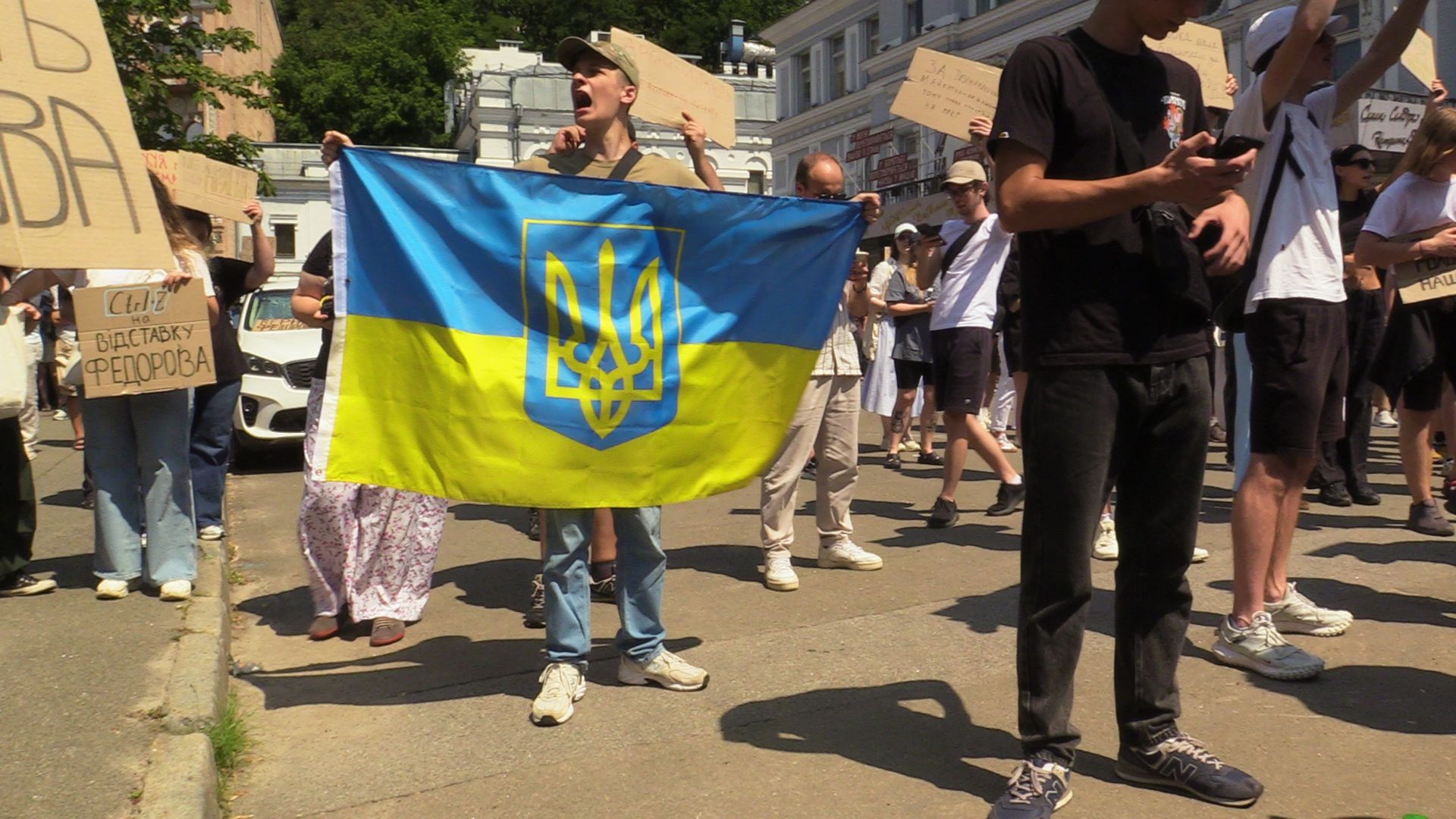
Ukrainian President Volodymyr Zelenskyy’s removal of Defense Minister Mykhailo Fedorov has triggered protests and opened a new political problem for the wartime government, according to Al Jazeera. The backlash matters because Fedorov had become associated with technology-driven military reforms, while his dismissal has sharpened tensions between civilian reformers and the army command.
Al Jazeera reported that Zelenskyy dismissed Fedorov on Wednesday, about seven months after appointing him in January. Fedorov, 35, had no combat background, but had previously built a reputation as Ukraine’s minister of digital transformation.
In the defense post, Fedorov handled areas including logistics, budgeting, reform, anti-corruption measures and talks tied to Western aid and loans, according to Al Jazeera. Combat planning remained under Commander-in-Chief Oleksandr Syrskii, a four-star general credited with key Ukrainian successes in 2022 but also criticized over battlefield losses.
Reforms and resistance
After taking the job, Fedorov gave Zelenskyy a list of problems inside the military, Al Jazeera reported. Those concerns included disorganized management, frequent command rotations, opaque distribution of weapons and equipment, bureaucracy, resistance from Syrskii’s General Staff, loyalty-based decision-making and the sidelining of effective reform-minded commanders.
Al Jazeera reported that Fedorov expanded Ukraine’s use of drones, including medium- and long-range systems used against Russian supply routes, depots, refineries and air defenses. He also promoted AI-enabled drones and ground robots for resupply and casualty evacuation, while trying to make procurement more transparent.
Kyiv-based analyst Ihar Tyshkevich told Al Jazeera that Fedorov made the ministry more effective and that the results showed in Ukrainian strikes on Russia. Tyshkevich said Syrskii is unpopular and that many Ukrainians credited Fedorov.
Al Jazeera said the reforms angered Syrskii but won support among some troops and civilians. A drone pilot identified only as Boris, speaking while on leave from the eastern front, said Fedorov had not solved issues such as long service terms, recruitment problems or desertion, but added that “the results were good.”
Protests and political strain
Demonstrations broke out in Kyiv and other major Ukrainian cities after the dismissal, Al Jazeera reported. Protesters in central Kyiv carried signs praising Fedorov and criticizing Zelenskyy’s decision.
One demonstrator, Taisiya, told Al Jazeera that Fedorov had proved himself as a reformer and said she would like to see him as president. She withheld her last name for security reasons.
Volodymyr Fesenko, head of the Kyiv-based Penta think tank, told Al Jazeera that the protests, the resignations of two Fedorov advisers and reported hesitation in parliament over approving a successor showed Zelenskyy faced a stalemate. “So far, Zelenskyy doesn’t have a solution,” Fesenko said.
Fedorov pushed back publicly on Thursday, accusing Syrskii of “weaving intrigues” and trying to “split” Ukraine, according to Al Jazeera. He said Syrskii had saved the country in 2022 but argued that the war had changed and Ukraine had to change with it.
Fedorov said he remained loyal to Zelenskyy and suggested the decision could still be reversed, Al Jazeera reported. Tyshkevich told the outlet that the firing had turned Fedorov into a popular figure who “suffered for the truth,” making him a possible political threat to Zelenskyy.
Russian pro-war voices also reacted to the dismissal, according to Al Jazeera. Russian military blogger Alexey Zhivov wrote on Telegram that Fedorov had been “too smart and effective for an enemy,” while Moscow-based analyst Sergey Markov described the protests as a political riot.
This story draws on original reporting from Al Jazeera.