
Child HIV outbreak in Sindh linked to hospital safety failures
Officials say at least 130 people, mostly children, have tested positive after exposure tied to government-run health facilities in Karachi.
By Lucas Ferreira · Science & Environment Writer
4 min read
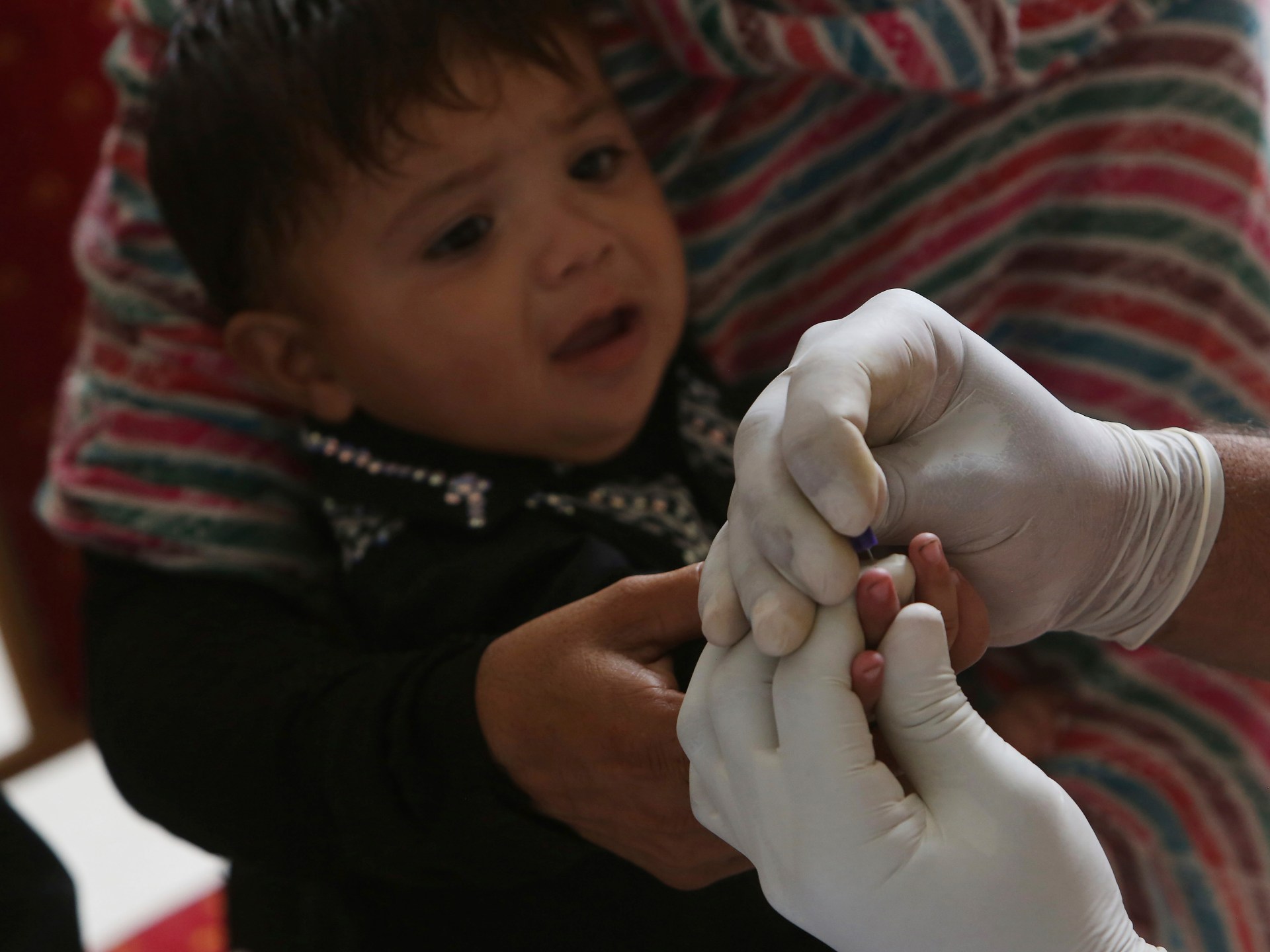
At least 130 people, most of them children, have tested positive for HIV in an outbreak linked to government-run health facilities in Karachi, Pakistan’s largest city. The cases have raised new questions about infection control in Sindh, a province that has seen repeated child HIV outbreaks in recent years.
Sindh Labour Minister Saeed Ghani said more than 10,500 people were screened around Kulsum Bai Valika Hospital, a facility run by the Sindh Employees’ Social Security Institution, and 120 were found to have HIV. A separate screening effort at another SESSI facility in Karachi’s Landhi area found 10 more cases, according to officials.
SESSI provides medical care and financial support to industrial and commercial workers and their families across Sindh. Officials have traced the current outbreak to October 2025, when the provincial health department was first told of six HIV-positive cases. The matter drew public attention the following month after residents in Karachi’s SITE Town reported infections among children who had been treated at Kulsum Bai Valika Hospital.
Inquiries cited infection-control failures
Sindh Chief Minister Murad Ali Shah was told on July 14 that two internal reviews had found serious failings at the hospital, including weak infection-prevention practices, insufficient use of protective equipment and mishandling of single-use syringes.
The first inquiry, submitted in November 2025, found 16 HIV-positive children connected to the hospital’s paediatrics department. A second review submitted to the provincial ombudsman on June 19 confirmed 78 infections and six deaths, and assigned responsibility to named hospital staff for administrative and supervisory failures.
Ghani said the infections were linked to exposure before October 2025 and that screening would continue even though officials expect more cases may be found. On July 3, authorities issued show-cause notices to 37 doctors and hospital employees, giving them 14 days to respond. Ghani said dismissals and criminal cases would follow if staff were found responsible.
The minister has disputed allegations in a Sindh High Court petition that reused syringes caused the outbreak, saying the hospital uses auto-disable syringes. The official inquiries, however, described broader infection-control breakdowns, including problems in how single-use syringes were handled. The court has given the provincial government until July 20 to respond to the petition, which alleges violations of rules on syringe regulation and disposal.
Repeated outbreaks point to wider risks
The current cluster follows earlier HIV outbreaks in Sindh, including a major outbreak among children in Ratodero in 2019. In December, the World Health Organization and UNAIDS described Pakistan as having one of the fastest-growing HIV epidemics in the WHO Eastern Mediterranean Region, with annual infections rising from 16,000 in 2010 to 48,000 in 2024.
WHO and UNAIDS estimated that about 350,000 people in Pakistan are living with HIV and said nearly 80 percent do not know their status. The agencies also reported that infections among children ages 0 to 14 rose from 530 in 2010 to 1,800 in 2023. They said 38 percent of children with HIV receive treatment, while 14 percent of pregnant women who need therapy to prevent transmission to babies receive it.
Doctors writing in The Lancet HIV in June argued that unsafe medical practices have become a major driver of Pakistan’s HIV problem. Syed Faisal Mahmood, an infectious diseases professor at Aga Khan University Hospital in Karachi, urged caution, saying Pakistan does not have systematic surveillance to determine how many infections come from healthcare settings compared with sexual transmission, mother-to-child transmission or intravenous drug use.
Mahmood said poor injection safety is a national problem across different levels of care. He also linked the risks to Pakistan’s high hepatitis C burden, saying both diseases can spread through similar unsafe medical practices.
Government response
Prime Minister Shehbaz Sharif ordered a nationwide ban on substandard syringes on July 3. The Drug Regulatory Authority of Pakistan later said retail sales of reusable conventional syringes will be banned from January 2027.
Federal Health Minister Mustafa Kamal has said HIV screening will be required before surgery across Pakistan, while cautioning against calling the situation a broader epidemic. The Sindh government has approved a 2 billion-rupee, or $7.2 million, endowment fund for long-term care of affected children, along with an isolation ward and an outside audit of the hospital’s procurement and infection-control systems.
Mahmood said syringe bans alone would not solve the problem because much of Pakistan’s healthcare is delivered by private clinics, dispensaries and hospitals that are difficult for regulators to inspect. He said unsafe injections are reinforced by weak oversight and by patients who expect injections as part of treatment.
This story draws on original reporting from Al Jazeera.