
Trump utility bill pledge expands to AI power companies and states
The White House added utilities, developers and states to a voluntary AI data centre pledge, but it includes no enforceable protections.
By Daniel Okafor · Business Editor
3 min read
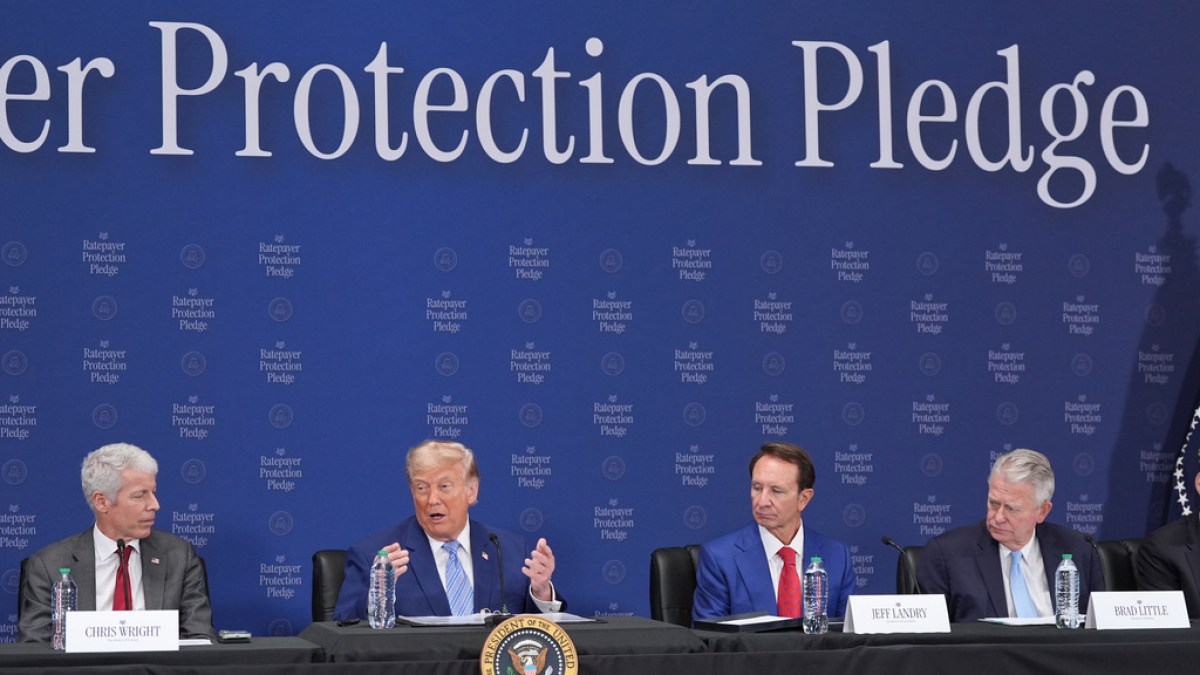
President Donald Trump’s administration expanded the Trump utility bill pledge aimed at preventing AI data centres from pushing energy costs onto households. The White House said Thursday the voluntary agreement will now include state governors and electricity companies, widening a March effort that began with technology and AI firms.
The move comes as data centres, many built to support artificial intelligence, drive new demand for power and draw resistance from communities worried about electricity and water costs. The administration described the expanded pledge as “historic,” but it did not announce enforceable consumer protections.
According to the White House, 200 additional utilities, data centre developers and states will join the agreement. The pledge says hyperscalers, AI companies, utilities and data centre developers will “build, bring, or buy” the power their facilities require and pay for the infrastructure needed to deliver it.
What is Trump’s utility bill pledge for AI data centres?
The pledge is a public commitment that companies and power providers behind AI data centres will cover the electricity and infrastructure costs tied to those facilities. The White House says the goal is to ensure consumers do not pay for AI’s energy needs through higher utility bills.
Because the agreement is voluntary, it relies on participating companies, utilities and state officials to follow through without a new federal enforcement mechanism. The administration did not announce penalties for companies that fail to meet the commitment.
Trump promoted the agreement at the Environmental Protection Agency on Thursday, where he urged executives and governors to persuade local communities to accept data centre projects. He said towns and cities that host them would become “rich” and told officials, “You have to convince your community. You can’t fight it. You have to go with it.”
Trump also said communities should accept the investment rather than see it go elsewhere. “If you don’t take all that money, somebody else is going to take it. You might as well do it yourselves,” he said.
Why are AI data centres facing local opposition?
AI data centres use large amounts of electricity to run computing equipment and cooling systems, and some facilities also require substantial water resources. Residents who oppose them often cite higher utility costs, water use, quality-of-life concerns and doubts about whether AI will benefit their communities.
An analysis by consulting and technology services company ICF found that rising electricity demand from AI data centres could increase monthly utility bills by 15 percent to 40 percent by 2030. That forecast has helped make energy costs a central issue in debates over new projects.
Public polling shows broad unease. A May Gallup poll found that seven in 10 people in the United States opposed AI data centre construction in their area, with about 48 percent strongly opposed. Slightly more than a quarter supported such projects, and 7 percent strongly supported them.
A June poll from Johns Hopkins University found strong support among Americans for more regulation of AI. About 60 percent of respondents said they expected AI to increase inequality over the next decade, while four in 10 said AI companies stood to gain the most power from the technology’s growth. One in 10 said individuals would benefit the most.
Trump has made AI a priority in his second term and has taken a light regulatory approach toward the sector, according to Al Jazeera and The Associated Press. Even as data centre construction has become an election issue in some places, the industry continues to pursue rapid expansion of the infrastructure needed for AI.
This story draws on original reporting from Al Jazeera.