
Trump threatens new Iran strikes as Vance joins Swiss talks
The warning came as U.S., Iranian and regional officials met in Switzerland over a strained Lebanon agreement and Iran’s nuclear program.
By Sofia Marchetti · World Affairs Correspondent
3 min read
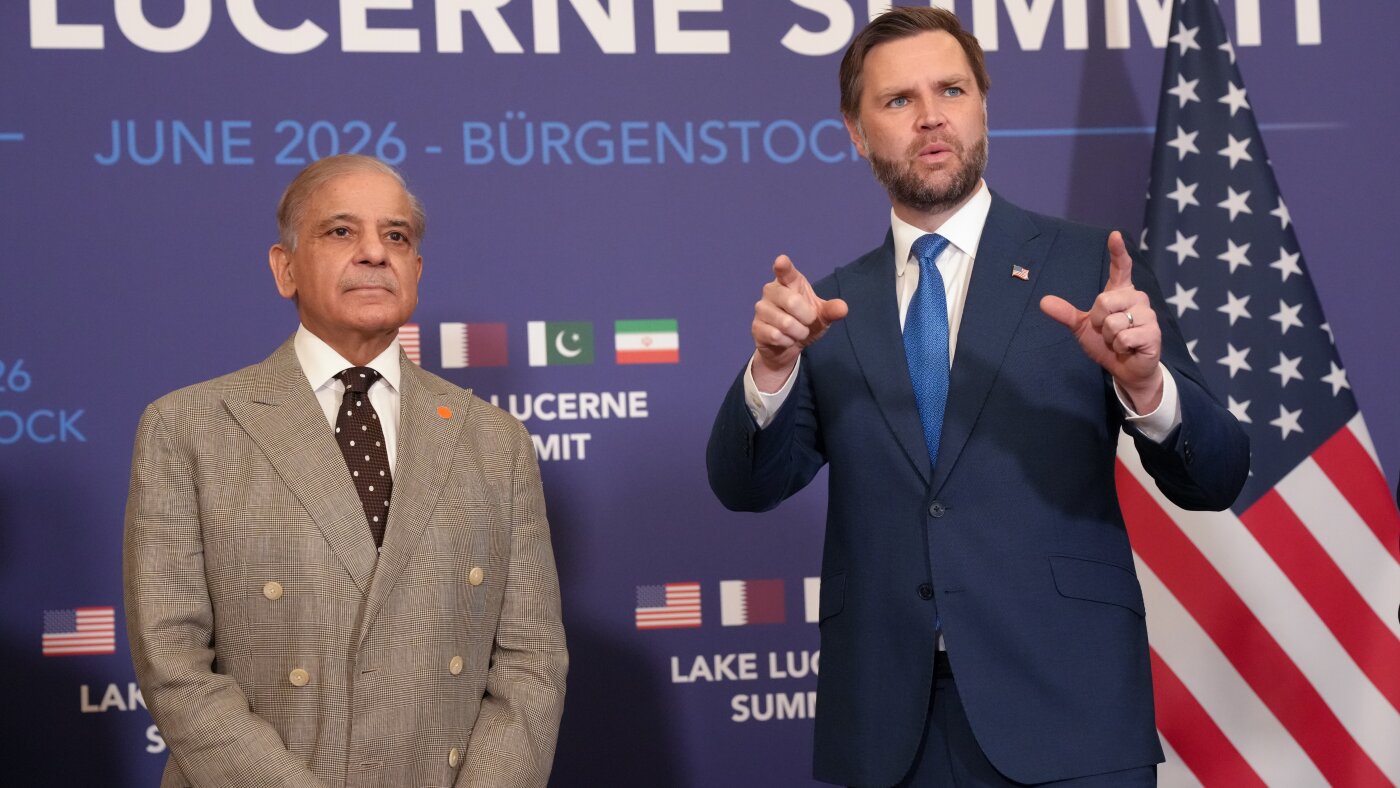
President Trump threatened fresh military action against Iran on Sunday as Vice President JD Vance joined talks in Switzerland aimed at keeping a fragile Middle East agreement from collapsing. The warning underscored the pressure on negotiations after Iran said it had closed the Strait of Hormuz and fighting continued in Lebanon.
In a Truth Social post, Trump said Iran must stop what he called its proxies in Lebanon from causing trouble. If Iran did not, he wrote, the United States would “hit Iran very hard again,” and harder than it had the previous week.
NPR reported that Vance arrived in Switzerland early Sunday for meetings tied to a memorandum of understanding signed last week by the United States and Iran. The talks include Iranian officials, mediators from Qatar and Rafael Grossi, the head of the International Atomic Energy Agency.
Vance also met with Pakistani officials involved in brokering the talks, including Prime Minister Shehbaz Sharif and Staff Field Marshal Asim Munir, according to NPR. The meetings took place at the Bürgenstock Resort near Lucerne.
Hormuz claim adds pressure
Iran’s military said Saturday it had closed the Strait of Hormuz because Israeli strikes in Lebanon were continuing against Hezbollah, the Iranian-backed militant group. Iran said the United States had failed to restrain Israel and had violated terms of the tentative agreement, which calls for fighting in Lebanon to stop.
U.S. Central Command gave a different account, saying shipping through the strait was continuing normally. The strait is a key maritime passage, and any disruption there can heighten concern over regional trade and energy flows.
The agreement under discussion calls for respect for Lebanese sovereignty and a halt to military operations in Lebanon, NPR reported. Israel and Lebanon have not signed the memorandum, but Iran says Washington must enforce its provisions.
Nuclear dispute remains on the table
Iran’s nuclear program is also part of the Swiss discussions. Iranian President Masoud Pezeshkian said Sunday that Iran would not give up what he described as its right to enrich uranium, and that the other side would have to accept that position.
Iran has maintained that its nuclear program is peaceful. Grossi’s presence at the meetings reflects the role of the International Atomic Energy Agency in monitoring nuclear issues.
Vance told reporters Sunday that the talks were making progress. Asked whether he had a message for Israeli Prime Minister Benjamin Netanyahu, Vance said there had been “great progress” in recent days while adding that such efforts can be messy.
Vance also said the United States had done more than any other government to stop the conflict in Lebanon, according to NPR. He said officials would keep working through remaining disagreements.
Lebanon fighting strains deal
Israel and Hezbollah announced a ceasefire Friday, but NPR reported that the two sides exchanged heavy fire through Saturday. The Lebanese National News Agency said at least 16 people, including civilians, were killed by Israeli strikes on Saturday.
Israel said those strikes answered Hezbollah projectiles fired at Israeli forces overnight Saturday. Hezbollah said it fired after Israel moved toward Lebanese territory.
On Sunday, the interim head of the United Nations Interim Force in Lebanon told NPR that the peacekeeping mission had recorded no attacks from either side for the first time since the Israel-Hezbollah war began on March 2.
This story draws on original reporting from NPR.