
Trump plans new Supreme Court bid on birthright citizenship
The president said he will seek a rehearing after justices rejected his order limiting citizenship for some children born in the US.
By Sofia Marchetti · World Affairs Correspondent
3 min read
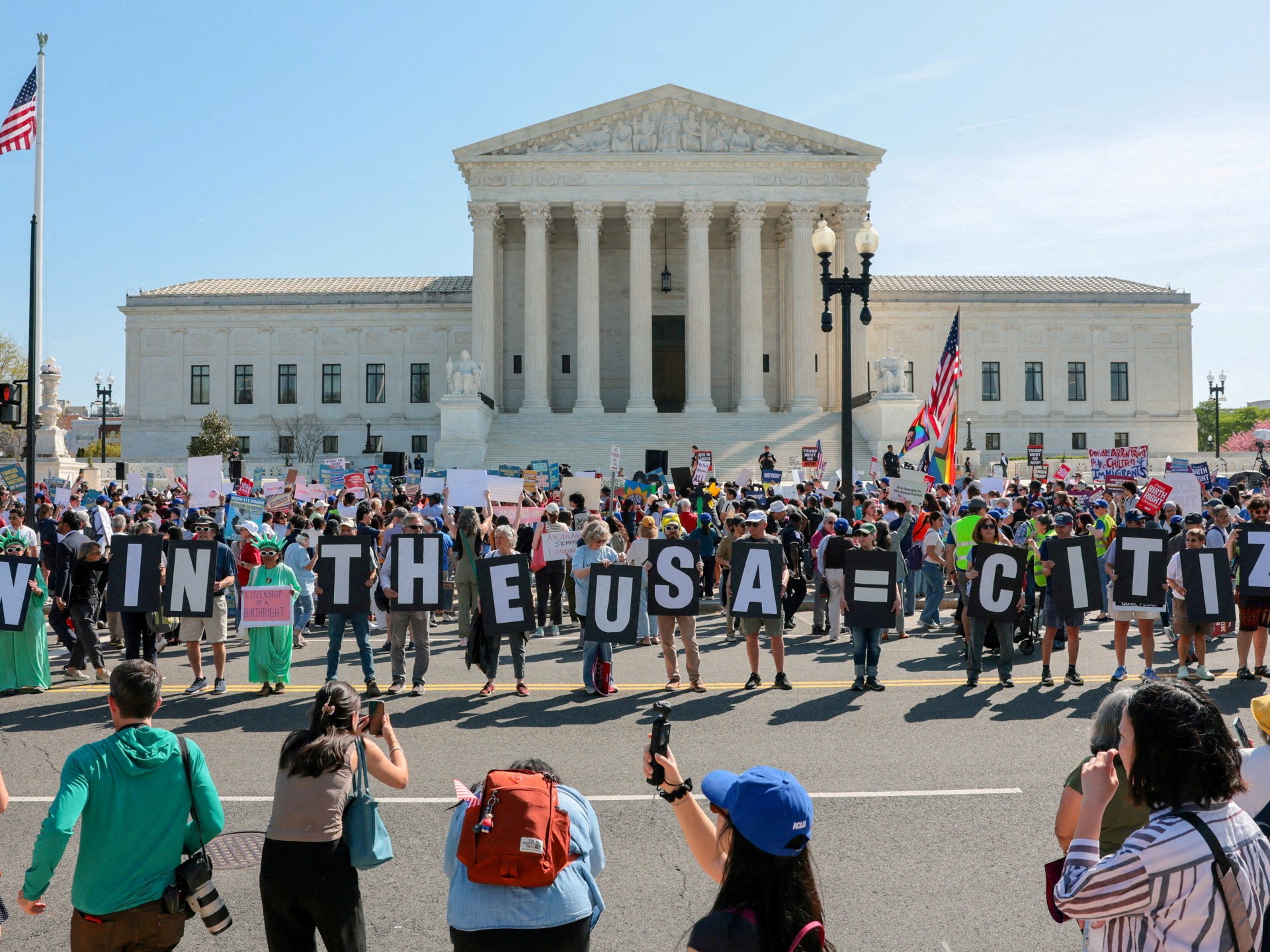
US President Donald Trump said he will ask the Supreme Court to revisit its ruling against his attempt to limit birthright citizenship. The move keeps alive a central piece of his immigration agenda after the court found that his directive conflicted with the Constitution’s citizenship guarantee.
Trump announced the planned request Wednesday on Truth Social, according to Al Jazeera and Reuters. “AMERICAN CITIZENSHIP IS NOT FOR SALE! In fact, that is a crime, and therefore, the Supreme Court’s ruling is wrong,” he wrote. “I will be asking for a Rehearing by the United States Supreme Court, IMMEDIATELY.”
The Supreme Court ruled 6-3 last month against Trump’s order, which sought to deny automatic citizenship to some people born on US soil. The order applied to children born in the United States to parents who lack documentation or hold temporary legal status.
Trump signed the executive order on January 20, 2025, the day he took office, Al Jazeera and Reuters reported. The order targeted a long-established interpretation of the 14th Amendment, which grants citizenship to people born in the United States and “subject to the jurisdiction thereof”.
Low odds for a rehearing
A rehearing request faces a difficult path. Al Jazeera and Reuters reported that the Supreme Court rarely grants such petitions, and that decades have passed since the court last allowed a new hearing after issuing a decision in an argued case.
Trump also urged Republicans in Congress to pass legislation narrowing birthright citizenship, calling the court’s ruling “too bad for our country.” Al Jazeera and Reuters reported that such a bill would likely face major obstacles, citing polls that regularly show broad public support for birthright citizenship and a Supreme Court majority opinion indicating that a constitutional amendment would be needed.
The ruling marked a setback for Trump after a series of immigration wins at the high court in recent months. Al Jazeera and Reuters reported that the court had allowed his administration to effectively end Temporary Protected Status for residents of some crisis-hit countries and to use a tactic that physically blocked asylum seekers from reaching US soil, where the government would have to let them seek protection.
Rights groups welcomed the decision
Rights organizations praised the ruling against Trump’s birthright citizenship order. Cecillia Wang, an American Civil Liberties Union lawyer who argued the challenge before the Supreme Court, said the decision “reaffirms a fundamental American promise – if you are born here, you are a citizen”.
A study released in May last year by the Migration Policy Institute and Penn State estimated that 255,000 infants each year would be born in the United States without citizenship if the order took effect. The study said the undocumented population would rise by 2.7 million by 2045.
The study warned that the policy “would create a self-perpetuating, multigenerational underclass,” with US-born residents inheriting the disadvantages faced by their parents and, over time, earlier generations.
This story draws on original reporting from Al Jazeera.