
Collina rejects bias claims after Argentina's World Cup win over Egypt
FIFA's refereeing chief defended officials after Egypt challenged key VAR calls in a 3-2 round-of-16 loss to Argentina.
By Lucas Ferreira · Science & Environment Writer
3 min read
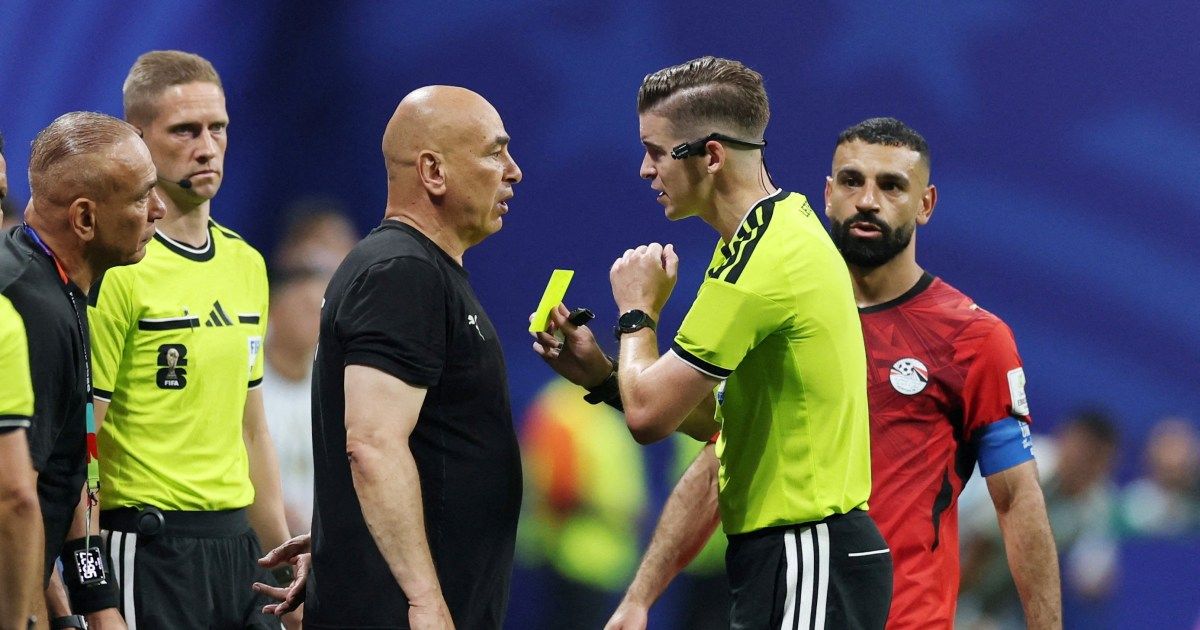
FIFA refereeing chief Pierluigi Collina has rejected allegations that officials were biased in Argentina’s 3-2 World Cup round-of-16 win over Egypt. His defence matters because Egypt blamed refereeing and VAR decisions for a defeat that ended its tournament, according to Al Jazeera and Reuters.
In an interview published Thursday on FIFA’s website, Collina said match officials at the World Cup act independently and are not subject to outside influence. He said criticism of decisions is expected in football, but accusations attacking officials’ honesty are unacceptable.
Collina said referees can make mistakes during a tournament with many games in a short span, and that officials respond by preparing for their next assignments. He warned that unsupported claims about integrity can lead to threats against referees and their families.
According to FIFA, Collina said no one could question the integrity of World Cup officials or claim FIFA refereeing is swayed by any person, including FIFA president Gianni Infantino. He said officials make decisions in good faith, as players and coaches do.
Egypt disputed two major calls
Egypt was eliminated after Argentina recovered from a 2-0 deficit with 11 minutes left and won through an Enzo Fernandez goal in stoppage time, Al Jazeera and Reuters reported. After the match, Egypt coach Hossam Hassan alleged there may have been pressure on the referee to keep Argentina in the competition and said Egypt had been cheated out of a quarterfinal place.
The Egyptian Football Association also criticised the officiating and said it would not stay silent over what it called improper use of the Video Assistant Referee system. Egypt’s complaints centred on a disallowed goal by Mostafa Zico and a challenge on Mohamed Salah shortly before Argentina’s winning move.
Egypt argued that Zico’s second-half goal should have stood, saying the foul cited in the build-up did not exist. Collina said VAR was right to advise the referee to cancel the goal after spotting a foul by Marwan Attia on Argentina defender Lisandro Martinez during the attacking phase.
Collina said FIFA’s position is that a foul remains a foul even if it is not obvious to the referee on the field. If the referee misses it, he said, VAR is allowed to intervene.
FIFA backs no-penalty decision
Collina also supported the decision not to award Egypt a penalty for the contact involving Salah and Argentina forward Julian Alvarez before the winning goal. He said the referee and VAR viewed the incident as normal football contact.
According to Collina, stepping on an opponent’s foot is a foul, while a player who touches the ball first and then makes ordinary contact has not committed an offence. He said the Salah-Alvarez incident fell into the second category.
Collina acknowledged that some refereeing decisions involve judgment calls. Even so, he said FIFA was satisfied with how VAR rules had been applied during the tournament.
The match was refereed by France’s Francois Letexier. Reuters photographs from the game showed Letexier speaking with Salah and issuing a yellow card to Hassan during the contest.
This story draws on original reporting from Al Jazeera.