
Saudi oil tankers turn back as Red Sea route comes under threat
A Houthi blockade threat is forcing Asian refiners to weigh slower, costlier routes for Saudi crude through Suez and around Africa.
By Daniel Okafor · Business Editor
3 min read
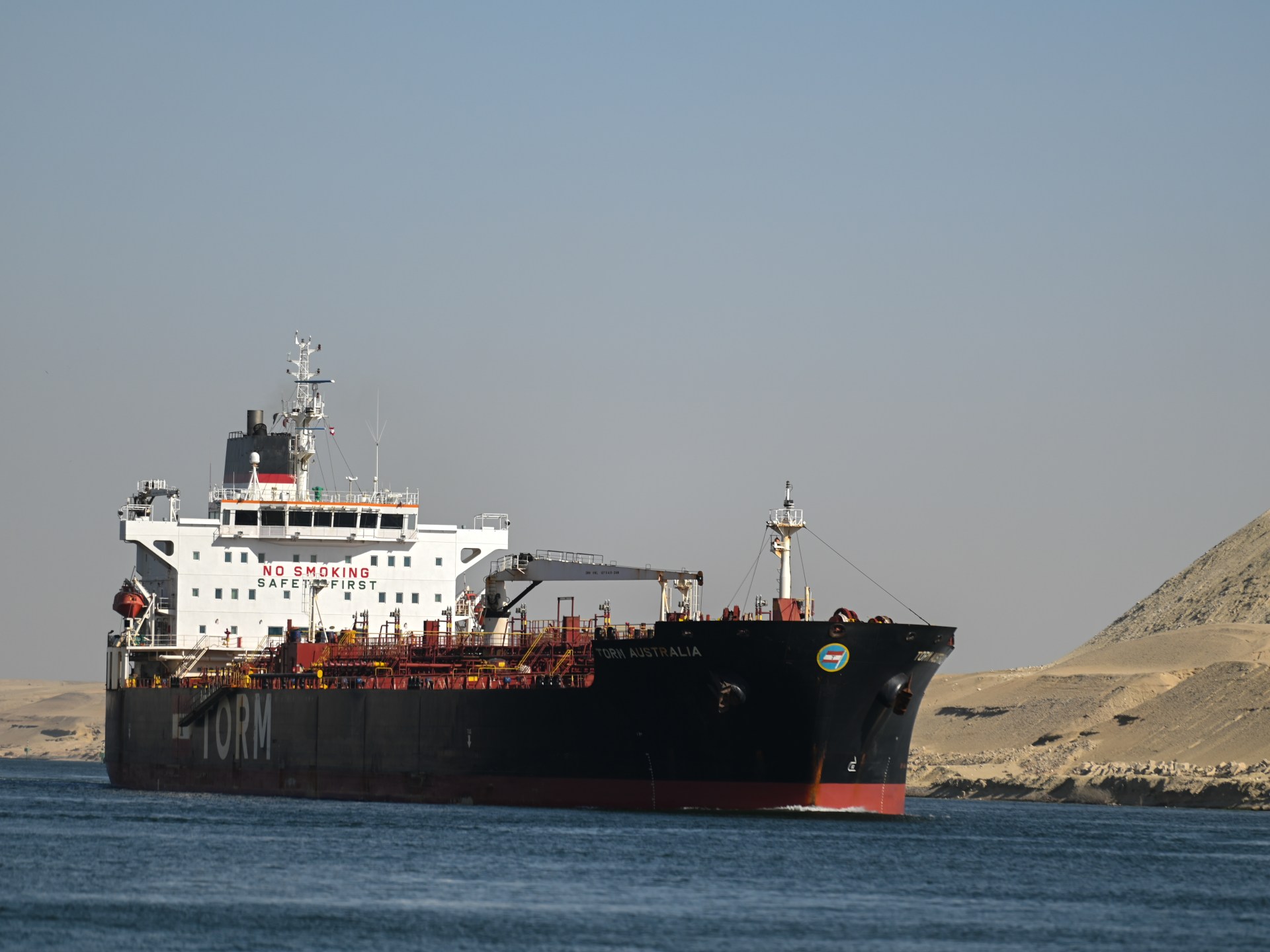
Two tankers carrying Saudi crude toward Asia have turned around in the Red Sea after Yemen’s Houthis announced a blockade of Saudi ports, according to shipping analytics firm Kpler. The movements matter because Saudi Arabia had been using its Red Sea outlet to reduce exposure to the disrupted Strait of Hormuz.
Kpler said the Rodos and Xin Long Yang were carrying a combined 2.8 million barrels from Yanbu, Saudi Arabia’s western oil port. Both vessels had been heading toward Bab al-Mandeb, the strait between Yemen and the Horn of Africa, before changing course northward.
The Houthi announcement has put a second major shipping chokepoint under strain. Al Jazeera reported that traffic through the Strait of Hormuz has already fallen sharply during the war between Washington and Tehran, with Iran restricting passage and the United States blocking vessels travelling to and from Iranian ports and coastal areas.
Before the conflict, about one-fifth of global oil and liquefied natural gas supplies moved through Hormuz, according to Al Jazeera. Kpler data showed only three commodity vessels transited the strait on Tuesday, with no very large crude carriers or LNG tankers observed.
Saudi Arabia and the United Arab Emirates have more options than Gulf producers that depend almost entirely on Hormuz, because both have pipelines to alternative export terminals. Saudi Arabia has increasingly relied on Yanbu: Kpler said the port shipped about 4.1 million barrels per day in June, covering roughly 64 percent of Saudi crude that otherwise would have moved through Hormuz.
That workaround is now less secure. Kpler said 12 crude-laden vessels from Yanbu remained in the Red Sea, while two others switched off automatic identification system transponders near Bab al-Mandeb. Empty tankers heading toward the area also appeared to be pausing or changing plans, the firm said.
Asian refiners face the biggest risk
Asia is most exposed because many refiners rely on Middle Eastern crude for shorter and cheaper deliveries. Kpler estimates about 6 million barrels per day of crude currently moves through Bab al-Mandeb toward Asia, with Saudi Arabia accounting for two-thirds and Russian crude accounting for 1.9 million barrels per day.
India has the greatest exposure among major importers, with more than half of its crude imports passing through Bab al-Mandeb, according to Kpler. The firm said the route also carries 37 percent of crude imports for the Philippines, 36 percent for Pakistan, 31 percent for South Korea, 28 percent for Japan, 22 percent for Taiwan and 19 percent for China.
Suez offers a detour, with limits
One possible route would send crude from Yanbu north through Egypt’s Suez Canal, into the Mediterranean, around Africa’s Cape of Good Hope and then on to Asia. Kpler said that would avoid both Hormuz and Bab al-Mandeb, but it would add time, fuel use and freight costs.
For a Yanbu-to-South Korea shipment, Kpler estimated the trip would rise from about 24 days to roughly 54 days. LSEG and Kpler ship-tracking data showed the Liberia-flagged Rodos, loaded for India’s west coast, had turned around and signalled a Suez Canal destination.
Hyundai Oilbank has also sought a very large crude carrier able to load at Yanbu with the option of using the Suez Canal and Egypt’s SUMED pipeline before continuing to South Korea, according to Al Jazeera.
The main constraint is tanker size. Kpler analyst Homayoun Falakshahi said Yanbu exports mostly use very large crude carriers, which cannot pass through Suez fully loaded because of draft limits. Operators would need to shift to smaller Suezmax vessels or offload part of the cargo through SUMED, raising costs and slowing exports.
Kpler analyst Sumit Ritolia told Al Jazeera that longer voyages would raise fuel consumption, insurance premiums, tanker demand and freight rates. Energy researcher Marc Ayoub told Al Jazeera that Suez could ease some disruption but cannot match the scale and efficiency of the direct Hormuz and Bab al-Mandeb routes.
This story draws on original reporting from Al Jazeera.