
Electric chorus waves may help clear hazardous electrons near Earth
A Geophysical Research Letters study says tilted, electric-heavy plasma waves scatter high-energy electrons from the Van Allen belts.
By Priya Raghavan · Science Reporter
3 min read
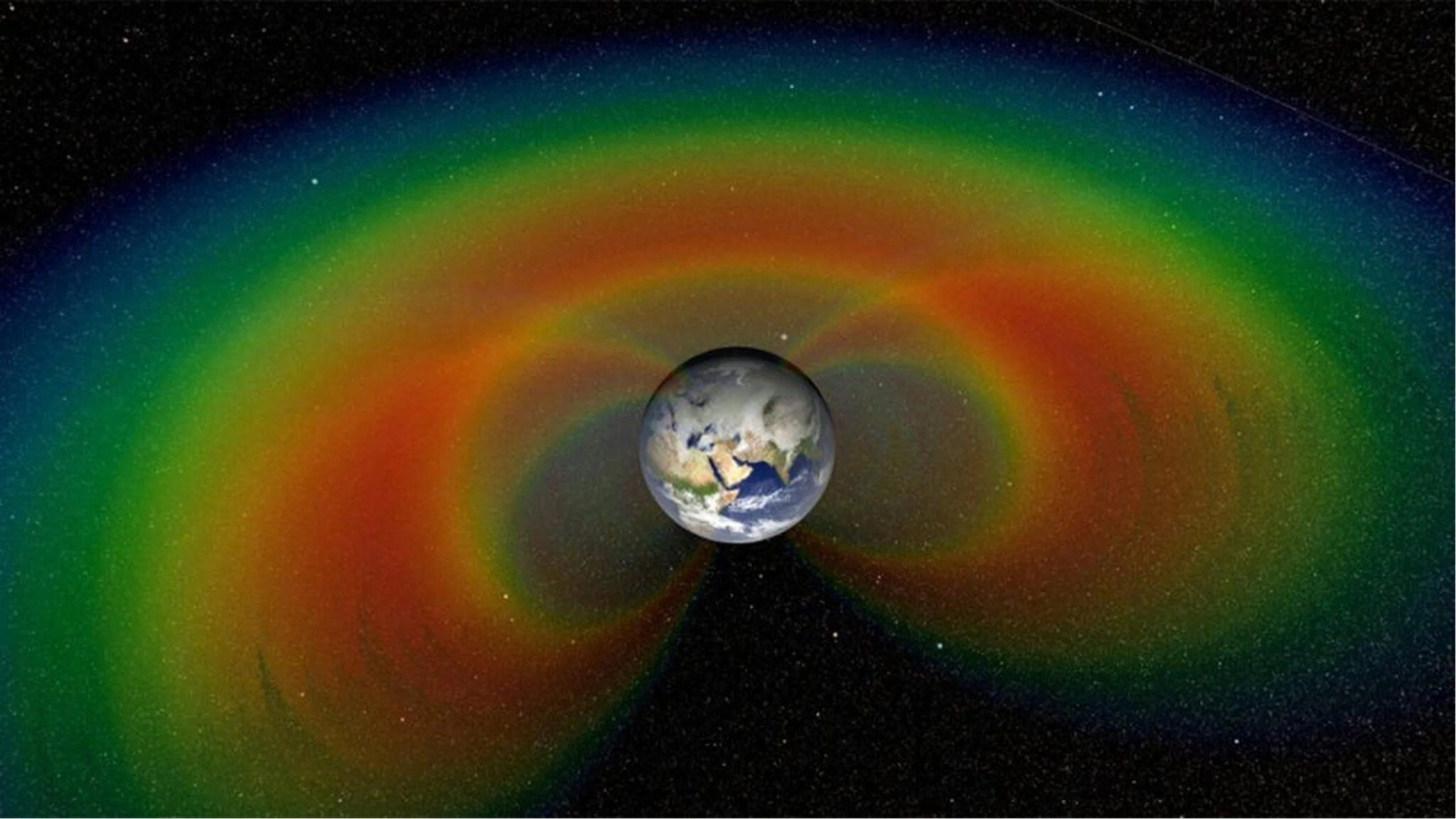
Researchers have identified a type of space wave that may help remove some of the most hazardous electrons trapped around Earth, according to a study in Geophysical Research Letters. The finding matters because high-energy electrons in the Van Allen radiation belts can threaten spacecraft electronics and astronauts.
The study, led by Lixian Yang and colleagues, examined three years of NASA Van Allen Probes observations from 2013 to 2015. The team found a population of chorus waves that behave differently from the waves commonly used in radiation belt models.
Earth’s Van Allen belts are two large, doughnut-shaped zones of charged particles held by the planet’s magnetic field. According to Phys.org’s report on the study, the belts help shield Earth from solar radiation, but the electrons inside them can damage technology in orbit.
Electrons above about 0.1 MeV can cause deep charging in spacecraft components, Phys.org reported. The new study focused on how natural plasma waves scatter those particles, including electrons with energies up to 2 MeV, out of the belts and toward the atmosphere.
Waves at unusual angles
Chorus waves are a known driver of radiation belt behavior. Scientists have associated them with both electron acceleration and electron loss, and they are often described by researchers as sounding like birdsong when converted into audio.
Many models have treated chorus waves as traveling mainly along Earth’s magnetic field lines. Yang’s team found that some waves instead move at high wave-normal angles, meaning they are strongly tilted relative to the magnetic field.
That tilt changes the waves’ character, according to the study. As the angle increases, the magnetic component weakens and the electric field becomes dominant, producing what the researchers call highly oblique quasi-electrostatic, or HOQE, chorus waves.
The study found that these waves often appear in low-density regions of the magnetosphere, where plasma is thinner than usual. Under those conditions, the waves’ electric fields can scatter energetic electrons more effectively than standard assumptions would predict.
Implications for radiation belt forecasts
The researchers reported that lower-band HOQE chorus waves can drive pitch-angle diffusion in ultrafast electrons up to 2 MeV. In that process, waves alter the direction of an electron’s motion until it can leave its trapped path and enter the atmosphere.
The study also found that upper-band chorus waves act on lower-energy plasma sheet electrons, at tens of keV. Phys.org reported that this scattering is linked to diffuse auroras in polar regions.
Yang and co-authors wrote that the results show “an important mechanism for the scattering of MeV electrons in the inner magnetosphere.” They also said the work expands understanding of how chorus waves interact with energetic electrons and offers new information for modeling radiation belt dynamics.
Adding these electric-heavy waves and realistic low-density conditions to global radiation belt models could improve forecasts of hazardous radiation levels, according to Phys.org. Better forecasts could help satellite operators assess when spacecraft may face greater risk from charged particles.
The study was published as “Electron Scattering by Highly Oblique Quasi‐Electrostatic Chorus Waves Under Realistic Magnetospheric Conditions” in Geophysical Research Letters.
This story draws on original reporting from Phys.org.