
Man pulled alive from rubble eight days after Venezuela quakes
Rescuers freed Hernan Gil in Catia La Mar as Venezuela’s disaster response shifts toward shelter, food and medical needs.
By Lucas Ferreira · Science & Environment Writer
3 min read
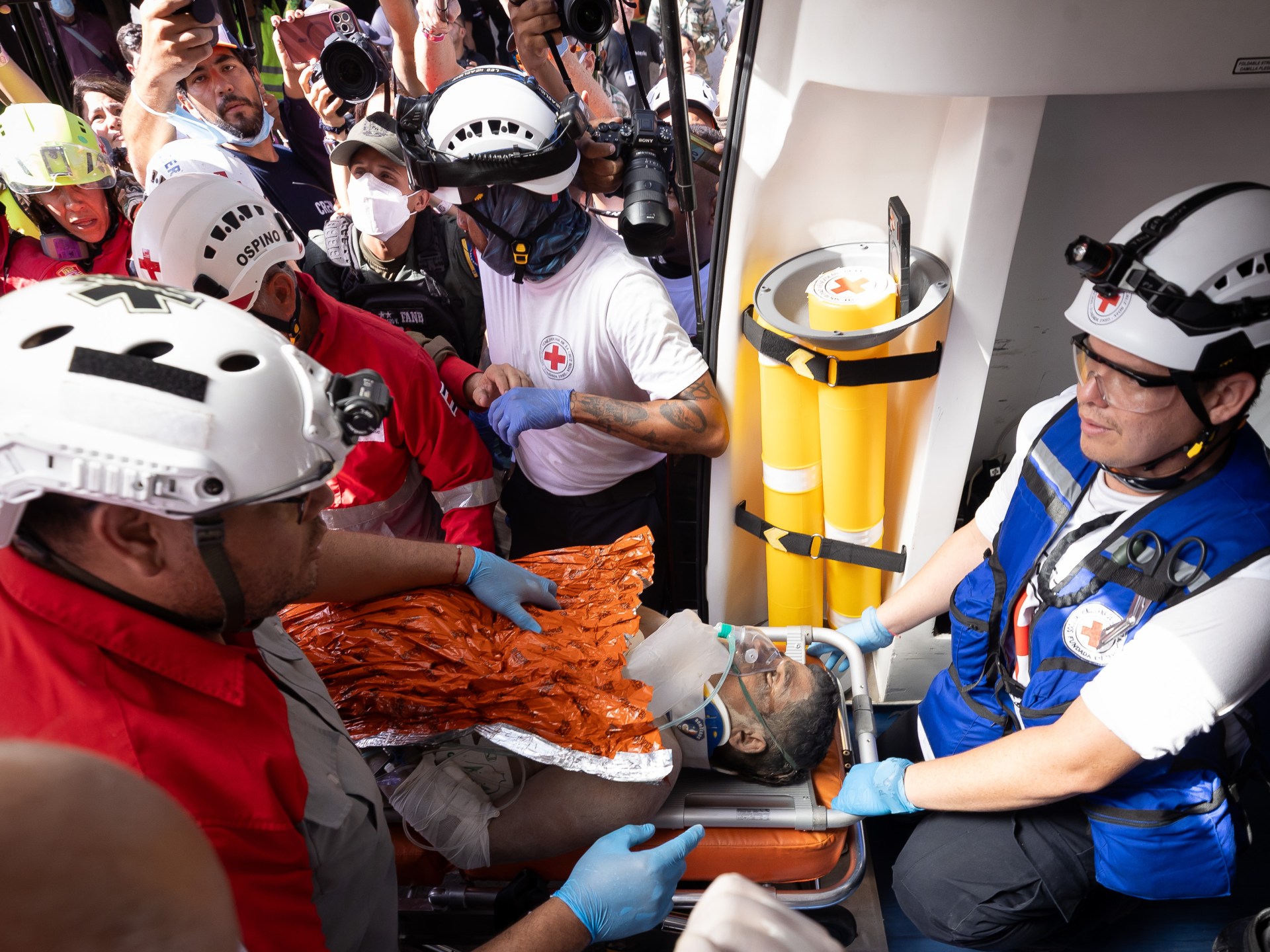
A security guard was rescued Thursday from a collapsed building in Venezuela eight days after two powerful earthquakes struck the country, according to Al Jazeera and AFP. The rescue offered a rare sign of hope as officials and aid groups face rising humanitarian demands from thousands of displaced people.
AFP identified the survivor as 43-year-old Hernan Gil, who had been trapped in a seven-storey building where he worked in Catia La Mar, a coastal area in La Guaira state north of Caracas. Rescue workers carried him out after a nearly 72-hour operation to reach him, according to the report.
Gil had been found three days before he was freed, AFP reported. Teams from Venezuela, Chile, the United States, Portugal, Costa Rica, El Salvador and Mexico worked on the operation.
Gusbimar Gonzalez, Gil’s wife, told AFP: “This is truly a miracle.”
Cristian Vera, who led the Chilean rescue team, told AFP that crews dug a three-metre tunnel to extract Gil. Rescuers had supplied him with water through a hose and oxygen through a tube in the days before they reached him, Vera said.
Vera told AFP that finding the precise point where Gil was trapped was difficult. The operation took place amid unstable rubble and after days in which survival chances have narrowed across the quake zone.
Death toll and damage
Al Jazeera reported that the earthquakes struck last week with magnitudes of 7.2 and 7.5. Venezuela’s government said in its latest official update that at least 2,295 people had died and 11,000 had been injured, according to Al Jazeera.
About 50,000 people have been reported missing, and officials expect the toll to rise, Al Jazeera reported. The quakes damaged or destroyed an estimated 60,000 buildings and left about 13,000 people homeless, according to the same report.
Al Jazeera correspondent Zein Basravi, reporting from La Guaira, said Gil’s rescue had encouraged some families, but many searches elsewhere had ended with bodies being recovered. Basravi reported that many collapsed buildings in La Guaira had been marked with the letter “D” for deceased after crews found no signs of life.
Basravi said a search-and-rescue expert on the ground described a disaster zone so large that crews were struggling to cover the affected area. As more time passes, he said, the chances of finding additional survivors continue to fall.
Aid needs grow
Al Jazeera reported that the emergency effort is beginning to shift from rescue and recovery toward relief work. Humanitarian workers have warned that Venezuela could face a health crisis as injured people go untreated and infectious diseases spread.
The country’s medical system was already under strain before the quakes because of shortages of equipment, trained personnel and electricity, Al Jazeera reported. Aid workers said understaffed medical centres are likely to come under further pressure.
The World Food Programme has requested $50m to feed about 500,000 people for three months, according to Al Jazeera. The United Nations Development Programme estimated physical damage at $6.7bn using satellite imagery, the report said.
Several governments and regional groups have pledged assistance. The US Department of State said Washington would provide $300m, according to Al Jazeera.
Journalist Noris Soto, reporting for Al Jazeera from Caracas, said Venezuela’s long-running economic hardship would make outside help essential beyond the immediate emergency. She said the disaster had compounded conditions that many Venezuelans were already enduring.
This story draws on original reporting from Al Jazeera.